
Why we still seat droppers by hand為什麼滴管我們仍然手工裝
A dropper is a compliant assembly, not a rigid cap. Here is what that means for your fill volume and your complaints.滴管是柔性組件,不是剛性瓶蓋。這對你的灌裝量與客訴意味著什麼。
The clip above is our dropper-bottle line. The bottles you see are square glass, already filled with a golden serum, moving along the conveyor while operators insert the dropper assemblies by hand. This is deliberately not automated, and the reason is worth explaining.
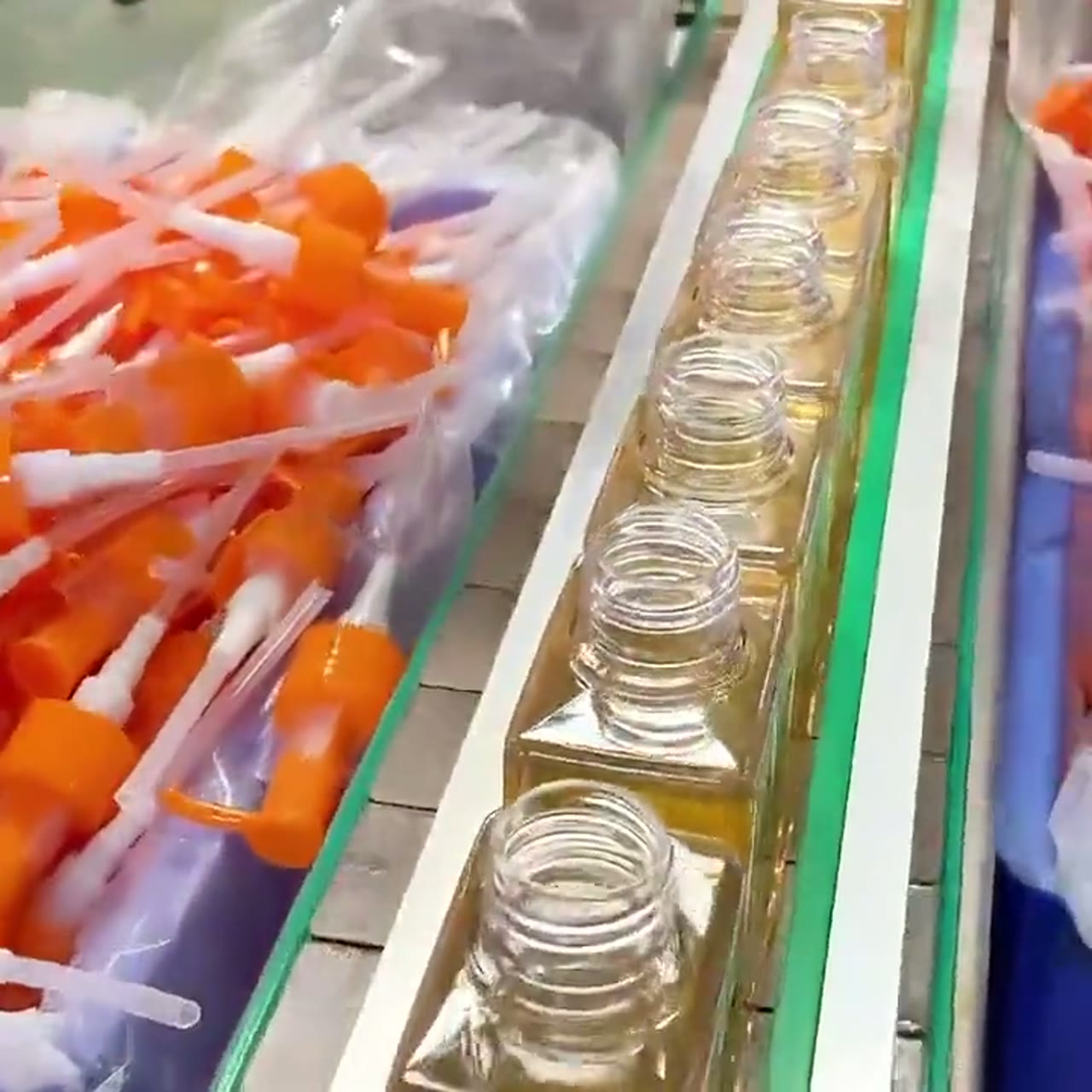
Why dropper assembly is still a manual station. A dropper has three parts that have to end up concentric — the pipette, the collar and the bulb. Automated capping works well when the cap is a single rigid piece, because the machine only has to align one axis. A dropper assembly is compliant: the pipette can sit slightly off-axis without looking wrong, but it will not reach the bottom of the bottle, and the customer will notice on first use. Trained hands catch that. On a 30 ml bottle, a two-millimetre pipette misalignment is the difference between drawing product and drawing air.
What the operator is checking, per bottle. Three things, and they take about a second each: the pipette reaches the bottom of the bottle without touching it, the collar seats flush against the neck, and the bulb is fully pushed home. A dropper that is not fully seated will leak when the bottle is laid on its side — which is exactly how a retail carton travels.
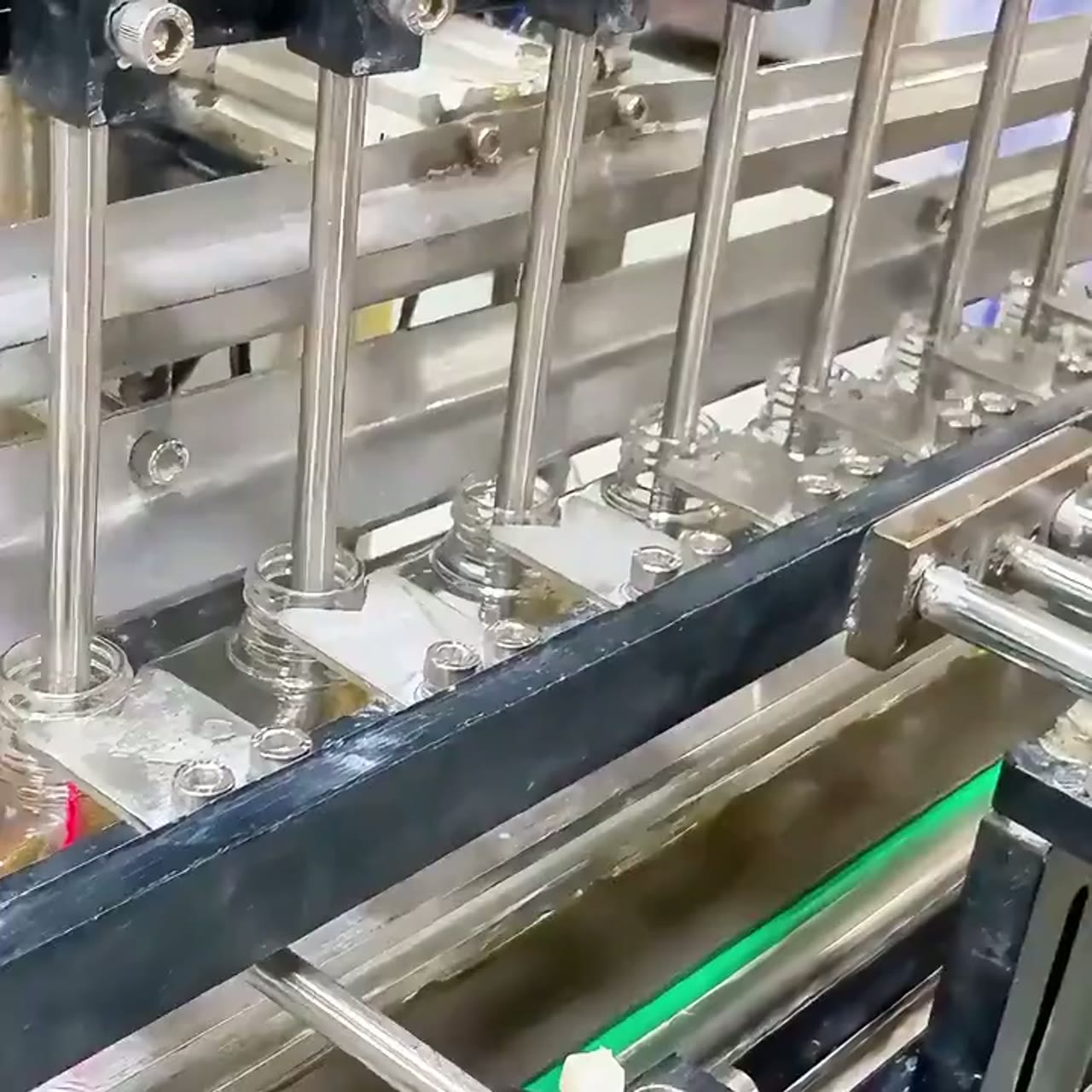
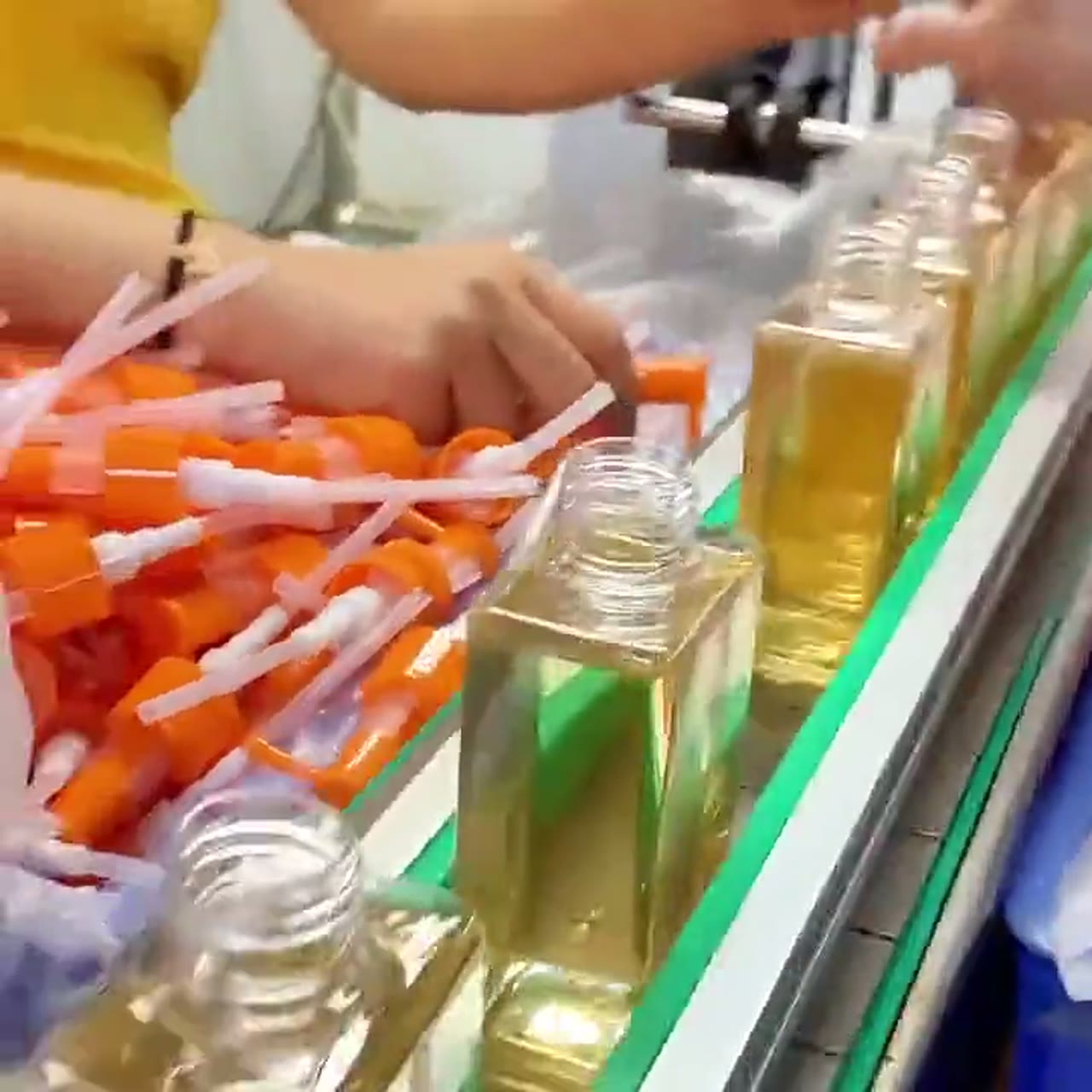
Where the automation actually is. Filling is volumetric and automatic, with check weighing downstream. The conveyor speed is set by the slowest human station, not by the filler — which is the opposite of how people usually assume these lines are scheduled.
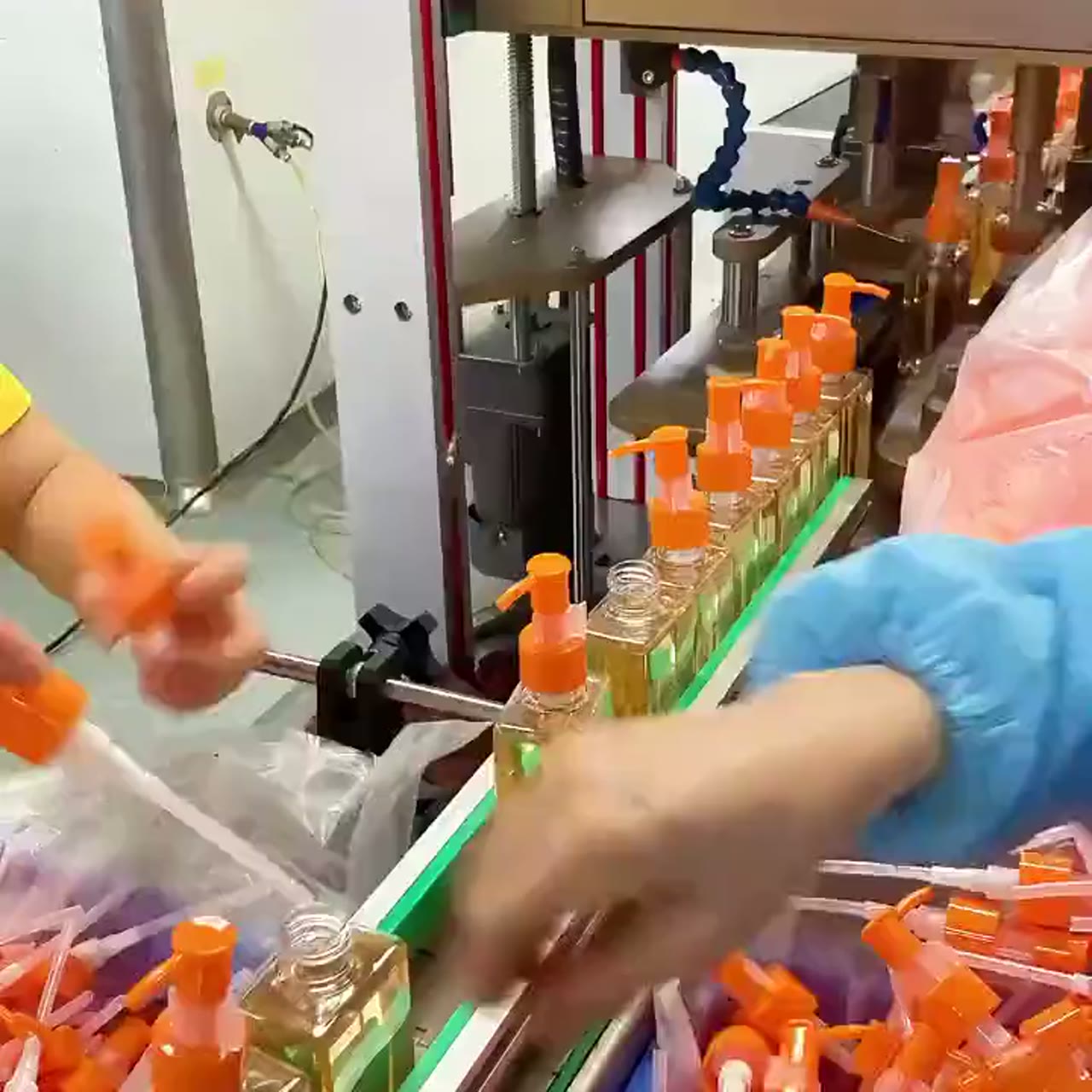
Why we film this stage. Dropper bottles are the format most likely to generate a complaint that is invisible in an inspection report. The bottle is full, the cap is on, the fill weight is in specification — and the pipette is two millimetres short, so the customer cannot use the last fifteen percent of the product. It is a defect that only shows up in the customer's hand.
If your product uses a dropper, two things are worth settling at the sample stage: the pipette length relative to your fill volume (the pipette has to reach the liquid even at the end of use), and the bulb material — natural rubber gives a better draw but degrades faster with essential-oil-heavy formulas than nitrile does.
上面這段是我方的滴管瓶產線。畫面裡是方形玻璃瓶,已灌裝金黃色精華液,沿輸送帶前進,同時由人工插入滴管組件。這一站刻意不自動化,原因值得說明。
為什麼裝滴管仍是手工工位。一支滴管有三個部件必須保持同心 —— 玻璃管、頸圈、球囊。當瓶蓋是單一剛性件時自動旋蓋很好用,因為機器只需對準一個軸;但滴管組件是柔性的:玻璃管可以稍微偏心而外觀看不出來,但它就到不了瓶底,客戶第一次用就會發現。熟練的手能抓到這一點。在 30 ml 瓶上,兩毫米的偏心就是「吸到料」與「吸到空氣」的分別。
操作員逐瓶在看什麼。三件事,各約一秒:玻璃管能到底但不觸底、頸圈與瓶口齊平貼合、球囊完全壓到位。沒壓到底的滴管在瓶子側放時會滲漏 —— 而零售紙盒運輸時正是側放的。
自動化到底在哪。灌裝是容積式自動的,下游有稱重複核。但輸送帶速度是由最慢的人工工位決定的,不是由灌裝機決定 —— 這與多數人對這類產線排產的想像正好相反。
為什麼我們要拍這一站。滴管瓶是最容易產生「檢驗報告看不出來」的客訴的規格:瓶子是滿的、蓋子裝好了、灌裝重量也合格 —— 而玻璃管短了兩毫米,客戶用不到最後一成半的產品。這種缺陷只有在客戶手上才會顯現。
如果你的產品用滴管,有兩件事值得在打樣階段就定下來:玻璃管長度與灌裝量的對應關係(快用完時玻璃管仍要能吸到料),以及球囊材質 —— 天然橡膠吸力更好,但在高精油配方下比丁腈橡膠老化得更快。
Related reading相關閱讀
Questions about this process?對這道工序有疑問?
Ask us and we will answer in writing, with the batch records to back it up.問我們,我們會以書面回覆,並附上批記錄。