
Filling perfume: what actually differs from skincare香水灌裝:和護膚品灌裝到底差在哪
Perfume sits in a different licensing unit from skincare. An alcohol base changes three things about how the line is built.同樣是灌裝,香水屬於「氣霧劑及有機溶劑單元」—— 酒精基底帶來的三個不同,決定了這條線怎麼設計。
The clip above is our partner facility's fragrance filling line — the sign reads "B Line". Four stages are visible: filling, capping, rolling and conveying.
Filling a bottle with liquid looks like the same job whether it is perfume or skincare. On the production side they sit in two different licensing units.
First, the licensing point
Under China's cosmetics production licensing classification, perfume falls under the aerosol and organic-solvent unit, in the organic-solvent class — the same unit as eau de cologne and nail polish.
General skincare liquids sit in the "general liquid unit"; creams and lotions sit in the "cream and lotion unit". These are three separate units. One licence does not cover the others.
So fragrance must be produced by a facility holding that unit. That is why our fragrance is partner-made rather than filled in our own plant.
Difference one: alcohol escapes
Perfume is based on ethanol, which is far more volatile than an emulsion. Two consequences follow.
First, loss control during filling. Ethanol evaporates at room temperature; the longer the fill and the larger the exposed surface, the greater the loss. Fragrance filling therefore tends to minimise exposure time.
Second, nozzle design. Emulsions can use wider nozzles for speed. Fragrance has to account for evaporation and wall creep, so sealing and suck-back matter more — otherwise residue is left at the neck and interferes with capping.
Difference two: alcohol burns
Ethanol is flammable, and that determines the room: explosion-proof electricals, static earthing, ventilation and fire compartmentation.
This is why the aerosol and organic-solvent unit exists as a separate licence category — the facility requirements are not on the same scale as a general liquid unit.
None of this is visible in the clip, because it lives in the equipment and the building. It is also the most commonly underestimated cost in fragrance production.
Difference three: clear glass shows everything
Operators wear white gloves throughout. That is not only hygiene.
Fragrance packaging uses a great deal of clear glass — frosted, polished, faceted. Fingerprints, oil and fibres are visible at a glance on clear glass, and wiping leaves marks of its own. So the bottle is not touched with bare hands from filling through to cartoning.
That is also why the packing stage of fragrance tends to carry a higher labour share than skincare.
Why "B Line"
There is a detail in the clip: the liquid at the filling stage is pale pink and cream, while the finished bottles passing through B Line are gold. Different colours are running on the same line.
That suggests B Line is organised for many variants in small volumes. A fragrance range routinely has a dozen or more scents, none of them large, so changeovers are frequent.
The constraint on changeover is not the filler — it is cleaning verification. The previous scent has to be gone, or it carries over. Fragrance residue is far harder to clear than an emulsion, and that is the real cost of a fragrance changeover.
Sealing matters more than in skincare
A leaking skincare product is damaged goods. A leaking fragrance makes the whole carton smell, and ethanol migrates through labels and cartons.
Fragrance sealing depends on two things: the fit between pump (or stopper) and neck, and the depth of the crimp. Under-crimp and it leaks; over-crimp and the neck cracks. That window is much narrower than screw capping on skincare.
In the clip the capping station steadies the bottle by hand — that is what controls the window.
If you are developing a fragrance
Four things are worth settling before sampling:
Concentration. The same scent at Parfum, EDP and EDT differs substantially in longevity and cost. Settle the concentration before discussing price.
The sealing solution. Pump, stopper and neck tolerances need confirming before tooling — not discovered at filling.
Licensing. Fragrance must be produced by a facility holding the aerosol and organic-solvent unit. Confirm this early.
Labels and transport. Alcohol-based products face additional restrictions in some markets and with some carriers, air freight in particular. Check before shipping.
The barrier in fragrance is not the formula. It is packaging fit and line conditions — and both are far cheaper to settle early than to fix later.
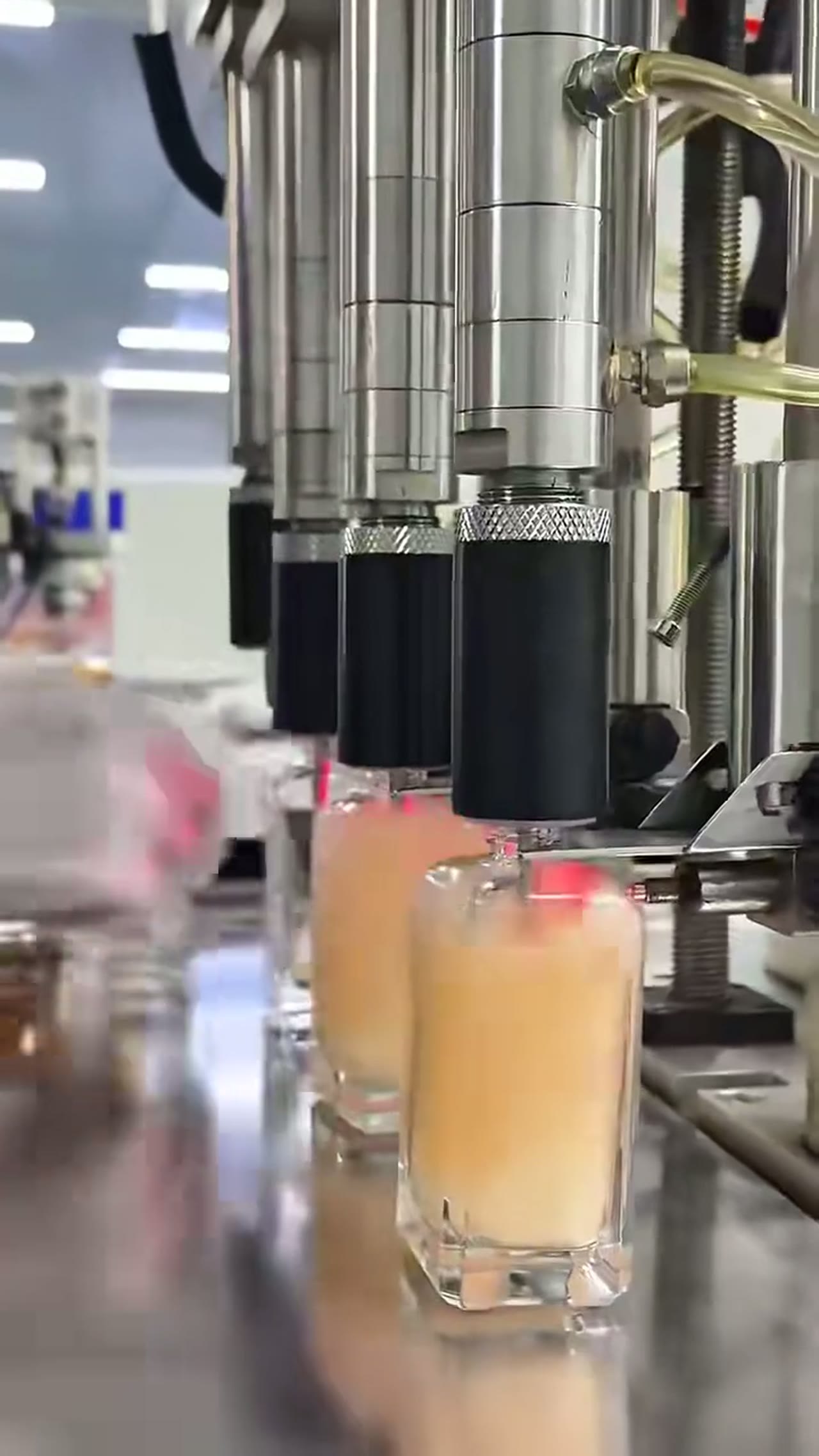
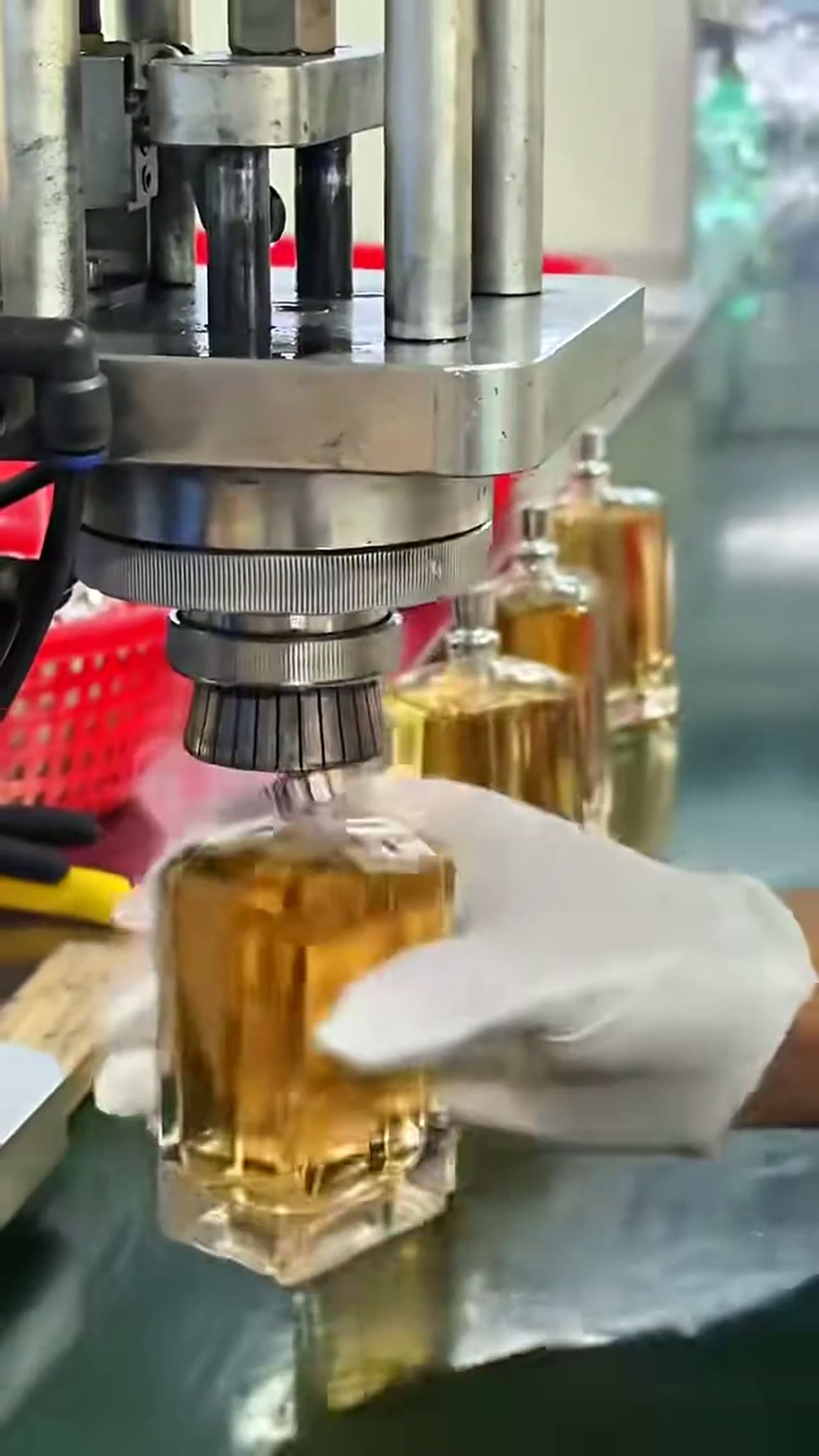
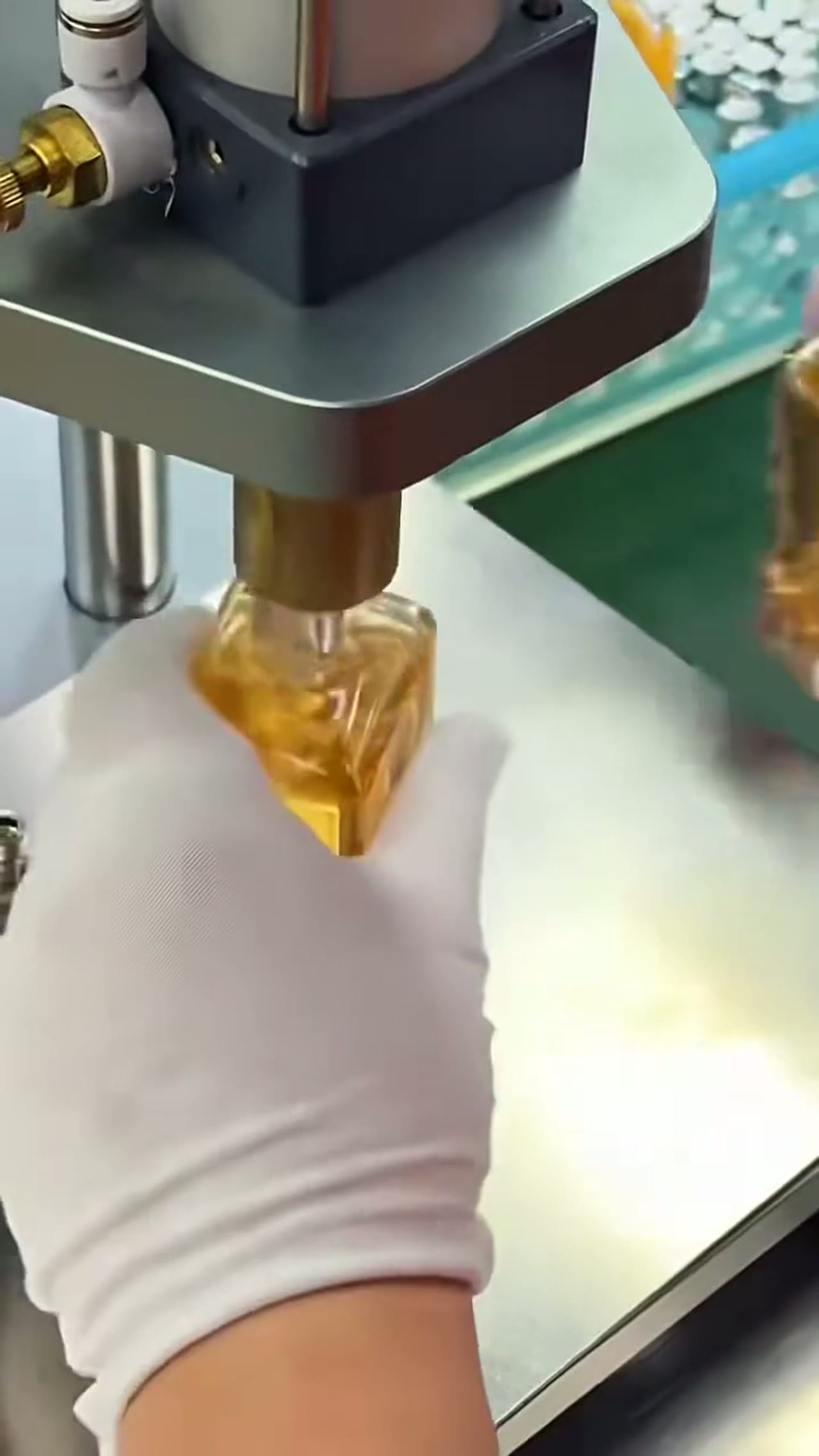
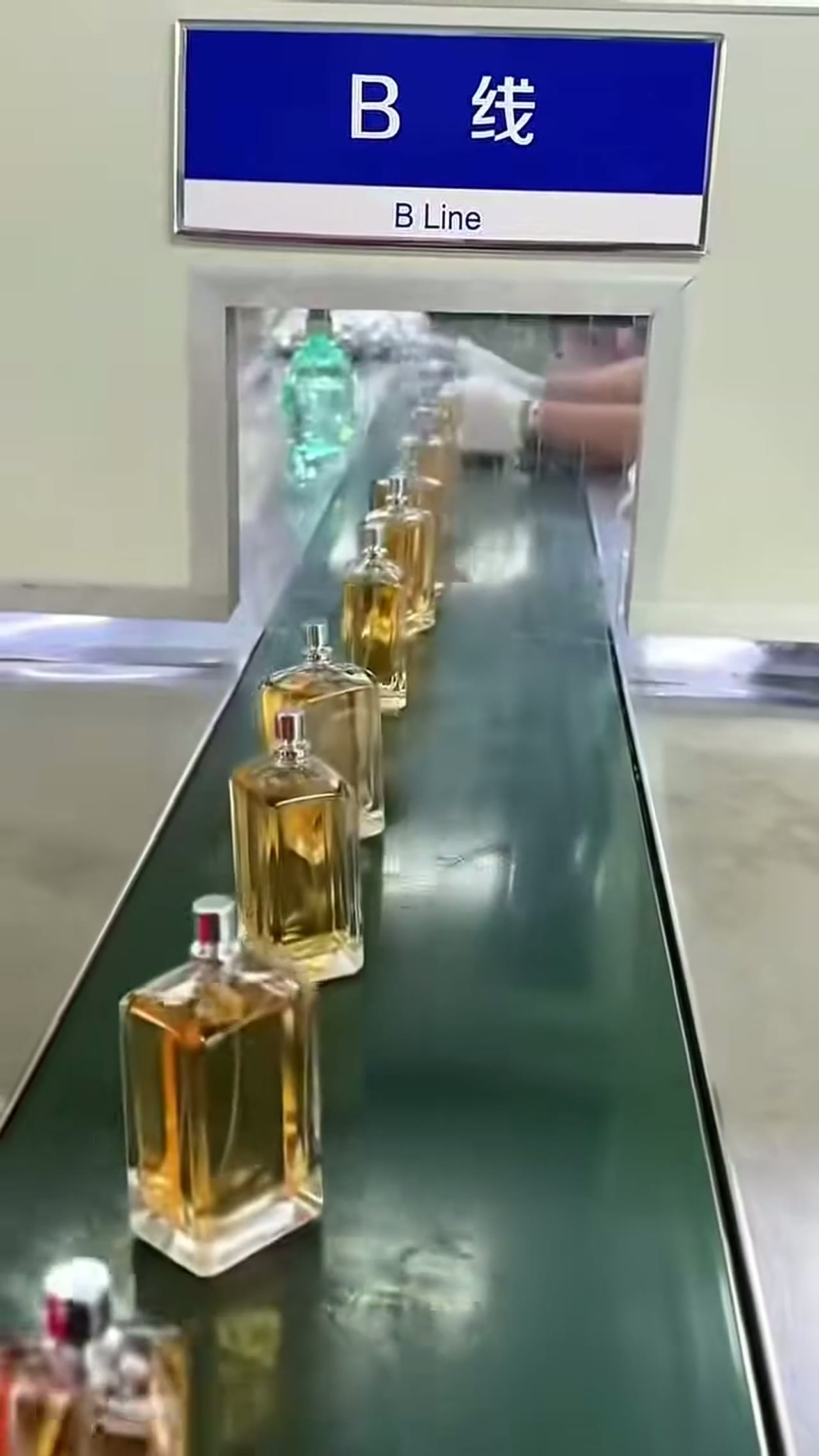
上面這段是合作工廠的香水灌裝線,產線牌上寫著「B 线」。畫面裡我們能看到灌裝、壓蓋、滾壓和輸送四段。
同樣是往瓶子裡灌液體,香水跟護膚品的水乳精華,在生產端其實是兩個不同的許可單元。
◆ 先說清楚許可這件事
照《化妝品生產許可範圍》的分類,香水屬於「氣霧劑及有機溶劑單元」下的有機溶劑類 —— 同一個單元裡還有花露水和指甲油。
而一般護膚水乳屬於「一般液態單元」,膏霜屬於「膏霜乳液單元」。這是三個不同的單元,不是同一張許可證能覆蓋的。
所以香水的生產,必須由持有該單元許可的工廠來做。這也是為什麼我們的香水是合作生產,而不是在自己廠裡灌。
◆ 第一個不同:酒精會跑
香水的基底是乙醇,揮發性遠高於水乳。這帶來兩件事。
一是灌裝過程中的損耗控制。乙醇在常溫下就在揮發,灌裝時間越長、料液暴露面積越大,損耗越明顯。所以香水灌裝通常追求更短的暴露時間。
二是灌裝嘴的設計。水乳可以用較大口徑的灌裝嘴提高速度;香水要考慮揮發與掛壁,對灌裝嘴的密封與回吸要求更高 —— 否則瓶口會殘留,影響後續壓蓋。
◆ 第二個不同:酒精易燃
乙醇是易燃液體,這直接決定了車間條件:防爆電氣、靜電接地、通風換氣、消防分區。
這也是「氣霧劑及有機溶劑單元」單獨設一個許可單元的原因 —— 它對廠房的要求跟一般液態單元不是一個量級。
畫面裡看不到這些(它們在設備與廠房層面),但這是香水生產最容易被低估的一塊成本。
◆ 第三個不同:瓶子是透明的,指紋藏不住
畫面裡操作員全程戴白色手套。這不只是衛生要求。
香水的包材大量使用透明玻璃 —— 磨砂、光面、多切面都有。指紋、油污、纖維在透明玻璃上一眼就能看見,而且擦不掉(擦會留痕)。所以從灌裝到裝盒,全程避免裸手接觸瓶身。
這也是為什麼香水的包裝環節人力佔比通常比護膚高。
◆ 為什麼是「B 线」
畫面裡有一個細節:灌裝段的液體是淡粉/乳白,而輸送段通過 B 线的成品是金色。同一條線上跑著不同顏色的料液。
這說明 B 线是按多品種、小批量組織的 —— 香水一個系列常有十幾個香型,每個香型的量都不大,靠頻繁換產來跑。
換產的關鍵不是灌裝機,是清洗驗證:上一個香型的氣味必須清乾淨,否則會串味。香精的氣味殘留比水乳的殘留難處理得多,這是香水換產真正的成本所在。
◆ 香水的密封,比護膚更關鍵
護膚品漏了,是貨損。香水漏了,整個箱子都是味道,而且乙醇會滲透標籤與紙盒。
香水的密封主要靠兩處:泵頭(或塞子)與瓶口的配合,以及壓蓋時的壓合深度。壓合不到位會滲漏,壓過頭會壓裂瓶口 —— 這個窗口比護膚品的旋蓋窄得多。
畫面裡壓蓋工位用手扶穩瓶身,就是為了控制這個窗口。
◆ 如果你要做香水
四件事建議在打樣前定下來:
一是香型與濃度。 同一個香型在 Parfum、EDP、EDT 三個濃度下,留香與成本差距很大,先定濃度再談價格。
二是包材的密封方案。 泵頭、塞子、瓶口的配合公差要在開模前確認,不要等灌裝時才發現漏。
三是許可資質。 香水必須由持有「氣霧劑及有機溶劑單元」許可的工廠生產,這一項要提前確認。
四是標籤與運輸。 含酒精產品在部分市場與承運商有額外限制(空運尤其),出貨前要確認。
香水的門檻不在配方,在包材配合與產線條件。這兩件事提前定,比事後補救便宜得多。
Related reading相關閱讀
Questions about this process?對這道工序有疑問?
Ask us and we will answer in writing, with the batch records to back it up.問我們,我們會以書面回覆,並附上批記錄。