
Foundation filling: where the machine stops and hands take over粉底液灌裝:自動到哪一步,人工接哪一步
Foundation comes in wide-mouth bottles, at high viscosity, in shades that show every error. The machine meters; people verify.粉底液用廣口瓶、黏度高、顏色敏感 —— 自動灌裝解決定量,人工負責複檢。
The clip above is a foundation filling line. Two wide-mouth glass bottles on a conveyor, a nozzle descending to meter the fill, and a beige-pink liquid.
There is a line of text on the left of the frame: the automated line handles precise metering; people handle the fine operations and the double inspection. That sentence actually describes the division of labour in foundation filling rather well. This piece is about where that line falls, and why.
Three ways foundation differs from skincare liquids
Filling foundation is a more demanding job than filling a serum.
Wide-mouth bottles. Serums mostly use narrow-neck dropper bottles; foundation generally comes in wide-mouth bottles because the contents are viscous and have to be poured or pumped out. A wide mouth makes location easier but the surface less stable — the tolerance between nozzle and neck is looser, but splashing and product on the rim become more likely.
High viscosity. Foundation is a suspension — pigment dispersed in an oil or emulsion base — far more viscous than a toner. A viscous liquid moves slowly through the filling line and clings to the walls, which affects two things: filling speed, and how hard it is to clean between shades.
Shade sensitivity. A foundation range runs to dozens of shades that differ only slightly. A fill error that is invisible in skincare is a visible shade difference in foundation. That is why the metering requirement is tighter than for a general liquid unit.
What automation actually solves is metering
The nozzle descend-meter-retract cycle in the clip is done by machine. The core value of automated filling is consistency of fill volume — a person cannot hit the same figure several thousand times in a row.
But a machine can only guarantee that the right amount went in. It cannot guarantee that it went in correctly. For example:
· Product left on the bottle rim (common with viscous liquids)
· Bubbles at the surface (filling too fast)
· Fingerprints or scuffs on clear glass
· A label that does not match the shade in the bottle
A machine either cannot see these, or can see them without judging them.
What people take over is inspection
The on-screen text says "double inspection" — the same batch checked twice, or two stages each checking once.
What inspection covers is exactly what the machine cannot guarantee: a clean rim, a correct fill level, an unmarked bottle, a matching shade.
This is also why the packing stage of foundation carries a high labour share. It is not that automation is unavailable; it is that many shades, small batches and high appearance standards together make full automation uneconomic.
Shade changeover is the real bottleneck
A foundation range often runs to 20–40 shades, none of them large — the same logic as a fragrance range.
A shade change involves three things: cleaning the line (no pigment left from the previous shade), changing the bulk, and changing labels and cartons. Cleaning takes the longest — pigment adheres to the pipe walls and a simple flush is not enough.
So the throughput of a foundation line often depends less on filling speed than on how fast a shade change can be completed.
If you are developing a foundation
Four things are worth settling before sampling:
Wide-mouth tolerances. The neck diameter tolerance on a wide-mouth bottle directly affects splashing during filling. Confirm it before tooling.
Metering accuracy and declared fill. Whether the declared fill is average or minimum affects both cost and compliance — the same question as in skincare, and it has to be settled early.
Shade count and batch size. More shades means more changeovers. A first order is better off covering the base shades than filling out the whole range.
Inspection criteria. Write down what counts as a reject as judgeable items, rather than "pick out the ones that look wrong" — otherwise the standard drifts between shifts.
The difficulty in foundation is not the formula and not the filler. It is shade management and inspection criteria.
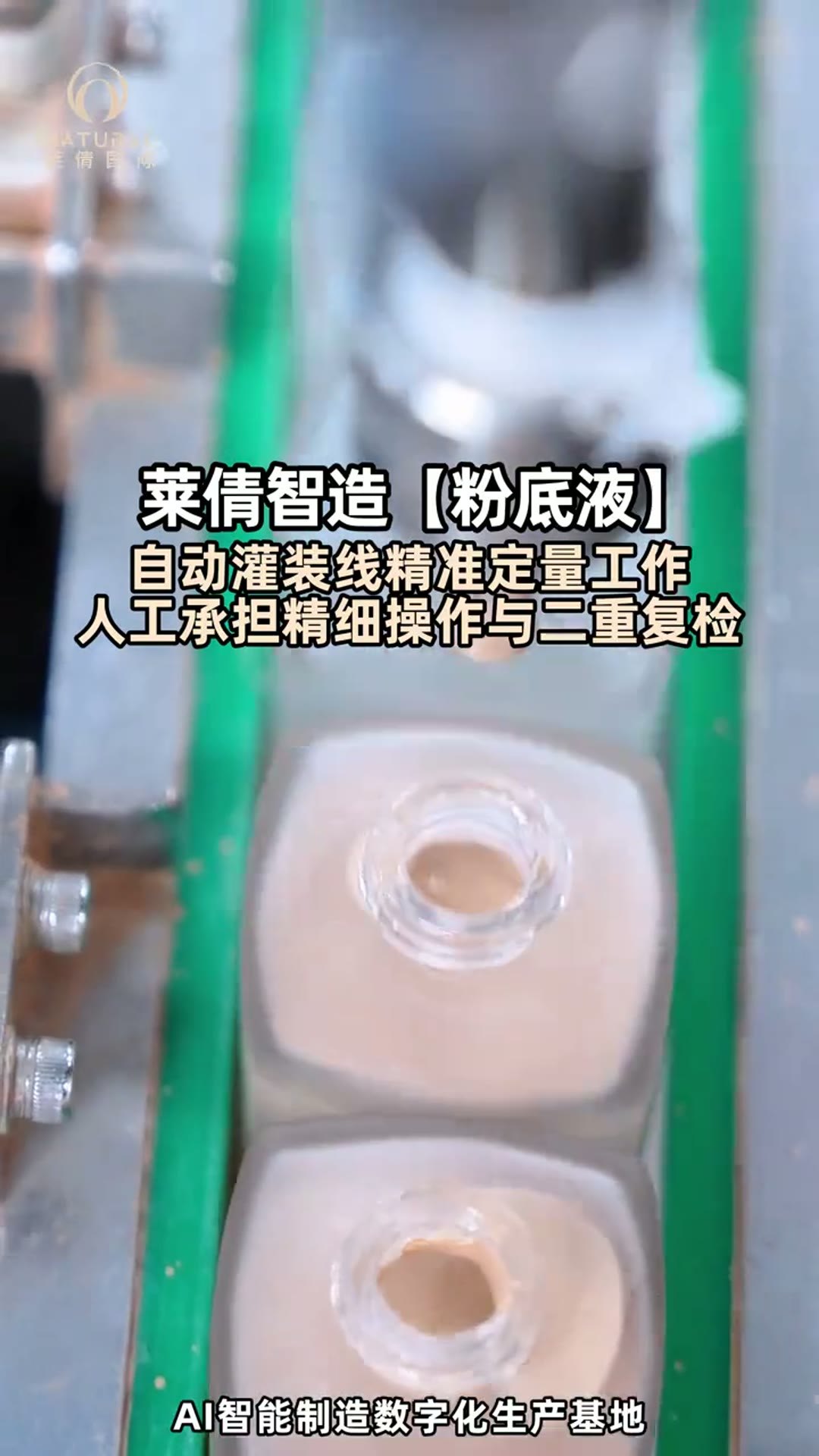
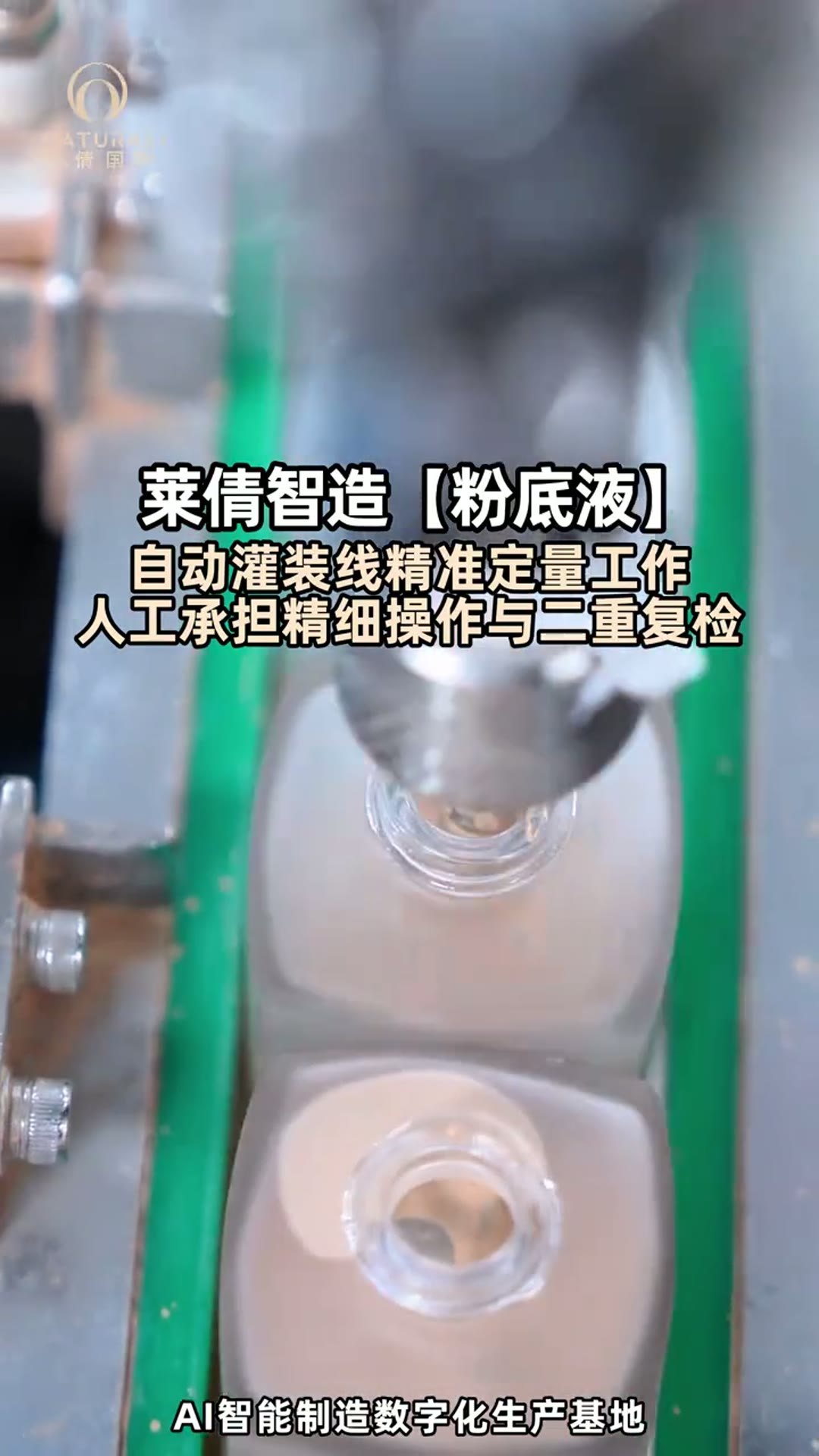
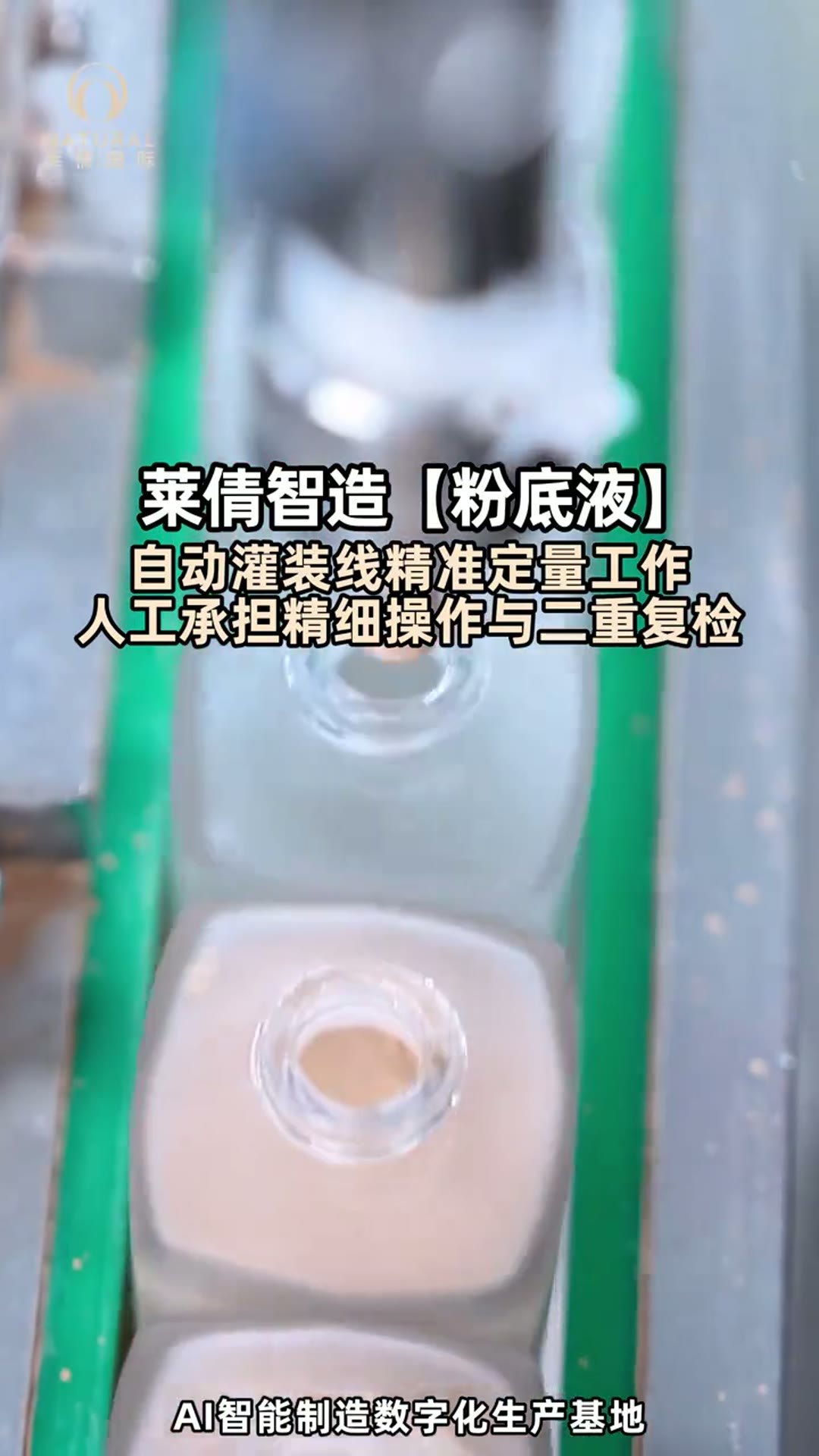
上面這段是粉底液灌裝線的實拍。畫面裡兩個廣口玻璃瓶在輸送帶上,灌裝嘴下降定量灌裝,液體是米粉色。
畫面左側有一行字:自動灌裝線精準定量工作,人工承擔精細操作與二重複檢。這句話其實把粉底液灌裝的分工說清楚了 —— 這一篇講的就是這條分界線在哪裡,以及為什麼。
◆ 粉底液跟護膚水乳,灌裝上有三個不同
同樣是往瓶子裡灌液體,粉底液的灌裝條件要苛刻一些。
一是廣口瓶。 護膚精華多用窄口滴管瓶,粉底液普遍是廣口瓶 —— 因為內容物黏度高,要靠倒或按壓取出。廣口意味著灌裝時定位更難:瓶口大,灌裝嘴與瓶口的對位公差相對寬鬆,但液面更容易波動,濺液與瓶口掛料的風險反而更高。
二是黏度高。 粉底液是懸浮體系(色粉分散在油相或乳化體系裡),黏度遠高於化妝水。高黏度液體在灌裝管路裡流動慢,且容易在管壁殘留 —— 這會影響兩件事:灌裝速度,以及換色號時的清洗難度。
三是顏色敏感。 粉底液有幾十個色號,每個色號的顏色差別很小。灌裝誤差在護膚品上可能看不出來,在粉底液上就是色差。這也是為什麼粉底液的灌裝精度要求比一般液態單元更高。
◆ 自動灌裝解決的是「定量」
畫面裡的灌裝嘴下降、定量、回升,這個循環由機器完成。自動灌裝的核心價值是每次灌裝量的一致性 —— 人做不到連續幾千次都灌同一個量。
但機器只能保證「灌進去的量對」,保證不了「灌進去的過程對」。比如:
· 瓶口有掛料(黏度高容易發生)
· 液面有氣泡(灌裝速度太快)
· 瓶身有指紋或刮痕(透明玻璃)
· 色號與瓶身標籤不一致(換色號時的風險)
這些機器看不出來,或者看得出來但不會判斷。
◆ 人工接的是「複檢」
畫面文字說的是「二重複檢」—— 同一批貨檢查兩遍,或者兩道工序各查一遍。
複檢要查的,正是機器保證不了的那些:瓶口是否乾淨、液面是否到位、瓶身是否有瑕、色號是否配對。
這也是為什麼粉底液的包裝環節人力佔比普遍不低。 不是自動化程度不夠,而是色號多、批量小、外觀要求高,這三件事加起來讓全自動的投入產出比不划算。
◆ 換色號是粉底液產線的真正瓶頸
粉底液一個系列常有 20–40 個色號,每個色號的批量都不大 —— 這跟香水系列是一樣的邏輯。
換色號要做三件事:清洗管路(不能殘留上一個色號的色粉)、更換料液、更換標籤與外盒。其中清洗最花時間 —— 色粉會附著在管壁上,普通沖洗不夠。
所以粉底液產線的效率,往往不取決於灌裝速度,而取決於換色號的速度。
◆ 如果你在做粉底液
四件事建議在打樣前定下來:
一是包材的廣口公差。 廣口瓶的瓶口直徑公差直接影響灌裝時的濺液,開模前要確認。
二是灌裝精度與標稱量。 粉底液的標稱量按平均量還是最低量定,會影響成本和合規,這件事跟護膚品一樣要提前定。
三是色號數量與批量。 色號越多,換產越頻繁。首單建議先做覆蓋主要膚色的基礎色號,不要一次鋪滿。
四是複檢標準。 把「什麼算不合格」寫成可判定的條目,而不是「看著不好就挑出來」—— 否則不同班次標準不一致。
粉底液的門檻不在配方,也不在灌裝機,而在色號管理與複檢標準。
Related reading相關閱讀
Questions about this process?對這道工序有疑問?
Ask us and we will answer in writing, with the batch records to back it up.問我們,我們會以書面回覆,並附上批記錄。