
Inside the filling and capping stage灌裝與旋蓋這一站,到底在做什麼
What a rotary filling and capping machine actually does, what gets measured, and where first production runs tend to fail.旋轉式灌裝旋蓋機實際在做什麼、要看哪些數據,以及首次生產通常會在哪裡出問題。
The clip above is a single pass of our rotary filling and capping machine — the stage where your formula stops being bulk liquid and becomes a filled, closed unit. It is also the stage where most quality problems in a launch actually originate, which is why we film it.
Why a rotary machine rather than an in-line one. The bottles you see travel around a carousel rather than in a straight line. On a rotary machine each station — filling, cap placement, torque — acts on the container while it is held concentric on a rotating platform. That keeps the fill nozzle aligned with the bottle mouth throughout the fill, which matters for narrow-neck containers. In-line machines are easier to change over; rotary machines hold tolerance better on a long run.
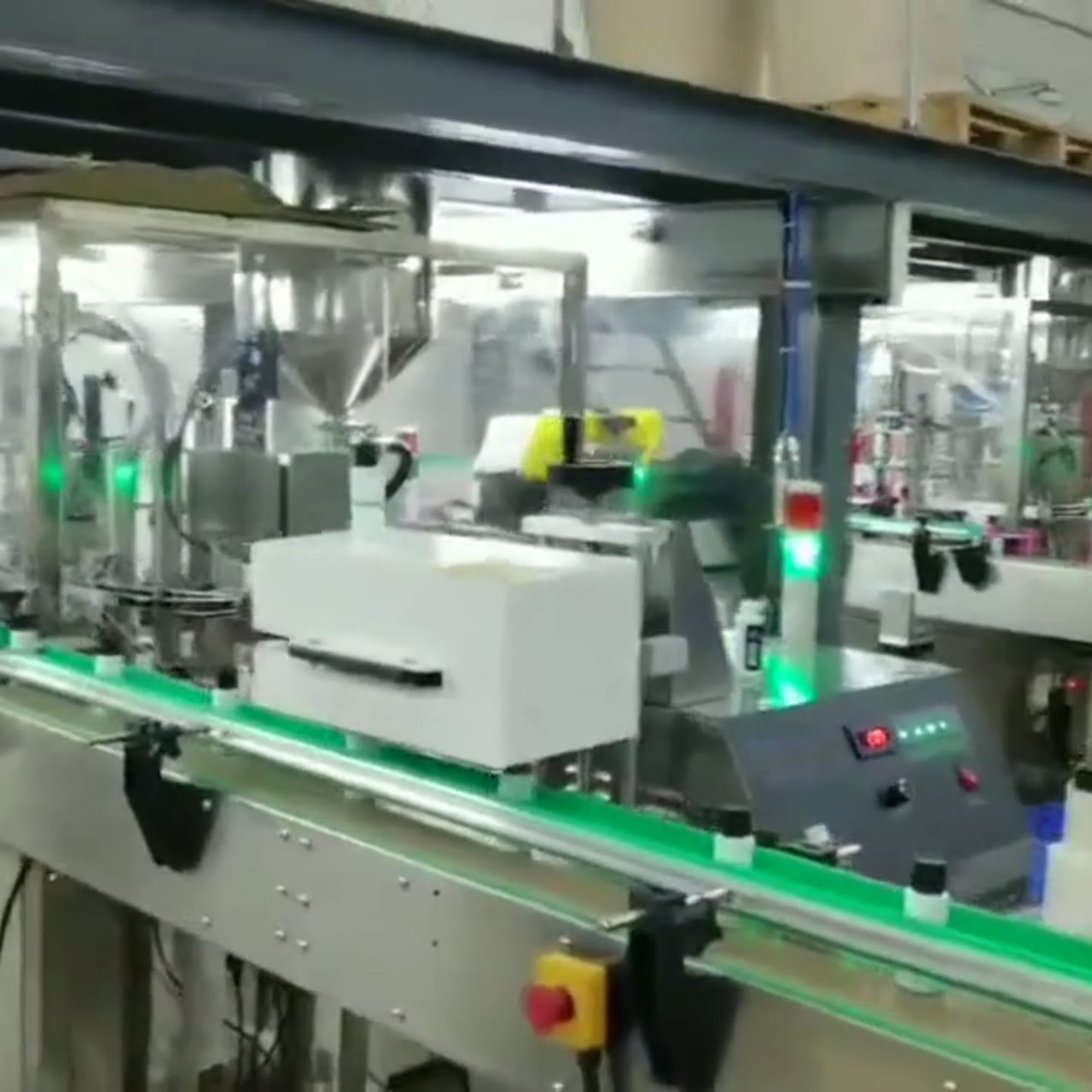
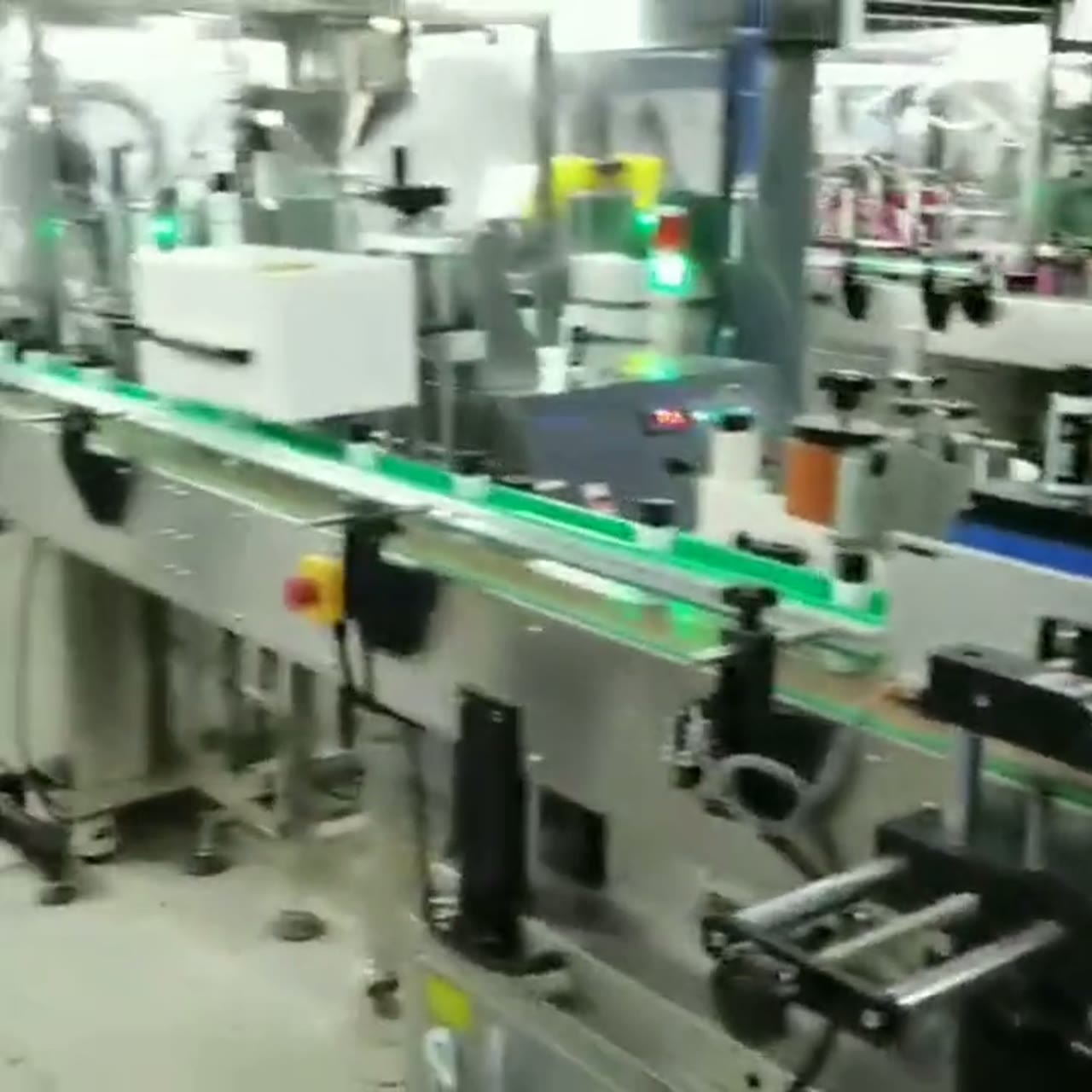
What the stations do. Bottles enter on the conveyor at the lower left, are indexed onto the carousel, filled, then transferred to the capping head. Caps are fed, placed and tightened. Filled and closed units discharge back onto the conveyor. The stainless hopper at the top feeds product to the filling head under level control.
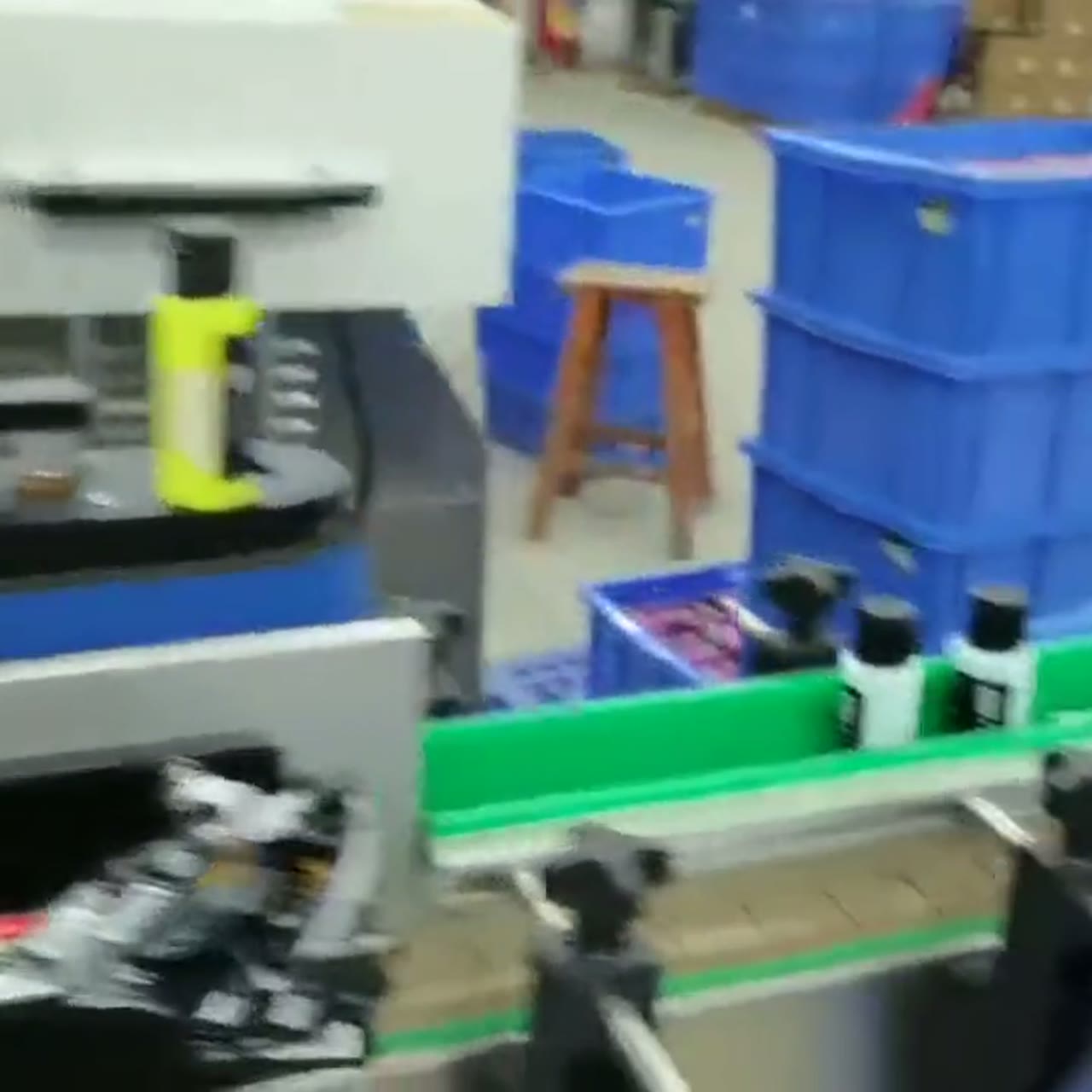
What the operator is checking. The touchscreen on the left is the machine HMI. In production the parameters that get watched are fill weight, cap torque and reject count — not line speed. Line speed is a derived number; if you push it up without re-checking fill weight, you ship short fills.
Cleanliness that is visible. The filling zone sits behind transparent guarding, and staff working the line are in hair covering and face masks. This is standard for cosmetic filling and is one of the things a client audit will look at first.
Where a launch usually goes wrong. In our experience the failures are rarely the machine. They are: bottle neck dimensions that drift between supplier batches, so the fill nozzle no longer seats properly; cap liner material that is incompatible with the formula, so the torque spec that passed at trial leaks after three weeks; and fill weight specified as an average rather than a minimum, which passes on the line and fails at the border.
If you are planning a first run, the two things worth settling before tooling is ordered are the fill weight convention (nominal or minimum) and the cap-and-liner combination. Both are cheap to change before the run and expensive to change after.
上面這段是我們旋轉式灌裝旋蓋一體機的一次過機實拍 —— 你的配方就是在這一站從散裝料液變成「已灌裝、已封口」的成品。這一站也是新產品上市時絕大多數品質問題的真正來源,所以我們把它拍下來。
為什麼用旋轉式而不是直線式。畫面裡的瓶子是繞著轉盤走的,不是走直線。旋轉式機器上,灌裝、上蓋、旋蓋各工位是在瓶子被同心地夾持在旋轉平台上時完成的 —— 灌裝嘴在整個灌裝過程中都與瓶口對準,這對窄口瓶尤其重要。直線式換產更快,旋轉式在長單生產時精度更穩。
各工位在做什麼。瓶子從左下方由輸送帶進機,被分度到轉盤上,完成灌裝後轉到旋蓋頭。瓶蓋被送料、放置、旋緊。灌裝封口完成的產品再回到輸送帶出機。頂部的不鏽鋼料斗在液位控制下向灌裝頭供料。
操作員在看什麼。左側的觸控屏是機台 HMI。實際生產時盯的是灌裝重量、旋蓋扭力、剔廢數量 —— 不是線速。線速是個導出值;不重新核對灌裝重量就提速,出來的就是灌裝量不足。
看得見的潔淨要求。灌裝區在透明防護罩內,線上人員戴發帽與口罩。這是化妝品灌裝的基本要求,也是客戶驗廠首先會看的地方之一。
新產品通常在哪些地方出問題。按我們的經驗,問題很少出在機器上。常見的是:瓶子供應商批次之間瓶口尺寸漂移,導致灌裝嘴不再嚴密對準;瓶蓋內墊材質與配方不相容,試產時通過的扭力規格,三週後就滲漏;以及灌裝標稱按「平均量」而不是「最低量」定,產線上合格、到海關被退。
如果你在籌備首次生產,開模前值得先定的兩件事是:灌裝標稱按平均量還是最低量,以及瓶蓋與內墊的組合。這兩件事在生產前改很便宜,生產後改很貴。
Related reading相關閱讀
Questions about this process?對這道工序有疑問?
Ask us and we will answer in writing, with the batch records to back it up.問我們,我們會以書面回覆,並附上批記錄。