The competitor's label said Exosome競品包裝上寫著 Exosome
The buyer wanted the same two lines of copy. Qiang refused.客戶帶了一支競品來,要求同樣的兩行字。強哥拒絕了。
Mr. Huang brought that bottle in himself.
He set the bottle on the table and turned it half a turn so the label faced Qiang. "Have a look at this."
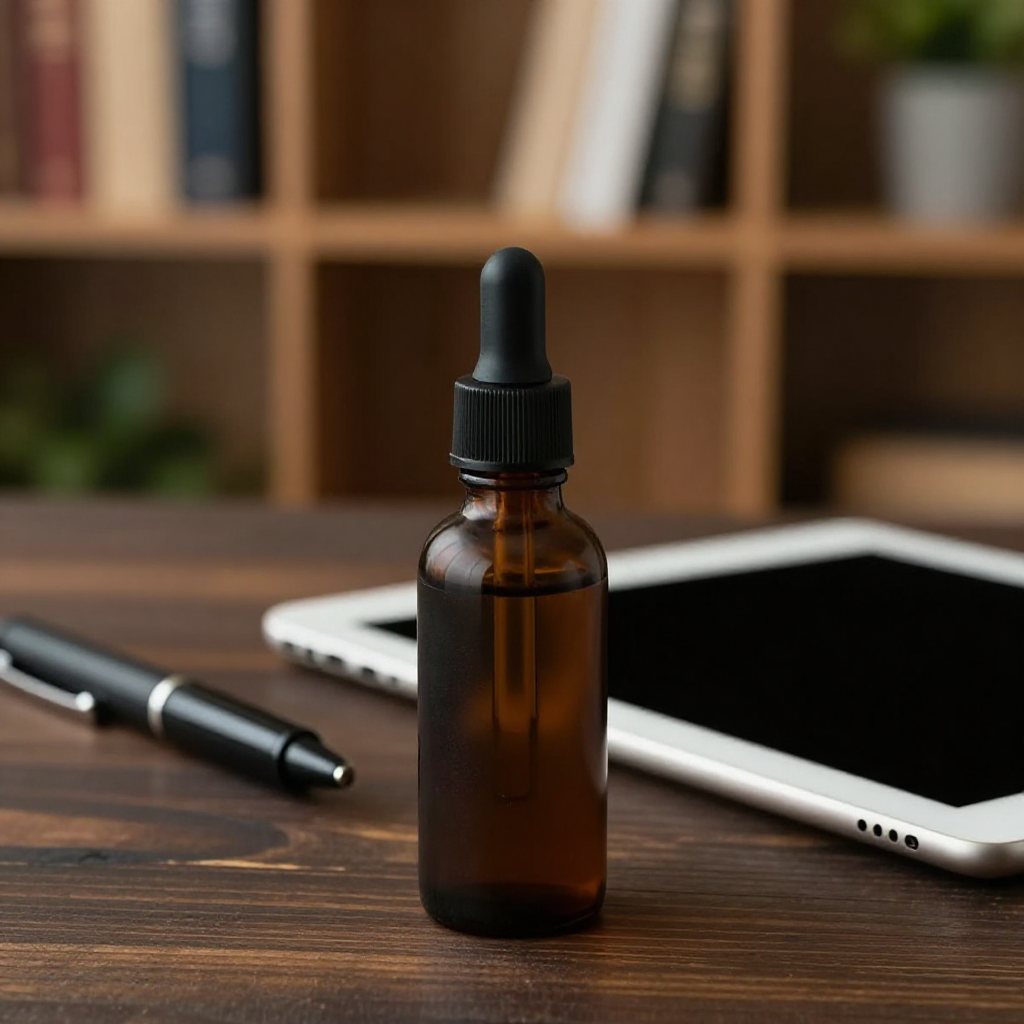
The bottle was frosted dark brown, and the label carried a line of English: EXOSOME + PDRN. Underneath it there was another line in small type — CELL-LEVEL REGENERATION.
May picked the bottle up, looked at it, set it down again, and said nothing.
Act One: He wanted the same thing
"This one sells very well where we are," Mr. Huang said. "I do Southeast Asia. This one moves twenty thousand a month."
"How much do you want this time?" Qiang asked.
"Start with a hundred thousand," Mr. Huang said. "Work the formula along these lines, but the price has to be twenty percent below his. And also—" he pointed at the label, "these two lines. I want them printed."
Qiang took the bottle, held it up to the window to look at the liquid inside, and set it back on the table.
"I can't print this."
Mr. Huang froze for a moment, then laughed. "Qiang, that's just being polite, isn't it? It's on sale. I didn't make it up."
"It being on sale doesn't mean you can print it."
Act Two: We cannot print that word
Qiang turned the tablet around. On it was a passage of regulatory text.
"This exosome thing," he said, "under the Chinese regulatory framework, it sits outside the cosmetics category. Related products risk being classified as medical devices."
"And what does that have to do with me? I sell to Southeast Asia."
"It has everything to do with you," Qiang said. "First, this batch ships out of Guangzhou, and the production filing is in China. Second, your product page, your promotional material — if even one place carries those three characters, a screenshot is evidence. Third, the Southeast Asian countries don't define it the same way — some markets regulate it as a cosmetic, some markets will ask you what it is."
May added: "And platform review scans keywords now. Print that line on the bottle and your listing can get rejected."
Mr. Huang was silent for a few seconds, then pointed at the bottle. "So I can't make the money in this line at all?"
"It isn't that you can't make it," Qiang said. "It's that you can't make it this way."
Act Three: Then what do I sell
"You tell me," Mr. Huang leaned back in his chair, "does this sell well because exosomes actually work, or because those three characters sell well?"
Qiang didn't answer directly. He asked instead: "When your customer takes it home and finishes the bottle, what does she say to you?"
"She says her skin isn't so dry any more, and the fine lines have faded a little."
"There you are," Qiang said. "What she feels is the moisture and the fine lines, not the exosomes. Exosomes are the reason you sell it to her, not the thing she feels."
Mr. Huang said nothing.
"So we do it differently." Qiang swiped the tablet to another page. "On the formula, the technical route can stay. On the claim, we write what she actually feels."
"Write what?"
"Improves the appearance of fine lines, enhances firmness, improves elasticity, deep hydration." Qiang said. "Every one of those is compliant, and—" he paused, "they match what your customer has been telling you."
Act Four: We changed the wording, not the formula
For the next hour or so they took the formula apart into four lines and talked it through.
"Line one, peptides," Qiang said. "Two kinds: one takes the route of relaxing the facial muscles, one takes the route of signalling the skin. The first acts fast but is contested, the second is slow but steady. I'd use a little of each, but what we say to the market is only 'improves the appearance of fine lines'."
"Line two, retinal." He held up two fingers. "This is the best-evidenced thing in anti-aging, but it has two pits: the concentration ceiling, and photodegradation."
"What's the ceiling?"
"For the EU it's 0.3%, calculated as retinol equivalent," Qiang said. "That's a ceiling, not a recommended dose. Going over doesn't make it more effective, it makes it non-compliant."
"And the packaging?"
"Dark bottle, vacuum or inert gas seal," Qiang said. "This is the one cost you can't cut — cut it and half the batch has degraded by the time it reaches you."
"Line three, PDRN." He went on. "This is the raw material whose concentration is easiest to write wrong."

"How so?"
"Writing 'contains PDRN' the same way can mean the weight percentage of the raw material, the active content in the raw material, or the final active concentration in the formula. Those three numbers can differ by one to two orders of magnitude." Qiang said. "So our label will read 'contains polydeoxyribonucleotide, activity standard see supplier CoA', not a bare percentage."
Mr. Huang frowned. "Written like that, will the customer understand it?"
"The ones who understand will think you're a professional," May cut in. "And the ones who don't were never your customer to begin with."
"Line four, antioxidants," Qiang said. "CoQ10 and that family. It doesn't anti-age directly, but it cuts oxidative damage, and it's the base under the first three lines. Without it, the first three are wasted however well they're done."
Act Five: What was left
It had gone dark, and Mr. Huang put the competitor's bottle back in his bag.
"Qiang, I'll be straight with you," he said. "When I get back I still have to explain to my buyer why our packaging doesn't carry those three characters."
"Then you only need to say one sentence to him," Qiang said.
"What sentence?"
"Tell him this: the fine lands on the brand, not on the factory. Print those three characters, and when it blows up the factory is fine and your whole shipment is sitting out at sea."
Mr. Huang laughed a little, a rather bitter laugh.
"A hundred thousand units, I'll still place it with you," he said. "But on the claims side, write the copy for me."
"May will send it to you tomorrow."
After the man had gone, May closed the tablet and asked:
"Boss, what if he insists on printing those three characters?"
"Then we don't take the order." Qiang put the sample bottle back on the sample rack. "There are two kinds of raw material in this trade: the kind you can use but can't talk about, and the kind you can talk about but can't use. We want the first kind."
May wrote that sentence down.

FAQ
Q: Why can't Exosome be printed?
A: Under the Chinese regulatory framework, exosomes sit outside the cosmetics category, and related products risk being classified as medical devices. The production filing is in China, so those three characters cannot appear in promotional material.
Q: Then what does this serum sell on?
A: On what the customer actually feels — improved appearance of fine lines, enhanced firmness, improved elasticity, deep hydration. All of those are compliant claims, and they match the consumer's real experience.
Q: What does the 0.3% for retinal mean?
A: It's the EU ceiling, not a recommended dose. Actual use is usually lower, and irritation testing is needed. Retinal also photodegrades, so light-protective packaging is a necessity.
Q: Where can I read about the formula framework?
A: There is a separate technical note, "Anti-Aging Serum: Four Ingredient Routes and the Claim Red Lines", which covers the capability boundary of the four routes, the concentration basis and the incompatibilities.
那個瓶子是黃總自己帶來的。
他把瓶子放在桌上,轉了半圈,讓標籤正對著強哥。「你看看這個。」
瓶身是磨砂的深棕色,標籤上印著一行英文:EXOSOME + PDRN。下面還有一行小字——CELL-LEVEL REGENERATION。
May 把瓶子拿起來看了看,又放下,沒說話。
第一幕:他要一樣的東西
「這支在我們那邊賣得很好。」黃總說,「我做東南亞的,這支一個月能走兩萬支。」
「你這次要多少?」強哥問。
「先做十萬支。」黃總說,「配方你照這個思路來,但價格要比他低兩成。另外——」他指了指標籤,「這兩行字,我要印上去。」
強哥把瓶子拿過來,對著窗看了看裡面的液體,再放回桌上。
「這個我不能印。」
黃總愣了一下,然後笑了:「強哥,你這是客氣話吧?這支在賣啊,又不是我編的。」
「它在賣,不代表你能印。」
第二幕:「這個詞我們不能寫」
強哥把平板轉過來,上面是一段監管條文。
「外泌體這個東西,」他說,「在中國的監管框架裡,它不在化妝品範疇內。相關產品有被歸類為醫療器械的風險。」
「那跟我有什麼關係?我賣東南亞。」
「有關係。」強哥說,「第一,這批貨是從廣州出去的,生產備案在中國。第二,你的詳情頁、你的宣傳物料,只要有一處寫了這三個字,被截圖就是證據。第三,東南亞各國對它的定性也不統一——有的市場照化妝品管,有的市場會問你這是什麼。」
May 補了一句:「而且現在平台審核會掃關鍵詞。你這句話印在瓶子上,上架就可能被駁回。」
黃總沉默了幾秒,然後指著瓶子:「那我這行的錢,是不是就賺不到了?」
「不是賺不到。」強哥說,「是不能用這個方式賺。」
第三幕:那我的賣點在哪
「你告訴我,」黃總靠回椅背,「這支賣得好,是因為外泌體真的有用,還是因為這三個字好賣?」
強哥沒直接回答,反問了一句:「你的客人買回去,用完會跟你說什麼?」
「說皮膚沒那麼乾了,細紋淡了一點。」
「那就對了。」強哥說,「她感受到的是保濕和細紋,不是外泌體。外泌體是你賣給她的理由,不是她感受到的東西。」
黃總沒接話。
「所以我們換一個做法。」強哥把平板翻到另一頁,「配方上,技術路線可以保留;宣稱上,我們寫她真正感受到的。」
「寫什麼?」
「改善細紋的外觀、提升緊緻感、提升彈性、深層保濕。」強哥說,「這幾句都是合規的,而且——」他頓了一下,「它們跟你客人說的話是一致的。」
第四幕:換的不是配方,是說法
接下來的一個多小時,他們把配方拆成四條線來談。
「第一條,胜肽。」強哥說,「分兩種:一種走放鬆表情肌的路子,一種走給皮膚信號的路子。前者見效快但爭議大,後者慢但穩。我建議兩者都用一點,但對外只說『改善細紋外觀』。」
「第二條,視黃醛。」他伸出兩根手指,「這個是抗老裡證據最紮實的,但有兩個坑:濃度上限,還有見光分解。」
「上限是多少?」
「歐盟是 0.3%,以視黃醇當量計。」強哥說,「這是上限,不是建議用量。超過不是更有效,是違規。」
「那包材呢?」
「深色瓶、真空或惰性氣體封口。」強哥說,「這一項省不得——省了,貨到你手上已經降解一半。」
「第三條,PDRN。」他繼續,「這個原料最容易寫錯濃度。」
「怎麼說?」
「同樣寫『含 PDRN』,可能指原料重量百分比、原料裡的活性含量、或者配方最終活性濃度。這三個數字可以差一到兩個數量級。」強哥說,「所以我們標註會寫『含聚脫氧核糖核苷酸,活性標準見供應商 CoA』,不寫一個裸的百分比。」
黃總皺眉:「這樣寫,客戶看得懂嗎?」
「看得懂的人會覺得你專業。」May 接話,「看不懂的人,本來也不是你的客戶。」
「第四條,抗氧化。」強哥說,「輔酶 Q10 這類。它不直接抗老,但能減少氧化損傷,是前面三條的底座。少了它,前面做得再好也白費。」
第五幕:留下來的判斷
天黑了,黃總把那個競品瓶子收回包裡。
「強哥,我跟你說實話。」他說,「我回去還是要跟採購解釋,為什麼我們的包裝上沒有那三個字。」
「那你跟他說一句話就行。」強哥說。
「什麼話?」
「跟他說:罰單是罰品牌方,不是罰工廠。這三個字印上去,出事的時候,工廠沒事,你的貨全在海上。」
黃總笑了一下,笑得有點苦。
「十萬支,我還是給你做。」他說,「但宣稱那塊,你幫我把文案寫好。」
「May 明天發給你。」
人走了之後,May 把平板合上,問了一句:
「老闆,如果他堅持要印那三個字呢?」
「那這單就不做。」強哥把那瓶樣品收回樣品架上,「這行有兩種原料:一種能用不能說,一種能說不能用。我們要前一種。」
May 把這句話記了下來。
常見問題
Q:為什麼不能印 Exosome?
A:外泌體在中國的監管框架裡不在化妝品範疇內,相關產品有被歸類為醫療器械的風險。生產備案在中國,宣傳物料就不能出現這三個字。
Q:那這支精華靠什麼賣?
A:靠客人真正感受到的東西——改善細紋外觀、提升緊緻感、提升彈性、深層保濕。這些都是合規宣稱,而且跟消費者的實際體驗一致。
Q:視黃醛的 0.3% 是什麼意思?
A:是歐盟的上限,不是建議用量。實際用量通常更低,而且需要做刺激性測試。另外視黃醛見光分解,避光包材是必需品。
Q:配方框架在哪裡看?
A:另有一篇技術筆記《抗老精華:四條原料路線與宣稱紅線》,講了四條路線的能力邊界、濃度基準與配伍禁忌。
Questions about this process?對這道工序有疑問?
Ask us and we will answer in writing, with the batch records to back it up.問我們,我們會以書面回覆,並附上批記錄。