
Qiangge's Take: The Warning Went to the Web Page強哥點評:警示語不上包裝,上了網頁
Oregon's proposed rules, filed on 30 October, would from 1 January 2027 put the warning on the manufacturer's product page instead of the pack. The same week EU Safety Gate alerts named BMHCA in the ingredient list of several perfumes. Three sheets on the sample room table and one question: who signs the sentence on the customer's page.俄勒岡十月三十日立案的規則草案,擬明年一月一日起要製造商在自己的產品詳情頁掛警示,不貼包裝;同一週歐盟 Safety Gate 二十四、二十六日連續通報多支香水,理由都是成分表裡有 BMHCA。三張紙攤在樣品間,我只問一件事:客戶網頁上那句話,誰簽名。
Scene 1 · Third floor filling line, 28 November 2026, 7.40 a.m.
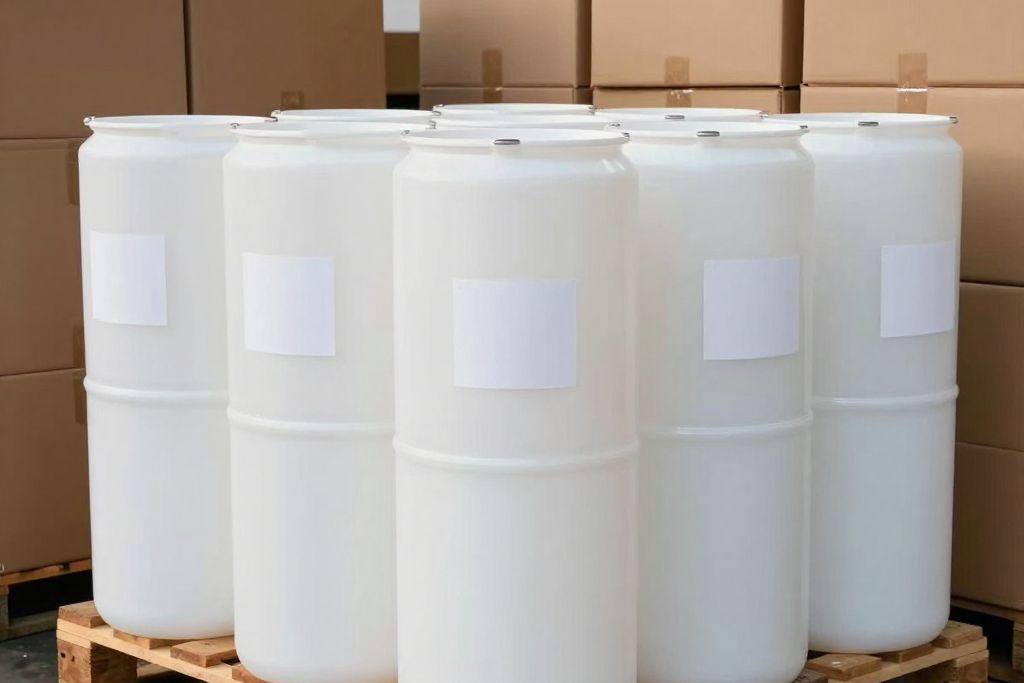
At twenty to eight the two-hundred-kilo drum on the third floor was still half full, the pump head hanging off the rim and dripping onto a rag Xiao Lin had folded underneath. The paste was running at forty-two degrees and the capper was loud enough that I had to stand close to hear May, who was holding her phone up and reading something that had nothing to do with paste.
What she read was the Oregon rule: from the first of January next year, a cosmetic sold in that state that carries one of seventeen listed chemicals above its threshold has to put a hyperlinked warning on the manufacturer's own product page. Not on the carton, not on the drum, on the web page, at no less than seventy-five per cent of the size of the surrounding text, and the buyer must not have to go hunting for it.
Scene 2 · Second floor sample room, 10 a.m. the same morning
At ten the stainless table in the sample room held three sheets, edges lined up the way May leaves them: the Oregon filing of the thirtieth of October, the EU Safety Gate alerts of the twenty-fourth and twenty-sixth of November, and a Nigerian report from the twenty-seventh. Four days, three continents, three sheets, and not one of them about a machine.
The Oregon part is narrow. Seventeen high-priority chemicals, and the threshold depends on how the substance got in. For something added on purpose it is the practical quantification limit, one to one hundred parts per million depending on the chemical; for a contaminant it is one hundred. Benzene sits at one, 1,4-dioxane at twenty, octinoxate at five. The text also says the container and the applicator are out of scope, unless the chemical migrates into the product and testing finds it.
The European sheets are the same story from the other end. On the twenty-fourth Italy notified an aftershave; on the twenty-sixth a Clinique eau de parfum and a Narciso Rodriguez. The sentence is identical every time: according to the list of ingredients the product contains BMHCA, which is prohibited in cosmetics. Lilial went out of EU cosmetics in March 2022, and the alert database still carries more than four thousand entries on it.
Scene 3 · Quality control room, 1.30 p.m.
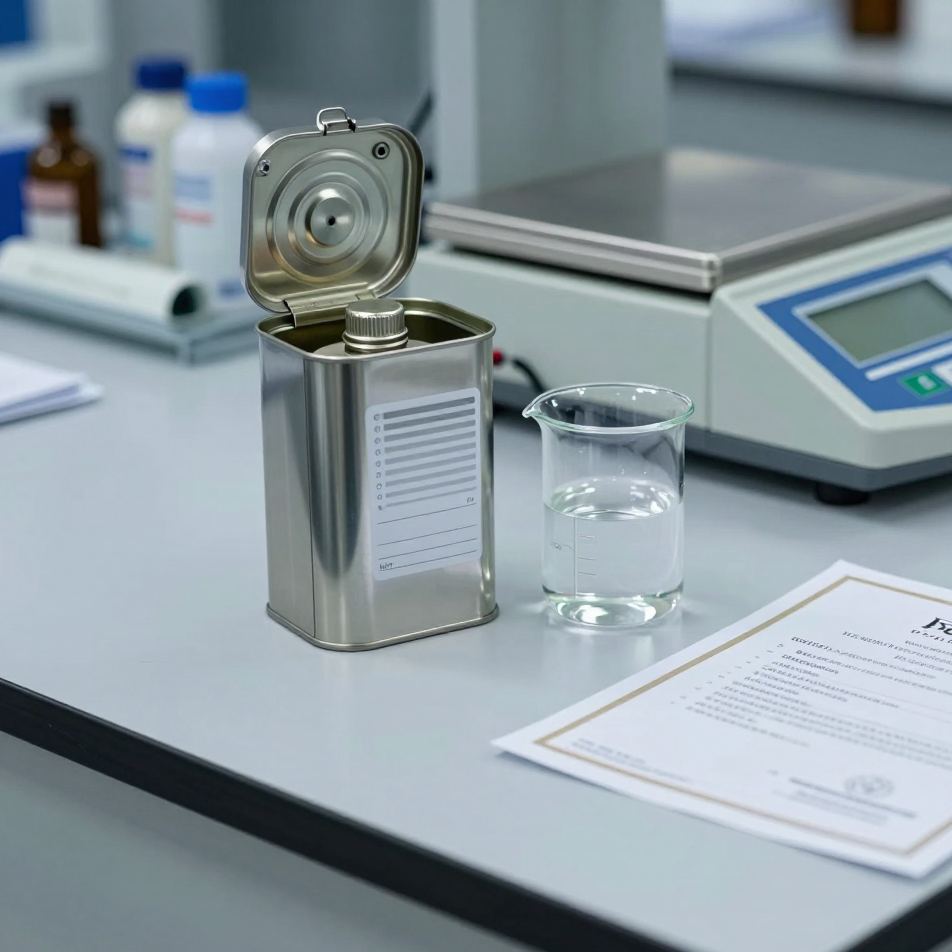
After lunch I went down to QC. Xiao Lin had a five-kilo fragrance can open on the bench with a certificate beside it and the balance already warm. He said the certificate was clean: conforms to IFRA, batch number, date, signature. I asked whether BMHCA was on it. He turned the sheet over twice and said no. A certificate is not obliged to name what is absent.
That is my first judgment, and it lands on the formula. Parfum is one line on the label and two hundred substances in the drum. If the base is pre-scented, the specification has to carry the fragrance code and its version, and the agreement needs a written change notice, because a fragrance house reformulates quietly. Without a declaration of what is absent, a clean certificate proves only that the supplier answered the questions we asked.
Scene 4 · Meeting room, 3 p.m.
At three a new customer sat in the meeting room. Dana runs a small brand out of Portland, sells on her own site, buys base by the pallet. She had the Oregon text printed out and asked me straight: can you give us the warning wording and the numbers for our product page? I said we can give you composition, concentration range, test method and batch report. Your web page we cannot give you.
Second judgment, on the regulatory statement. That warning belongs to the manufacturer whose name is on the product page. We are a base supplier, not that party, and a base is not a cosmetic sold in Oregon. But once her page has to name seventeen substances she will come back for the disclosure pack, and that pack has to be right the first time. A report proves this batch; a declaration binds the next. Both go into the agreement, or neither is worth the paper.
The third sheet was Nigerian, reported on the twenty-seventh: NAFDAC halves the registration fee for companies with five employees or fewer, announced at a small-business summit on the ninth of November, with assisted filing and a support desk alongside. Cheaper registration means more small brands, and small brands order small. Our schedule still assumes one big lot a month. MOQ and lead time stay per project, but the planning rule has to change first.
Scene 5 · Loading bay, 6 p.m.
At dusk I stood at the loading bay with Dana's sample box. Cartons stacked on the pallet, two drums behind them, the floor still wet from the wash-down. I put one extra sheet inside: a two-column list, what we disclose and what the customer discloses, with the test method beside each line. Nobody asked for that page. But whether the next argument happens at the port or in a meeting room depends on it.
Scene 6 · Factory office, 9 p.m.
Back in the office I pulled out the folder from 2019: three letters from fragrance houses, same tone, same message. Ten years ago we shipped goods. Now we ship the paper that proves the goods, and the paper has moved off the drum onto a page nobody in this building controls.

Drum side is ours, page side is hers, and the sheet between them needs a signature.
FAQ
Q: Does Oregon apply now?
A: The rules are proposed: filed on 30 October, comment closed on 23 November, intended to apply from 1 January 2027. We have not seen an adopted text, so prepare against the proposal and do not promise a customer a date.
Q: Is the warning printed on the pack?
A: No. It goes on the manufacturer's product detail page as a hyperlinked phrase leading to a prescribed block of text and a state page. Packaging discarded before use, containers and applicators are out, unless a listed chemical migrates into the product and is found.
Q: What is BMHCA?
A: 2-(4-tert-butylbenzyl)propionaldehyde, the lily-of-the-valley material known as Lilial. Prohibited in EU cosmetics since March 2022. The November alerts all quote the ingredient list, not new toxicity data.
Q: Does a base need its own warning?
A: The duty sits on the manufacturer that sells the finished cosmetic in Oregon; a base is not that product. What the customer will ask us for is composition, range, method and batch report, and those four are what we keep ready.
Q: Can a test report replace a declaration?
A: No. A report speaks for one batch, a declaration binds the batches after it, and it needs a change-notice clause beside it. Keep both in the agreement.
Q: What does the Nigerian fee cut have to do with scheduling?
A: Lower registration cost brings more small brands, smaller lots, shorter cycles. MOQ and lead time remain per project, but planning has to move from one big lot a month to several small ones.
場景1 · 三樓灌裝線,2026 年 11 月 28 日,早上七點四十
早上七點四十,三樓那隻兩百公斤的藍桶還剩半桶,泵頭掛在桶沿上滴,小林在底下墊了一塊抹布。料體四十二度,封蓋機響得我必須站近才聽得清 May 說話;她把手機舉著,唸的卻不是料體的事。
她唸的是俄勒岡那條:明年一月一日起,在該州銷售的化妝品,只要含十七種清單成分之一並超過門檻,就要在製造商自己的產品詳情頁掛一句帶超連結的警示。不貼在紙箱上,不印在桶上,掛在網頁上;字級不得小於周邊文字的七成半,而且買家不用翻找就該看見。
場景2 · 二樓樣品間,同日上午十點
十點,樣品間那張不鏽鋼長台擺了三張紙,紙邊對齊檯沿,是 May 的習慣:十月三十日俄勒岡的立案文件、十一月二十四與二十六日歐盟 Safety Gate 的通報、還有一份二十七日尼日利亞的報道。四天,三個洲,三張紙,沒有一張講機器。
俄勒岡那部分寫得很窄:十七種高優先化學物,門檻看它是怎麼進去的。故意添加的,按實用定量限,一 ppm 到一百 ppm 不等;當污染物帶進來的,一律一百 ppm。苯是一,1,4-二氧六環二十,奧克立林五。條文又明說容器與塗抹器不管,除非成分遷移進產品、而且驗出來。
歐洲那兩張是同一件事的另一頭。二十四日意大利通報一支鬚後水,二十六日通報一支 Clinique 淡香精、一支 Narciso Rodriguez;理由一字不差:成分表列有 BMHCA,該物在化妝品裡禁用。鈴蘭醛二○二二年三月在歐盟就禁了,通報庫裡掛著它的條目仍有四千多條。
場景3 · 品控室,下午一點半
吃過飯我下到品控室。小林把一桶五公斤的香精開在台上,旁邊是證書,天平已經熱好。他說證書很乾淨:符合 IFRA、批號、日期、簽名。我問他上面有沒有 BMHCA。他把那張紙翻了兩次,說沒有。證書不必寫明「沒有什麼」。
這是我的第一個判斷,落在配方上。標籤上「香精」只有一行,桶裡可能有兩百個物質。基料如果是預調香的,規格書就要寫清香精牌號與版本,協議裡要有一條書面變更通知——香精廠改配方是安靜地改的。沒有「不含什麼」的聲明,一張乾淨的證書只證明供應商回答了我們問過的問題。
場景4 · 會議室,下午三點
三點,新客戶坐在會議室。Dana 在波特蘭做一個小品牌,賣在自己的網站上,基料按棧板買。她把俄勒岡那條印出來,問得很直:能不能給我們網頁警示的文案和數字?我說,成分、含量區間、檢測方法、批次報告,我們給;你的網頁,我們給不了。
第二個判斷,落在法規聲明上。那句警示屬於產品頁上掛名的那個製造商;我們是基料供應商,不是那個人,基料也不是在俄勒岡銷售的化妝品。但她的網頁一旦要點名十七種物質,她就會回來要成分披露資料,而那份資料第一次就得對。檢測報告證明這一批,聲明約束下一批;兩樣都寫進協議,不然兩張紙都不值錢。
第三張紙是尼日利亞的,二十七日見報:NAFDAC 對五人以下的企業註冊費減半,措施是十一月九日在小企業峰會上宣布,同時還有協助填報和一個支援台。註冊便宜了,小品牌就多,小品牌下的單就小。我們的排產還按一個月一個大單在排。MOQ 與交期按項目確認,但排產的規矩得先改。
場景5 · 發貨口,傍晚六點
傍晚我站在發貨口,手裡是給 Dana 的樣品箱。棧板上疊著紙箱,後面兩隻桶,地面剛沖過還是濕的。我在箱裡多塞了一頁紙:兩欄清單,一欄我們披露、一欄客戶披露,每行旁邊寫檢測方法。這頁紙沒有人要求過,但下一場爭論是在口岸發生,還是在會議室發生,就看它。
場景6 · 廠區辦公室,夜裡九點
回辦公室,我把二○一九年那個文件夾抽出來:三封香精廠的信,語氣一樣,說的也是一樣的話。十年前我們交的是貨。現在交的是能證明貨的紙,而那些紙已經不在桶上,在一個這棟樓裡沒有人管得著的頁面上。
桶上的字歸我們,網頁上的字歸客戶,中間那頁,得有人簽名。
常見問題
Q:俄勒岡這條現在就要做嗎?
A:規則是提案,十月三十日立案、十一月二十三日截止評論,擬明年一月一日生效。我們沒看到最終採納文本,先按提案準備,別對客戶承諾日期。
Q:警示貼在包裝上嗎?
A:不貼。掛在製造商的產品詳情頁,帶超連結,後面接一段規定文字與州政府頁面。用前就丟的包裝、容器與塗抹器不適用,除非成分遷移進產品並驗出。
Q:BMHCA 是什麼?
A:2-(4-叔丁基苄基)丙醛,香料裡的鈴蘭醛。二○二二年三月起在歐盟化妝品裡禁用;十一月的通報引的都是成分表,不是新的毒性數據。
Q:基料要不要掛警示?
A:責任落在把成品賣到俄勒岡的那個製造商身上,基料不是那個產品。客戶會來要的是成分、含量區間、檢測方法與批次報告,我們備這四樣。
Q:檢測報告能代替聲明嗎?
A:不能。報告只說這一批,聲明約束以後的批次,還要配一條變更通知條款。兩樣都留在協議裡。
Q:尼日利亞減費跟排產有什麼關係?
A:註冊成本降,小品牌變多,批量變小、週期變短。MOQ 與交期按項目確認,但排產要從一個月一個大單,改成幾個小單。
Questions about this process?對這道工序有疑問?
Ask us and we will answer in writing, with the batch records to back it up.問我們,我們會以書面回覆,並附上批記錄。