Five bottles, one evidence line五個瓶子,一條證據線
Five acne and serum lines on the quotation, one yuan forty between the cheapest and the dearest. What separates them is not cost but whether the sentence on the label can be backed by a report — acne claims need a human efficacy test, and so do repairing and nourishing claims.報價單上的祛痘與精華五款,價格只差一塊四。真正拉開距離的不是成本,是瓶子上那句話能不能拿出報告 —— 祛痘宣稱要人體功效試驗,精華的「修護」「滋養」也一樣。
Scene 1 · The client video call, Tuesday morning
The call came in at nine, and Kofi had the quotation open on his screen with one line highlighted: laoshiya acne gel, 30 ml, ¥3.8. He wanted it relaunched under his own brand between Accra and Lagos, and he wanted the label to say what the last supplier's label said — anti-inflammatory, antibacterial, clears acne at the root. He read the three phrases slowly, as if they were the specification.
Qiang let him finish. Then he asked what the last supplier had submitted to get those words approved. Kofi said the words were on the artwork, not in a document. That answer decided the shape of the next two hours: what he was buying was not a gel, it was a sentence he had no evidence for.
May wrote the line down and added a note in the margin. Five lines of this quotation are one family — a gel, an aloe serum, a snail serum, a vitamin C serum and an eye serum. The whole family sits between ¥3.6 and ¥5.0. The prices are almost the same. The claims are not.
Scene 2 · The formulation lab, that afternoon
In the formulation lab, Xiao Lin put the gel base on the bench and walked through the skeleton: salicylic acid for the pore, niacinamide for the sebum and the barrier, azelaic acid for the mark left behind, tea tree oil for the surface. Four mechanisms in one gel. The concentration windows he stated as windows, not as a recipe: salicylic acid commonly 0.5–2.0%, niacinamide 2–5%, azelaic acid 8–10% in private-label work, tea tree oil 0.5–3.0%.
Then the conflicts. Salicylic acid wants a low pH to work; niacinamide is happiest around pH 5.5–6.5. Put both in one bottle and you accept a compromise — roughly pH 4.2–4.8 in the formulation plan — and you run a tolerance test before you ship. Azelaic acid barely dissolves in water, so it has to be pre-dissolved or carried in a microemulsion. Tea tree oil photo-oxidises: a clear bottle on a shelf in Lagos is a colour change waiting to happen.
BPO is the optional one. It is the strongest ingredient in the list and the most regulated: private label at 2.5% or below, the concentration stated on the label, and in several markets treated closer to an OTC medicine than to a cosmetic. Xiao Lin's line was flat — if you want it, it goes on the label, not into the sales conversation.
The gel also has to survive the climate it is going to. Forty degrees and 75% relative humidity for three months, watching pH, viscosity, colour and the actives. A gel that looks perfect in a Chinese winter is not the same gel that arrives in Accra in June.
Scene 3 · The meeting table, early evening
At the meeting table the compliance question landed. In China, a product claiming acne efficacy is an ordinary cosmetic, not a special cosmetic — it is notified, not registered. But the claim itself carries a testing obligation: under the Cosmetics Efficacy Claim Evaluation Specification, acne, nourishing and repairing claims must be supported by a human efficacy evaluation test. Not a lab test. Not literature. A human test.
The 2026 No. 70 announcement widened the range of accepted test methods for other claims, excluding whitening, sunscreen and hair loss — it did not remove the human-test requirement that sits on acne, nourishing and repairing. That matters for the four serums as much as for the gel: the day the artwork says repairs the skin barrier, the same rule applies.
Kofi asked whether the words he had seen on a competitor's bottle were legal anywhere. Qiang said some of them are legal as descriptions of what an ingredient did in a study, and none of them are legal as a product claim in the markets he was selling into. Anti-inflammatory and antibacterial describe a drug action. Clears acne at the root is a cure claim. The lawful sentence is smaller and less exciting: reduces the appearance of blemishes, suitable for blemish-prone skin, a soothing feel.
The cost came with the claim, and Qiang put it on the table instead of softening it. A human efficacy test takes time and money, and it must be run on the formula that goes into the bottle. Change the formula afterwards and the report is describing a product that no longer exists.
Scene 4 · The sample room, next morning
The next morning the five samples stood in a row and the question moved from compliance to selection. May read the lines off the quotation: laoshiya acne gel 30 ml ¥3.8; aloe acne serum ¥3.6; QIANSOTO snail serum 60 ml ¥5.0; QIANSOTO vitamin C serum 35 ml ¥3.6; QIANSOTO vitamin E eye serum ¥4.2.
Xiao Lin sorted them by job rather than by price. The gel is the treatment-positioned one — the only one of the five that carries an acne claim, and therefore the only one that needs a human test before that claim may appear. The aloe serum is the soothing companion: same family language, lower-irritation positioning, no acne claim on the front of the pack. The snail serum is the volume SKU at 60 ml, sold on texture and hydration rather than on a mechanism.
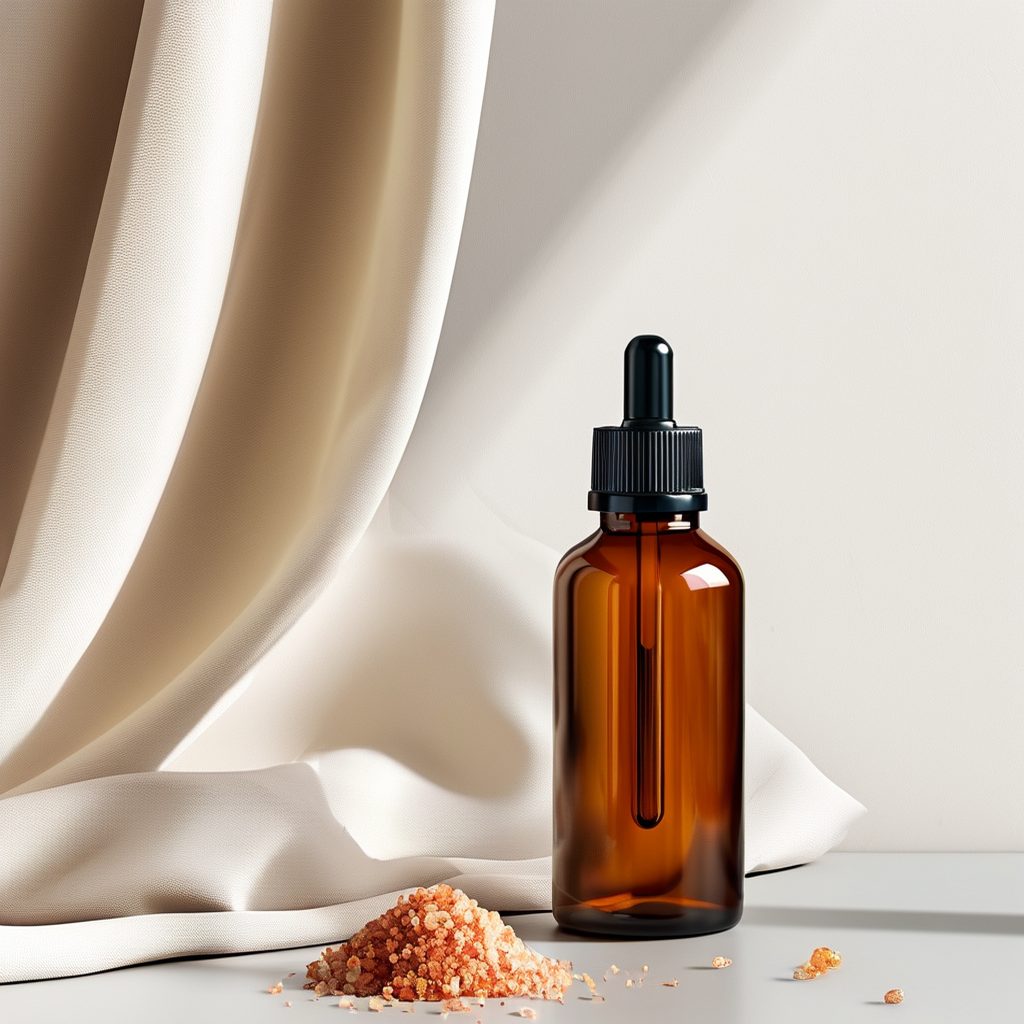
The vitamin C serum is the one that punishes a cheap pack. Ascorbic acid oxidises; a clear bottle and a wide mouth turn a ¥3.6 serum brown before it reaches the shelf. Amber glass, a dropper, a carton, an airless option — that packaging decision is worth more than the difference between two formulas. The eye serum at ¥4.2 has the smallest volume, the highest price and the most delicate claim: the skin around the eye is where suitable for sensitive skin actually gets tested.
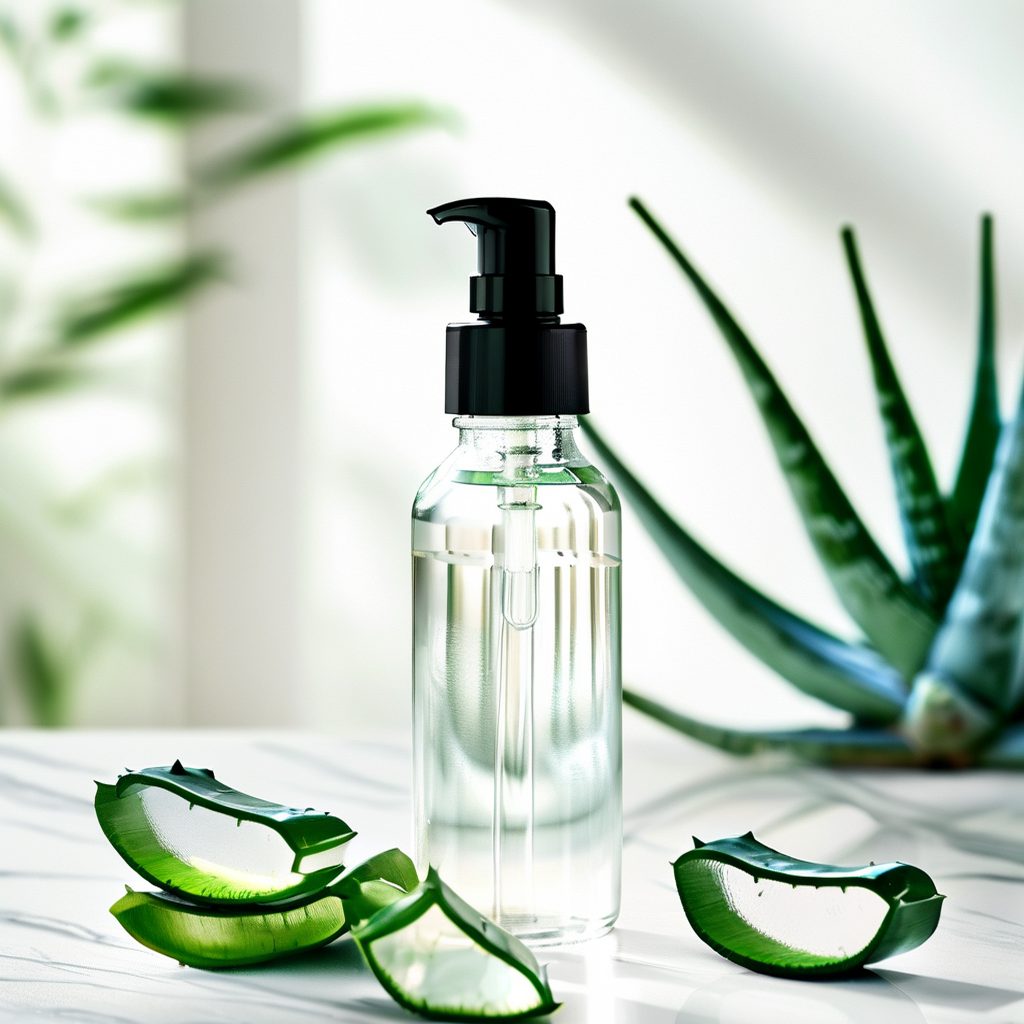
May put the five prices in a column and drew a line under them. One yuan forty between the cheapest and the dearest. A band that narrow means nobody wins this family on price. The packaging, the claim and the channel do the work.
Scene 5 · The corridor, dusk
On the way out, May stopped in the corridor with one page still open: the snail serum. Snail secretion filtrate is animal-derived. In the Gulf an animal-derived ingredient is not a formulation detail, it is a certification question — the source has to be declared, and the Halal documentation has to cover the raw material, not only the factory.
Behind that sits a second problem: consistency. A secretion-based raw material varies by batch and by supplier, and the serum still has to look and feel the same in the second container as in the first. Xiao Lin's answer was to fix the supplier specification and test every incoming lot, or to position the product on what can be measured — hydration, texture, finish — rather than on the origin story.
Kofi asked whether the snail story was worth the trouble. Qiang said the story sells on some shelves and blocks others; the same bottle is two different products depending on where it lands. That is not a reason to drop it. It is a reason to decide the market before the artwork.
Scene 6 · On set, two weeks later
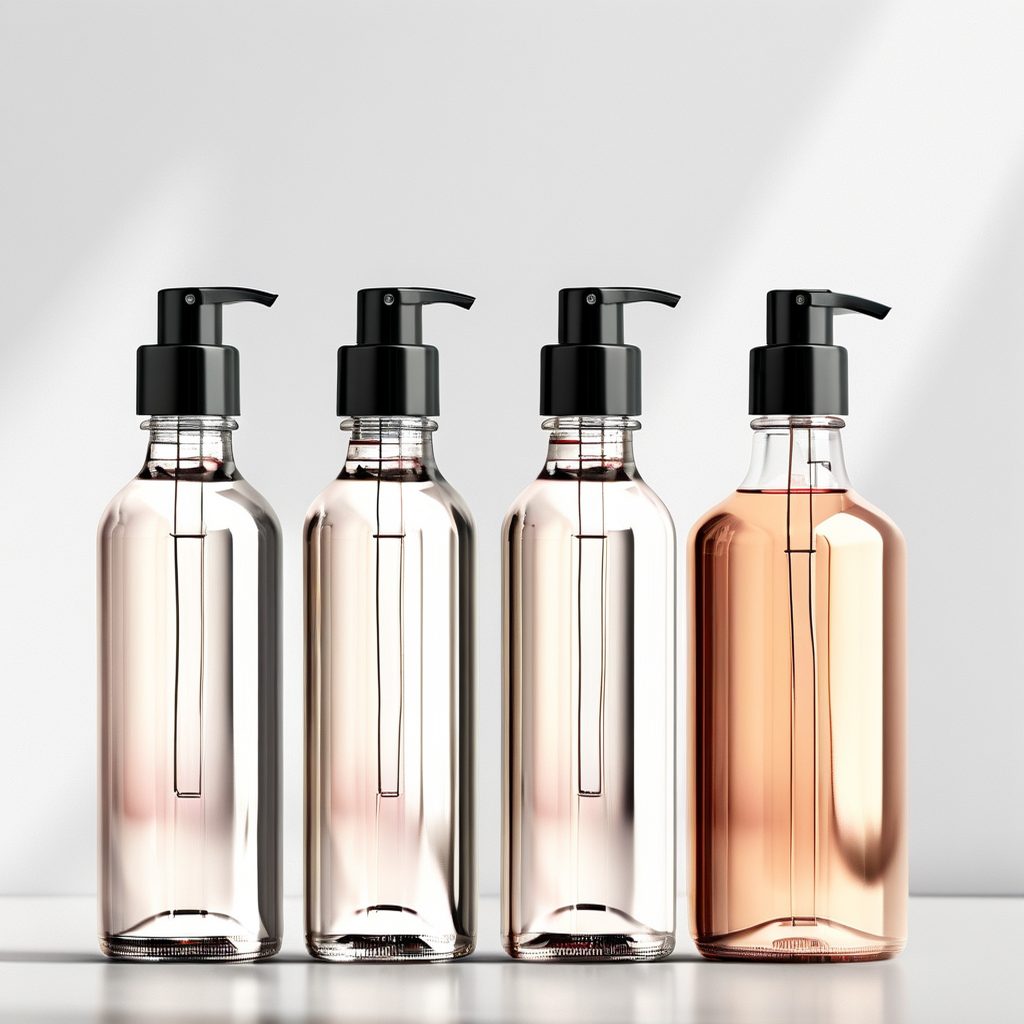
Two weeks later the five SKUs were on a light table under two soft boxes: plain containers, no brand marks. The photographer wanted the gel with a swatch, the four serums in a line, the eye serum alone. May stood at the edge of the frame with the claim sheet, checking each shot against what the label was allowed to say.
Three captions were rewritten on the spot. Fights bacteria became for blemish-prone skin. Repairs the barrier overnight became a light, fast-absorbing texture. Brightens in seven days became vitamin C serum in amber glass. None of the new lines is as exciting as the old ones. All of them can survive a customs check and a marketplace review.
Before the lights went off, Qiang gave the judgement he gives on every line of the quotation that carries a claim. The gel is not sold on how strong the sentence sounds; it is sold on whether the sentence can still be produced when somebody asks for the report. The five bottles cost almost the same to make. What separates them is what each one is allowed to promise.
FAQ
Q: Can we write anti-inflammatory or antibacterial on an acne gel?
A: No. Those describe a drug action rather than a cosmetic effect, and they are not permitted cosmetic claims in China or in most export markets. Lawful alternatives describe appearance and feel: reduces the appearance of blemishes, suitable for blemish-prone skin, a soothing feel.
Q: Does an acne product need a special cosmetics registration in China?
A: Not registration — acne products are ordinary cosmetics and are notified. But the acne claim requires a human efficacy evaluation test under the Cosmetics Efficacy Claim Evaluation Specification, and the same obligation applies to nourishing and repairing claims.
Q: What concentrations do you use in the gel?
A: We quote windows rather than a fixed recipe: salicylic acid 0.5–2.0%, niacinamide 2–5%, azelaic acid 8–10%, tea tree oil 0.5–3.0%, with a pH compromise around 4.2–4.8 and a tolerance test before shipping. BPO is optional at 2.5% or below and must be declared on the label.
Q: What do the five products cost on the quotation?
A: Cost quotes as listed: laoshiya acne gel 30 ml ¥3.8; aloe acne serum ¥3.6; QIANSOTO snail serum 60 ml ¥5.0; QIANSOTO vitamin C serum 35 ml ¥3.6; QIANSOTO vitamin E eye serum ¥4.2.
Q: Why is the snail serum difficult for the Middle East?
A: Snail secretion filtrate is animal-derived, so the source must be declared and the Halal documentation must cover the raw material, not only the factory. Batch-to-batch consistency is the second issue, and it is solved by a fixed supplier specification and incoming-lot testing.
場景一 · 客戶視訊連絡,週二上午
九點,客戶的視訊電話準時進來。Kofi 的螢幕上開著報價單,一條被高亮:laoshiya 祛痘凝膠,30 毫升,¥3.8。他想在阿克拉和拉各斯之間以自有品牌重推這支,標籤上要寫上一個供應商寫的那三句:消炎、殺菌、根治痘痘。他把三個短語讀得很慢,像在念一份規格。
強哥讓他說完。然後他問上一個供應商提交了什麼文件來獲得那些批文。Kofi說那些話寫在了設計圖上,並沒有文件。這個回答決定了接下來兩個小時的方向:他買來的不是凝膠,而是一個他沒有任何證據支持的句子。
May 把這行抄進筆記,邊上補了一句。這一行是五款一個家族——一支凝膠、一支蘆薈精華、一支蝸牛精華、一支維生素C精華、一支眼部精華。整個家族在 ¥3.6 到 ¥5.0 之間。價格幾乎一樣,宣稱並不一樣。
場景二 · 配方實驗室,同日下午
在配方實驗室裡,小林把凝膠基底放在工作臺上,然後逐一介紹:水楊酸用於疏通毛孔,煙酰胺用於調節油脂和屏障,壬二酸用於淡化痕跡,茶樹油用於表面護理。一種凝膠,四種機制。他提到的濃度範圍是窗口,而不是固定配方:水楊酸通常為0.5–2.0%,煙酰胺為2–5%,壬二酸在貼牌生產中為8–10%,茶樹油為0.5–3.0%。
接下來是衝突。水楊酸要低 pH 才起作用;煙酰胺最舒服的區間是 pH 5.5–6.5。放進同一個瓶子裡,就要接受折中——按配方計劃大約 pH 4.2–4.8——出貨前再做耐受測試。壬二酸幾乎不溶於水,必須預溶或用微乳帶著走。茶樹油會光氧化:拉各斯貨架上的一支透明瓶,就是在等一個顏色變化。
BPO 是選配的那一項。它是清單裡最強的成分,也是管得最嚴的:貼牌建議 2.5% 或以下,濃度必須標在標籤上,在好幾個市場裡更接近 OTC 藥品而不是化妝品。小林的說法很平:要用它,就寫在標籤上,不是寫在銷售對話裡。
這款凝膠還要經受它將要面對的氣候考驗。在四十度和相對溼度75%的條件下持續三個月,觀察pH值、粘度、顏色和活性成分。在中國的冬天看起來完美的凝膠,在六月到達阿克拉時就未必是同一種凝膠了。
場景三 · 會議桌,傍晚
在會議桌上,合規問題被提出來了。在中國,宣稱有祛痘功效的產品屬於普通化妝品,而不是特殊化妝品——它需要備案,而不是註冊。但是這個宣稱本身帶有測試義務:根據《化妝品功效宣稱評價規範》,祛痘、滋養和修護的宣稱必須通過人體功效評價試驗來支持。不是實驗室測試。不是文獻。是人體試驗。
2026 年第 70 號公告擴大了其他功效宣稱可接受的試驗方法範圍,祛斑美白、防曬、防脫髮除外——但它沒有取消壓在祛痘、滋養、修護上的「人體試驗」這一條。這對四支精華和凝膠同樣重要:標籤一旦寫上「修護皮膚屏障」,同樣的規則就落到它頭上。
Kofi 問,他在競品瓶子上看到的那幾個詞,在任何地方合法嗎。強哥說,其中一些作為「某個成分在某項研究裡做了什麼」的描述是合法的,但沒有一條可以在他要賣的市場裡作為產品宣稱。消炎、殺菌描述的是藥物作用;根治痘痘是治癒宣稱。合法的那句話小得多,也不那麼帶勁:減少痘痘外觀、適合易長痘肌膚、舒緩。
代價跟著宣稱一起來,強哥把它擺上桌,沒有替它說好話。人體功效試驗要時間要錢,而且必須跑在最終灌進瓶子裡的那個配方上。之後再改配方,報告描述的就是一個已經不存在的產品。
場景四 · 樣品間,隔天上午
隔天上午,五個樣品在樣品間排成一列,問題從合規變成了選擇。May 照著報價單念:laoshiya 祛痘凝膠 30 毫升 ¥3.8;蘆薈祛痘精華液 ¥3.6;QIANSOTO 蝸牛精華 60 毫升 ¥5.0;QIANSOTO 維生素C精華 35 毫升 ¥3.6;QIANSOTO 維生素E眼部精華 ¥4.2。
小林按用途分,不按價格分。凝膠是功效定位的那一支——五款裡唯一帶祛痘宣稱的,所以也是唯一要在宣稱出現之前先做人體試驗的。蘆薈精華是舒緩的搭配款:同一個家族語言,低刺激定位,正標不碰祛痘。蝸牛精華是 60 毫升的容積款,賣質地與保濕,不賣機制。
維生素C精華是對便宜包裝最不客氣的那一支。抗壞血酸會氧化;透明瓶加寬口,會讓一支成本 ¥3.6 的精華在上架前就變褐。琥珀玻璃、滴管、紙盒、無空氣接觸的選擇——這個包裝決定的價值,大於兩個配方之間的差別。¥4.2 的眼部精華容積最小、單價最高、宣稱最脆弱:眼周的皮膚,才是「適合敏感肌膚」真正被檢驗的地方。
May 把五個價格排成一欄,在下面畫了一條線。最貴和最便宜差一塊四。價格帶這麼窄,說明這個系列沒有人能靠價格贏。做功課的是包裝、宣稱和渠道。
場景五 · 走廊,天快黑
出門時 May 在走廊停下,手上還開著一頁:蝸牛精華。蝸牛分泌濾液是動物來源。在海灣地區,動物來源不是配方細節,是認證問題——來源要申報,Halal 文件要覆蓋原料,不只覆蓋工廠。
後面還有第二個問題:一致性。分泌物類原料每批、每個供應商都不一樣,而精華在第二個容器裡的外觀和膚感要跟第一個一樣。小林的答案是固定供應商規格、每批進廠檢測,或者把產品的定位放在能測的東西上——保濕、質地、膚感——而不是來源故事。
Kofi 問,蝸牛這個故事值不值得麻煩。強哥說,這個故事在某些貨架上賣得動,在另一些貨架上直接把門關上;同一支瓶子,落地點不同就是兩個產品。這不是放棄它的理由,是先定市場、再定設計的理由。
場景六 · 拍攝現場,兩週後
兩週後,五個 SKU 上了燈箱,兩盞柔光箱壓著:素面容器,沒有任何品牌標記。攝影師要凝膠配一塊膏體樣一起拍,四支精華排成一行,眼部精華單獨拍。May 站在畫面邊上拿著宣稱表,一張一張對:這張圖配的句子,標籤允許不允許。
三句圖說當場改掉。「抗菌」改成「適合易長痘肌膚」。「夜間修護屏障」改成「輕盈、快吸收的質地」。「七天煥亮」改成「琥珀玻璃瓶裝的維生素C精華」。新句子都不如舊的帶勁,但都能過海關,也能過平台審核。
關燈之前,強哥給了他在每一條帶宣稱的報價單上都會給的判斷。凝膠不是賣句子有多狠,是賣「有人要報告的時候,這句話還拿得出來」。五支瓶子的成本幾乎一樣,把它們分開的,是每一支被允許承諾什麼。
常見問題
Q:祛痘凝膠上可以寫消炎、殺菌嗎?
A:不行。那兩句描述的是藥物作用,不是化妝品效果,在中國和大多數出口市場都不是允許的化妝品宣稱。「根治痘痘」是治癒宣稱,同樣不能寫。合法的是描述外觀與感受:減少痘痘外觀、適合易長痘肌膚、舒緩。
Q:祛痘產品在中國需要特殊化妝品註冊嗎?
A:不需要註冊——祛痘屬於普通化妝品,走備案。但「祛痘」這個宣稱要有人體功效評價試驗報告;「滋養」「修護」的宣稱同樣要。
Q:凝膠裡的濃度是多少?
A:我們給窗口,不給固定配方:水楊酸 0.5–2.0%、煙酰胺 2–5%、壬二酸 8–10%、茶樹油 0.5–3.0%,pH 折中在 4.2–4.8,出貨前做耐受測試。BPO 選配,2.5% 或以下,濃度必須標在標籤上。
Q:這五款在報價單上是多少錢?
A:成本報價如下:laoshiya 祛痘凝膠 30 毫升 ¥3.8;蘆薈祛痘精華液 ¥3.6;QIANSOTO 蝸牛精華 60 毫升 ¥5.0;QIANSOTO 維生素C精華 35 毫升 ¥3.6;QIANSOTO 維生素E眼部精華 ¥4.2。
Q:蝸牛精華為什麼在中東麻煩?
A:蝸牛分泌濾液是動物來源,來源要申報,Halal 文件要覆蓋原料,不只覆蓋工廠。第二個問題是批間一致性,靠固定供應商規格與進廠逐批檢測解決。
Questions about this process?對這道工序有疑問?
Ask us and we will answer in writing, with the batch records to back it up.問我們,我們會以書面回覆,並附上批記錄。