Anti-aging serum: four ingredient routes and the claim line抗老精華:四條原料路線與宣稱紅線
Anti-aging is not one ingredient. The wording is easier to get wrong than the formula.抗老不是一種原料的事。比配方更容易出錯的是說法。
The word "anti-aging" is the easiest kind of thing in cosmetics to get wrong.
It is not the formula that is hard, it is the wording. The same serum, with the formula done right and one promotional sentence written wrong, and the whole batch cannot ship.
This piece covers only two things: the capability boundary of each of the four ingredient routes, and how far a claim can go.
1. Anti-aging is not one ingredient
The market often describes anti-aging as "the efficacy of some ingredient", but in reality anti-aging is several pathways stacked on top of each other. There are four common ones:
· Peptides: some take the "relax the facial muscles" route, some take the "signal the skin so it repairs itself" route. The former acts fast and is also more contested; the latter is slow but steady.
· Retinal / retinol: drives collagen synthesis, and is currently one of the anti-aging ingredients with the most solid evidence behind it. But it also brings the most problems: irritation, photostability and a concentration ceiling, all three of which have to be dealt with.
· PDRN (polydeoxyribonucleotide): a raw material that has seeped over from the medical-aesthetics track in the past two years, selling itself on "repair signals". Of these routes it is the newest, and the easiest to get wrong.
· CoQ10 and other antioxidants: they do not "anti-age" directly, but they reduce oxidative damage, and they are the base layer under the other three routes.
2. Retinal: 0.3% is a ceiling, not a starting point
The EU sets a clear concentration ceiling for retinol-class ingredients: roughly 0.3% in facial products (calculated as retinol equivalent).
There are two common misreadings of that number:
· Misreading one: taking it as a "recommended dose". It is not. It is a ceiling. Going over does not give better results, it puts you in violation.
· Misreading two: assuming all retinol-class ingredients are the same. Retinol, retinal and retinyl esters differ in irritation and in conversion efficiency, and the equivalent conversion cannot be taken for granted.
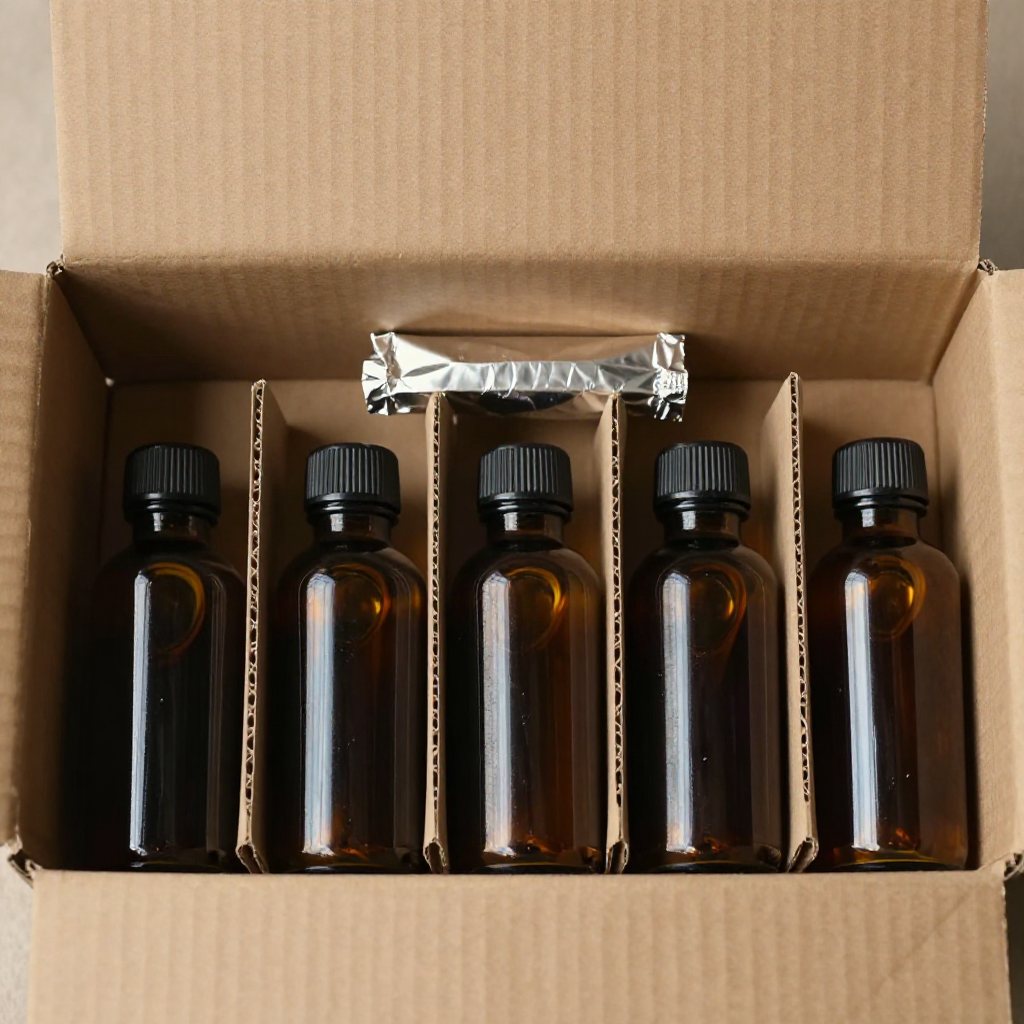
There is one more thing easily overlooked: retinal photodegrades in light. That means light-protective packaging is not a bonus, it is a necessity. Dark bottles, vacuum or inert gas seals, foil pouches: none of these costs can be skipped. Skip them, and half the batch has already degraded by the time it reaches the customer.
3. PDRN: state the concentration basis
PDRN is the raw material whose concentration has been most easily miswritten these past few years.
Writing "contains PDRN" the same way can mean three completely different things:
· The weight percentage of the raw material (for example, 1% PDRN raw material added to the formula)
· The active content in the raw material (the purity stated on the specification sheet the supplier provides)
· The final active concentration in the formula (the result after converting the first two)
Those three figures can differ by one to two orders of magnitude. So writing "contains 0.5% PDRN" externally without stating the basis amounts to saying nothing at all. When it actually comes to verification, the customer holds your label up against the test report, and if they do not match, that is false labelling.
⚠️ The correct practice: state "contains polydeoxyribonucleotide (activity standard see supplier CoA)", rather than writing a bare percentage.
4. Exosomes: usable in the formula, not on the label
This is the section this piece most wants to make clear.
Exosomes have been hot in medical aesthetics and premium skincare these past few years. But in the Chinese market they have one hard boundary:
· From a regulatory standpoint, exosome-related products risk being classified as a medical device, which puts them outside the cosmetics category
· Therefore the word "exosome" cannot appear in Chinese promotional material, filing documents or e-commerce product pages
That creates a very practical dilemma: a customer sees Exosome printed on a competitor's packaging and comes to ask, "how come you don't have it?"
The answer is not "we have it too", but:
"We can discuss the technical route, but we cannot write that word. If we write it, your goods will not clear in China."
⚠️ If related raw materials really are to be used in the formula, there is only one principle: set them out clearly in the technical documents by INCI name, and do not mention a word of it in any external claim.
5. Three claims that go too far
The three sentences that most often cross the line in the anti-aging category:
· "Botox-like" — implies a medical action. Even if the formula really does contain peptides, that sentence needs a large body of clinical evidence behind it, and most markets will not accept it.
· "Medical-aesthetic grade", "simulates the post-injection result of medical aesthetics" — medical aesthetics is a medical act, and a cosmetic cannot borrow the term.
· "Cell-level regeneration", "repairs at the genetic level" — implies a change in physiological function, which falls within the scope of drug claims.
What can be written:
· Improves the appearance of fine lines · Enhances skin firmness · Improves elasticity · Improves radiance · Deep hydration
Where is the difference? You can write how it looks, you cannot write what it actually changes.
6. Incompatibilities
· Retinal + acids (AHA/BHA) + high-concentration pure vitamin C: irritation stacks up, and redness and stinging come easily. If they are to come out in the same series, it is better to split them between morning and evening, or into separate products.
· Peptides + metal ions (iron, copper): the peptides deactivate. The water used in the formula has to be controlled for metal ions, and the packaging must not be one that leaches metal.
· PDRN + strong oxidisers: activity drops straight away.
7. Halal is a whole chain, not an ingredient
Markets such as the Middle East, Indonesia and Malaysia require Halal, and many people assume it is enough to "not use pig-derived raw materials".
What is actually required is system certification: the formula (the origin and processing method of every raw material), the production line (whether it shares a line with other products, and cleaning validation), and storage and transport (whether there is any cross-contamination).
So Halal has to be confirmed before the order is taken, not patched in after the formula is done. If it cannot be patched in, the entire production line has to be rescheduled.
FAQ
Q: Can the concentrations given here be used directly?
A: They are only a reference window. The actual concentration depends on the system, the packaging, the regulations of the target market and the cost, and must be settled by sampling. This piece does not provide a formula that can go straight into production.
Q: Why not give the exact ratios?
A: The exact ratios are the output of sampling and are trade secrets; and with the same set of concentrations, change the thickener or the preservative system and the optimal ratio changes with it.
Q: Can exosomes be used or not?
A: Whether they can be used technically depends on the raw material and the supplier; but they cannot be used in external claims in the Chinese market. The two things have to be looked at separately. Mix them together and something goes wrong.
Q: Is retinal 0.3% a recommended value?
A: No. That is the EU ceiling. Actual use is usually below that figure, and irritation testing has to be done.
抗老這兩個字,是化妝品裡最容易寫錯的一類。
不是配方難,是說法難。同一支精華,配方做對了,宣傳寫錯一句,整批貨就出不去。
這篇只講兩件事:四條原料路線各自的能力邊界,以及宣稱能寫到哪。
一、抗老不是一種原料的事
市面上常把抗老說成「某個成分的功效」,實際上抗老是好幾條路徑疊起來的。常見的有四條:
· 胜肽:一部分走「放鬆表情肌」的路子,一部分走「給皮膚信號、讓它自己修」的路子。前者見效快、爭議也大;後者慢,但穩。
· 視黃醛/視黃醇:促進膠原蛋白合成,是目前證據最紮實的抗老成分之一。但它的問題也最多——刺激性、光穩定性、濃度上限,三樣都得處理。
· PDRN(聚脫氧核糖核苷酸):近兩年從醫美賽道滲透過來的原料,主打「修復信號」。它是這幾條路線裡最新、也最容易講錯的一條。
· 輔酶 Q10 等抗氧化劑:不直接「抗老」,但能減少氧化損傷,是其他三條路線的底座。
二、視黃醛:0.3% 是上限,不是起點
歐盟對視黃醇類成分有明確的濃度上限,面部產品大約在 0.3%(以視黃醇當量計)。
這個數字有兩個常見誤解:
· 誤解一:以為這是「建議用量」。不是,這是上限。超過不是效果更好,是違規。
· 誤解二:以為所有視黃醇類都一樣。視黃醇、視黃醛、視黃醇酯的刺激性和轉化效率都不同,當量換算不能想當然。
還有一個容易被忽略的:視黃醛見光分解。這意味著避光包材不是加分項,是必需品。深色瓶、真空或惰性氣體封口、鋁箔袋,這些成本省不得——省了,貨到客戶手上已經降解了一半。
三、PDRN:濃度基準必須說清楚
PDRN 是這幾年最容易被寫錯濃度的一個原料。
同樣寫「含 PDRN」,可能指三種完全不同的東西:
· 原料的重量百分比(例如配方裡加了 1% 的 PDRN 原料)
· 原料裡的活性物含量(供應商提供的規格書上寫的純度)
· 配方中最終活性濃度(前兩者換算後的結果)
這三者的數字可以差一到兩個數量級。所以對外寫「含 PDRN 0.5%」而不說明基準,等於什麼都沒說——真要核實的時候,客戶拿你的標籤跟檢測報告一對,對不上就是虛假標註。
⚠️ 正確做法:標註「含聚脫氧核糖核苷酸(活性標準見供應商 CoA)」,而不是直接寫一個百分比。
四、外泌體:技術上可能用得上,宣稱上不能用
這是本文最想說清楚的一節。
外泌體(Exosomes)這幾年在醫美和高端護膚裡很熱。但在中國市場,它有一個硬邊界:
· 監管上,外泌體相關產品有被歸類為醫療器械的風險,不在化妝品範疇內
· 因此,在中國的宣傳物料、備案資料、電商詳情頁上,不能出現「外泌體」字樣
這帶來一個很實際的困境:客戶看到競品的包裝上寫著 Exosome,會來問「你們怎麼沒有」。
答案不是「我們也有」,而是:
「技術路線我們可以討論,但這個詞我們不能寫。寫了,你們的貨在中國就過不了。」
⚠️ 如果確實要在配方裡使用相關原料,原則只有一條:技術文件裡按 INCI 寫清楚,對外宣稱一個字都不提。
五、三個超範圍的宣稱
抗老品類最常越界的三句話:
· 「類肉毒」——暗示醫療作用。就算配方裡真的有多肽,這句話也需要大量臨床證據支撐,而且多數市場不接受。
· 「醫美級」「模擬醫美注射術後效果」——醫美是醫療行為,化妝品不能借用這個說法。
· 「細胞級再生」「從基因層面修復」——暗示改變生理功能,屬於藥品宣稱的範疇。
可以寫的是:
· 改善細紋的外觀 · 提升肌膚緊緻感 · 提升彈性 · 改善光澤 · 深層保濕
差別在哪?可以寫「看起來怎麼樣」,不能寫「實際改變了什麼」。
六、配伍禁忌
· 視黃醛 + 酸類(AHA/BHA)+ 高濃度純維 C:刺激性疊加,容易泛紅刺痛。要同系列出,建議分開早晚或分開產品。
· 多肽 + 金屬離子(鐵、銅):多肽會失活。配方用水要控金屬離子,包材也不能用會析出金屬的。
· PDRN + 強氧化劑:活性直接下降。
七、Halal 是全鏈條,不是某個成分
中東、印尼、馬來西亞這些市場要 Halal,很多人以為是「不用豬源原料」就行。
實際上要的是體系認證:配方(所有原料的來源與處理方式)、產線(有沒有和其他產品共線、清洗驗證)、倉儲與運輸(有沒有交叉污染)。
所以 Halal 要在接單前確認,不能在配方做完之後補。補不上,整個產線要重排。
常見問題
Q:這篇給的濃度可以直接用嗎?
A:只能當參考窗口。實際濃度取決於體系、包材、目標市場法規與成本,必須打樣確定。本文不提供可直接生產的配方。
Q:為什麼不寫精確配比?
A:精確配比是打樣結果,屬於商業機密;而且同一組濃度,換一種增稠劑或防腐體系,最佳比例就變了。
Q:外泌體到底能不能用?
A:技術上能不能用要看原料與供應商;但在中國市場的對外宣稱上不能用。這兩件事要分開看,混在一起就會出事。
Q:視黃醛 0.3% 是建議值嗎?
A:不是。那是歐盟的上限。實際用量通常低於這個數字,而且要做刺激性測試。
Questions about this process?對這道工序有疑問?
Ask us and we will answer in writing, with the batch records to back it up.問我們,我們會以書面回覆,並附上批記錄。