
The Clay Ate the Preservative泥把防腐劑吃掉了
A brand owner in Manila had twenty thousand labels printed and a mall slot booked when her clay mask base failed the challenge test at day fourteen. The same preservation system passes in a cream base; the difference is fifteen points of bentonite.馬尼拉的品牌方印好了兩萬張標籤、訂好了商場檔期,泥膜基的挑戰測試卻在第十四天把黴菌讀了回來 —— 同一套防腐體系在膏霜基裡是過的,差別只有那十五個百分點的膨潤土。
Scene 1 · A brand office in Pasig, Metro Manila, Monday morning
Liza's office sits on the seventeenth floor of a tower in Pasig. Three sheets of paper were spread across her desk: a printed sample of the twenty thousand labels already run, a mall slot confirmation for the last week of November, and the business licence her importing company obtained last year. What she wanted was simple. Six drums of clay mask base leaving the plant on 20 November, and shelves stocked by 1 December.
May read the artwork before she read anything else. Two lines worried her: a brightening claim, and a phrase about drawing impurities out. She asked one question, who wrote those words and what supports them. Liza said marketing wrote them three months ago, before a formula existed, and the artwork had already gone to the printer.
The bigger problem was inside the drum. Bentonite at fifteen percent, kaolin at five, a water phase near sixty-eight: a wet paste going into a wide-mouth jar that a customer digs into with two fingers. That format carries a microbial risk a pump bottle never has, and the risk does not disappear because the drum is called a base material.
Liza gave the answer the industry always gives: it is a base material, and problems belong to whoever fills it. May did not argue. She turned the calendar around instead. A challenge test runs twenty-eight days from the day of batching, and until that report exists, the twenty thousand labels are waste paper with a nice finish.
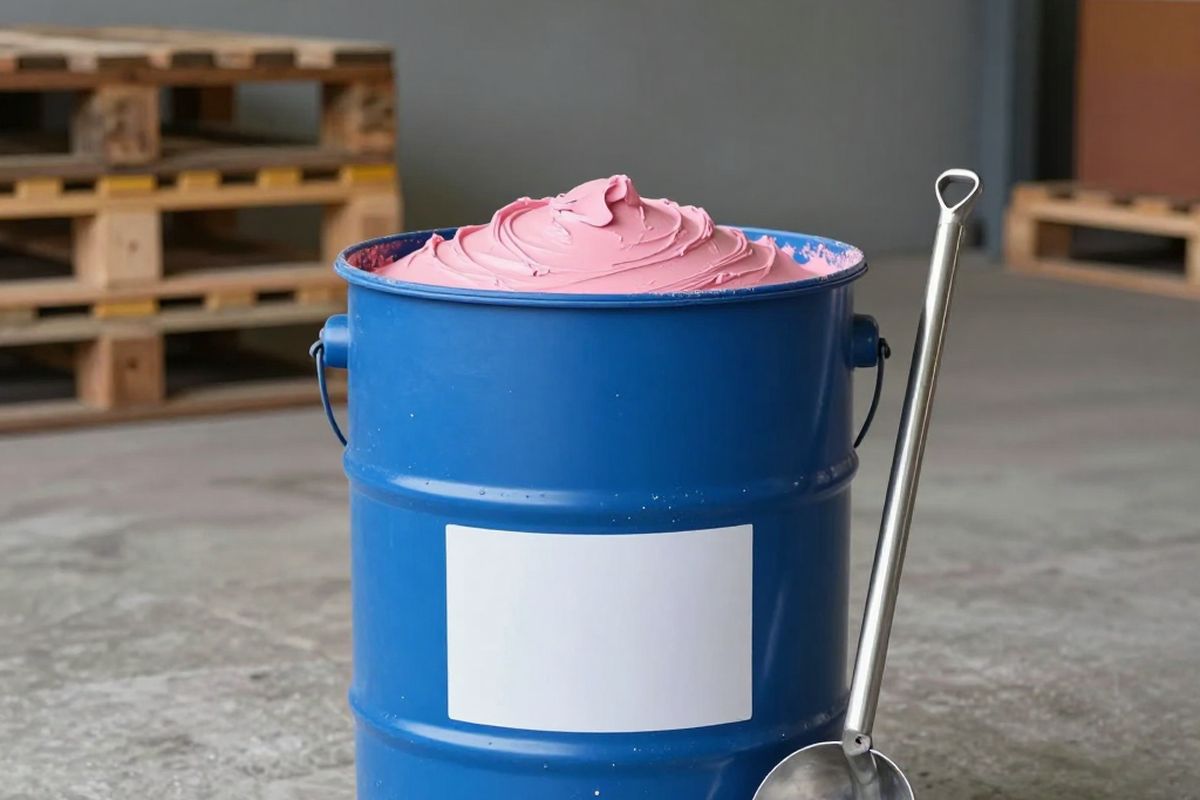
The cost was easy to count. A mall day not trading is a day gone, the labels were paid for, and the Manila warehouse bills by the week. Liza said she could wait ten days, and not twenty-eight. May said they should first find out which day the test fails on, and then argue about whether ten days could be made to work.
Scene 2 · The microbiology room at the Guangzhou lab, Tuesday afternoon
Xiao Lin's microbiology room is small: two rows of incubators, one laminar flow cabinet, and an old desktop computer that only holds colony counts. Six wide-mouth jars from the same batch stood on the bench, each inoculated with Staphylococcus aureus, Pseudomonas aeruginosa, E. coli, Candida albicans and Aspergillus brasiliensis, then read at day seven, day fourteen and day twenty-eight the way ISO 11930 asks.
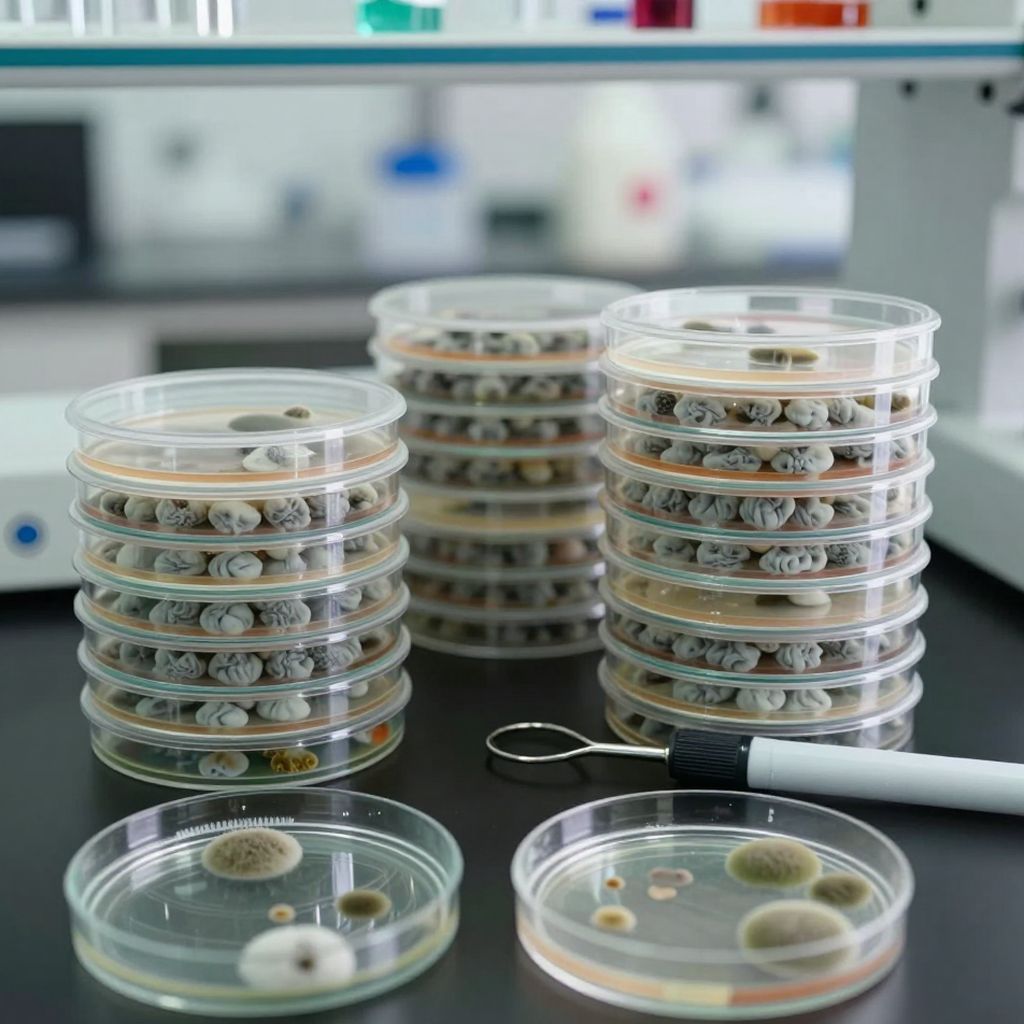
Day seven looked fine. Bacteria fell by more than three logarithms and Xiao Lin wrote a cautious note in the margin. Day fourteen brought the mould back: the Aspergillus count was climbing again from its post-inoculation low, and Candida had only dropped a little over one logarithm. He read the numbers twice before he wrote them down.
He set three jars side by side: a plain cream base, the clay base, and the clay base with extra preservative he had added himself. Same system, same use level. The cream base passed. The clay base did not. The only difference between them was fifteen points of bentonite.
His conclusion was blunt: the preservative was not short, it was gone. The free concentration had been taken up by the mineral surface, and adding more only raised the total on the batch record without raising the part that actually kills things. He booked a recovery test to measure total and free separately.
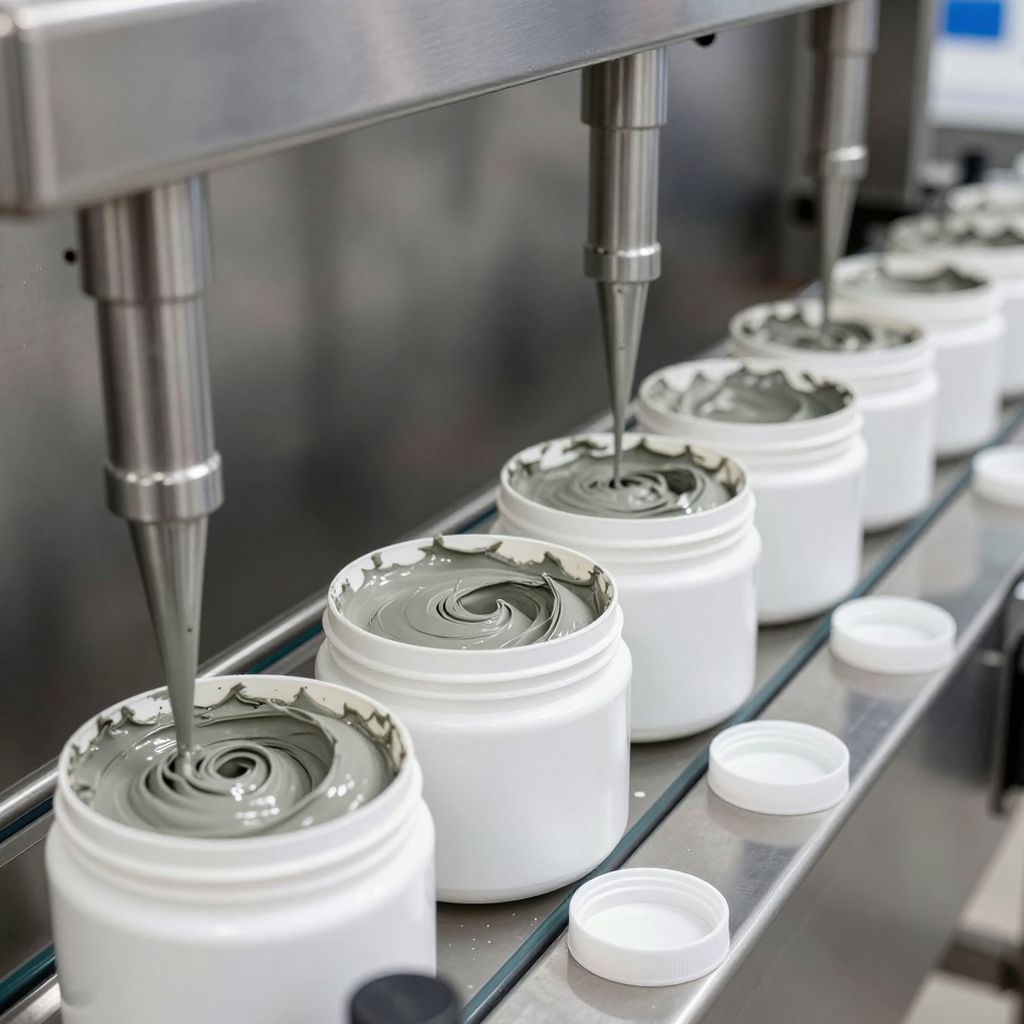
May put that paragraph into an email to Manila in one plain sentence: shipping this batch now means handing a preservation system nobody has tested to twenty thousand strangers, who will open the jar with wet fingers in a bathroom in Quezon City.
Scene 3 · The formulation bench, Wednesday morning
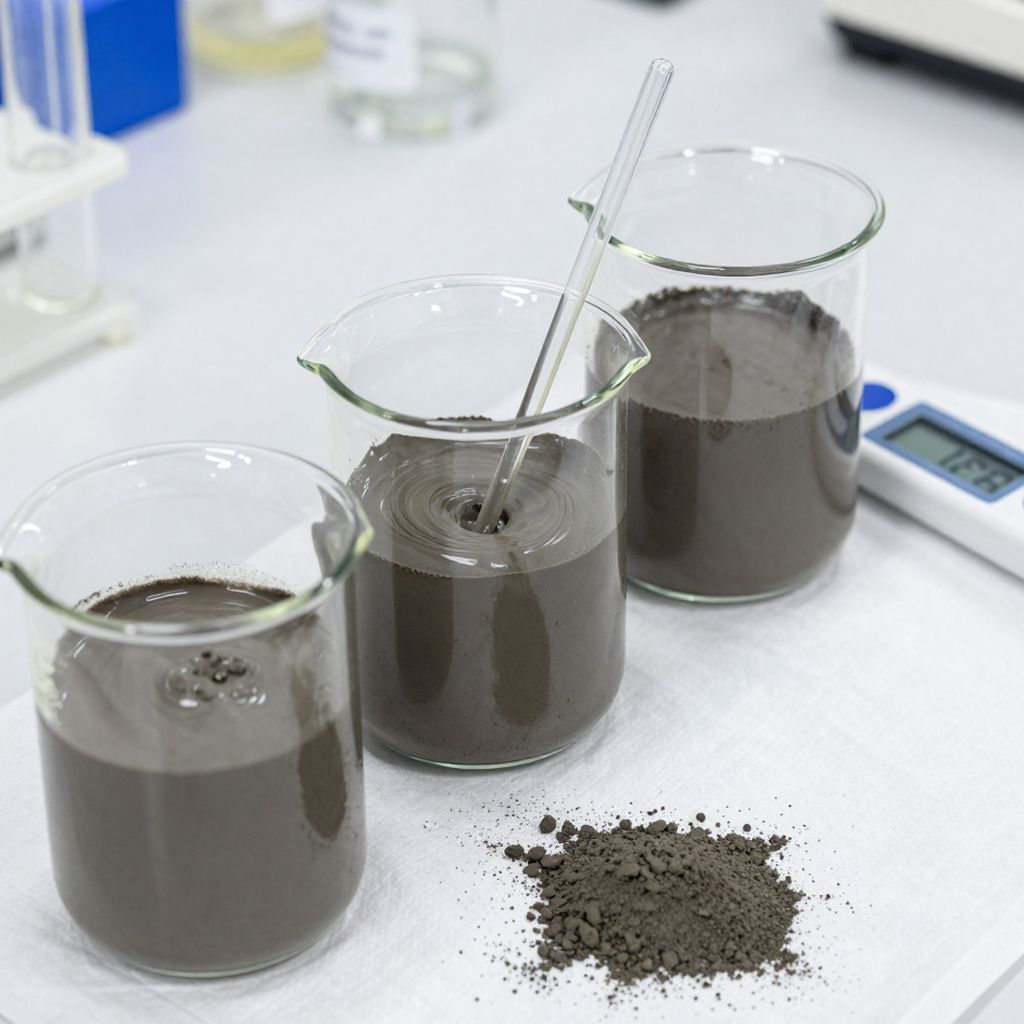
The number that decided the whole argument was the cation exchange capacity. Smectites such as bentonite carry seventy to one hundred and twenty milliequivalents per hundred grams; kaolinite and talc carry fifteen to twenty. Four to eight times the binding capacity, which is why clay is not one preservation problem but at least two.
Cationic preservatives, the quaternary ammonium family, barely survive in bentonite: ion exchange pulls them onto the mineral surface and recovery is poor. Organic acids lose their useful undissociated fraction as pH climbs toward seven, so the working window is pH five to five and a half. And phenoxyethanol is capped at one percent in the ASEAN annex, which leaves no room to simply add more.
Three options went on the bench. One: drop bentonite to eight percent and lift kaolin to twelve, which keeps the system simple and costs some of the thick, cool feel. Two: move to a mainly non-ionic system with glycols as support, which costs money and needs the odour rebalanced. Three: leave the clay ratio alone and fight with pH, chelation and water activity, the riskiest of the three and the one the customer wanted most.
Xiao Lin had one line: the customer buys thick, cool and fast-drying, so protect the sensory first and take option two. Ethan asked a different question. If the system changes, the twenty-eight days start again, and what happens to the mall slot in the meantime.
Ethan set three rules in the meeting. This batch does not ship. The test is re-run, and the cost stays inside the factory. And Liza gets something she can take into a negotiation: a small first batch, claims removed, labels reprinted. Nobody in the room pretended the third rule was free.
He added one remark about colour. Bentonite shifts shade between deposits, and that is geology, not a defect. If a customer cannot live with it, the specification has to say natural mineral colour variation in writing, instead of a return note every three months. That sentence later went into the spec sheet.
Scene 4 · A video call across two time zones, Wednesday evening
It was already nine in the evening in Manila when the call connected. May held three sheets up to the camera: the LTO, the CPN, and the product name field on an invoice. She said these are three different things in the Philippines, and most first-time importers treat them as one.
To import or distribute cosmetics, the company itself needs a License to Operate, which covers the establishment and the activity. The product then needs a Certificate of Product Notification, one per product. Without an LTO nobody can notify, and if the LTO is suspended, the notifications already issued go with it.
A CPN's validity is chosen by the applicant, one to three years, and it can only be renewed on or before the expiry date. The automatic issuance is worth understanding too: it acknowledges a complete submission, not a technical review of the formula. Responsibility for what goes on the market stays with the holder of the notification.
The ASEAN annexes keep moving. The Philippines folded the amendments from the fortieth to forty-second committee meetings in through FDA Circular 2026-0001, with compliance dates running from 2026 to 2028. Xiao Lin added one sentence: the permitted preservatives list is Annex VI, and a formula that misses it will not be saved by a beautifully filed notification.
On the twenty thousand labels May said very little. The drum carries no claims, that is a factory rule, because a claim on a raw material drum pulls the customer's obligation onto our steel. The jar is Liza's call, but brightening and drawing impurities out are claims that need support, and skin lightening has been a named enforcement target for years.
Liza asked the most practical question of the night: then how do I write my invoice. May said the product name on the invoice and packing list has to match the name on the CPN, because those are the two sheets customs reads. Call it clay mask base while the CPN says something else, and the container waits at the port for a reason that has nothing to do with quality.
Scene 5 · The filling plant and the loading yard, Friday
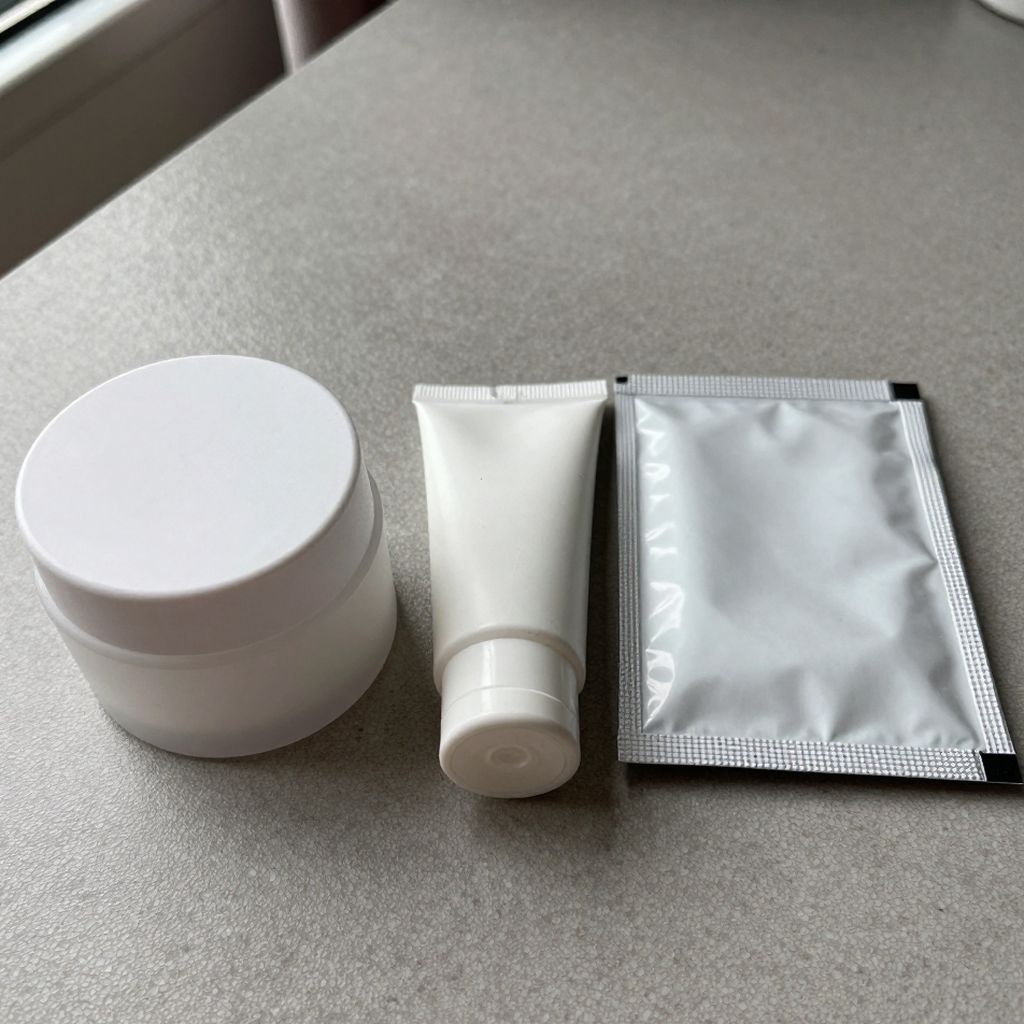
On Friday morning the sample room held three formats: a wide-mouth jar, a tube, and a foil pouch. Xiao Lin argued for the tube, because every opening is an exposure event and a tube reduces that to almost nothing. The jar looks better on shelf and sells itself, and it pushes the preservation system to its limit.
Liza chose the jar, for a reason that was also true: in Manila this category lives in jars on the shelf, and changing the pack means re-educating the shopper. May accepted it and wrote the conditions in: six months after opening, keep water out of the jar, and a lid that actually seals.
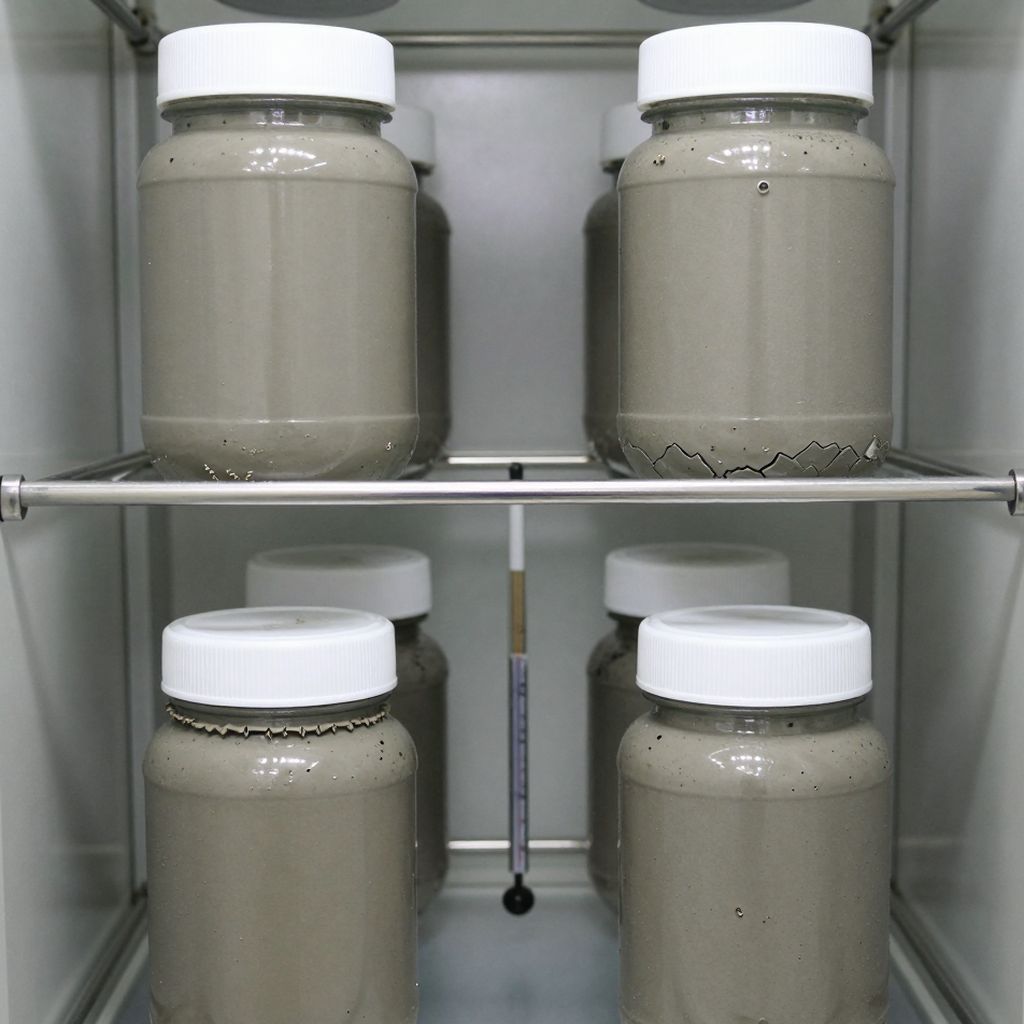
The stability room runs forty degrees at seventy-five percent humidity for three months plus freeze-thaw cycles. The failure mode in a clay paste is rarely separation. It is surface skinning and a dry ring at the jar thread, and Manila makes both worse because air conditioning and street heat alternate all day and the jar wall condenses.
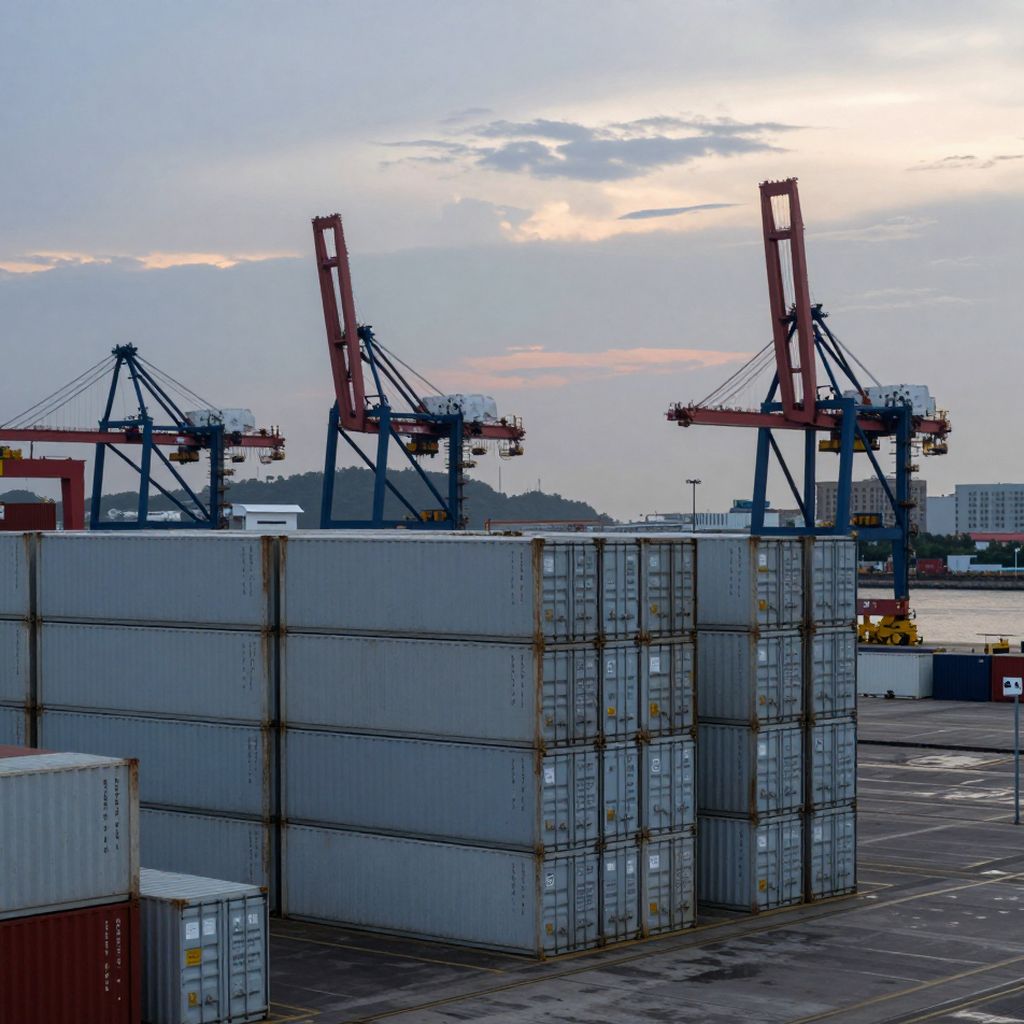
The drums have the same problem at sea. Forty days in a container that reaches fifty degrees by day and drops at night, and water condenses inside the lid and drips back. The plant's answer is an inner liner with desiccant, two seals on the lid, and no drums against the container door.
The twenty-eight day result came out on the second Friday. In the revised system the mould count was below the limit of detection by day fourteen, and every criterion held at day twenty-eight. Xiao Lin wrote two characters on the report: acceptable.
The bill was settled the same way. Twenty thousand labels reprinted, three weeks of mall slot given up, a small first batch flown instead of shipped, and that freight difference paid by Liza. The re-test and the formulation hours stayed with the factory. Ethan said one sentence: we pay what is ours, we do not sign what we cannot support.
When the second batch sailed, the drum still carried six lines and no claims. The jar carried Liza's brand and the notification number on the base. The sailing schedule held, the warehouse kept billing, and nobody asked again whether ten days would have been enough.
FAQ
Q: Why does a clay mask base need more preservative care than a cream base?
A: Not more preservative, but a counted free fraction. Bentonite binds charged preservative molecules onto the mineral surface through ion exchange, so the total in the formula is not the amount available to protect the product. The work is to measure recovery, design around the free concentration, then prove it with a challenge test to ISO 11930. Adding more is limited anyway: phenoxyethanol is capped at one percent under the ASEAN annexes.
Q: What documents can the factory supply with a bulk base shipment?
A: A batch COA with microbiological and heavy metal results, the full INCI list, an SDS, stability and challenge test reports, and the process parameter sheet. Heavy metals are tested against the ASEAN limits: mercury 1 ppm, lead 20 ppm, arsenic 5 ppm, cadmium 5 ppm. Free sale certificates, authorisation letters and legalisation are handled per destination market. MOQ, lead time and price are confirmed per project.
Q: Who files the Philippine CPN, the factory or the brand?
A: The brand, through its local entity. A CPN can only be submitted by an establishment holding a Philippine FDA License to Operate for the relevant activity, and an overseas factory does not hold one. What the factory can do is prepare the pack the notifier needs: formula, INCI, test reports, label wording and the manufacturing site details.
Q: If the drum carries no claims, what does it say?
A: Six kinds of content: product name, batch number, net weight, production date, storage conditions, and handling precautions. Claims belong to the finished product and to the notification holder. A claim printed on a raw material drum moves the customer's regulatory obligation onto our steel, and can get the consignment treated as a finished cosmetic at the border.
Q: After a formula change, is the customer's existing notification still valid?
A: A formula change is a substantive change and needs a new notification rather than carrying on with the old number. That is exactly why the delivery schedule is agreed before the formula is touched, and not after: a reformulation quietly eats months of someone else's shelf plan.
Q: Can a clay mask be made preservative-free for marketing?
A: A water-containing paste cannot. Water activity is high and the jar is opened repeatedly, so the exposure is real. A powder format is a different risk profile and relies on the incoming mineral specification instead. On this line we write process and compliance, not zero-additive marketing language.
場景1 · 馬尼拉帕西格一間品牌辦公室,週一上午
Liza 的辦公室在帕西格一棟塔樓的十七層,桌上攤著三張紙:一張是已經印好的兩萬張標籤樣,一張是商場給的十一月底檔期確認,一張是她進口公司去年拿到的營業執照。她要的東西很簡單——十一月二十日,六桶泥膜基從廠裡出,十二月一日,貨上架。
May 先看的是標籤樣。上面有兩行字讓她停住:一句美白宣稱,一句「吸出雜質」。她只問了一句:這兩個字誰寫的,憑什麼。Liza 說市場部三個月前寫的,那時候連配方都還沒有,現在已經送去印了。
更麻煩的在桶裡:膨潤土十五個百分點,高嶺土五個,水相接近六十八——這是一個含水的膏體,裝進廣口瓶,客人每次用手指挖。這種形態的微生物風險比泵瓶高一個級別,而這個風險不會因為桶上寫著「基料」三個字就消失。
Liza 給的是行業裡最常見的那句:這是基料,出了問題是灌裝廠的事。May 沒有爭。她把日曆轉過來:挑戰測試從投料那天起算二十八天,報告不出來,那兩萬張標籤就是印刷精美的廢紙。
代價是可以算的:商場一天不做就空一天,兩萬張標籤的錢已經付了,馬尼拉的倉租按週計。Liza 說她能等十天,等不了二十八天。May 說,那就先弄清楚測試卡在哪一天,再來談十天夠不夠。
場景2 · 廣州實驗室的微生物室,週二下午
小林的微生物室不大:兩排培養箱、一個無菌操作台、一台只拿來記菌數的舊電腦。台上擺著同一批泥膜基的六個廣口瓶,分別接了金黃色葡萄球菌、銅綠假單胞菌、大腸桿菌、白色念珠菌和黑麴黴,按 ISO 11930 的判讀方式,第七天、第十四天、第二十八天各讀一次。
第七天看起來很好,細菌掉了三個對數以上,小林在邊上寫了一句「暫可」。第十四天黴菌回來了:黑麴黴的菌數從接種後的低點重新往上爬,白色念珠菌只降了一個多對數。他把數字讀了兩遍才寫進記錄本。
他把三只瓶並排放:一只純膏霜基、一只泥膜基、一只泥膜基加上他自己補的防腐。同樣的體系、同樣的添加量。純膏霜基過了,泥膜基沒過。兩者唯一的差別,是那十五個百分點的膨潤土。
他的結論很直:不是防腐劑不夠,是防腐劑不見了。游離濃度被礦物表面吃掉了,加得再多,只會讓批記錄上的總量好看,真正起作用的那一部分並沒有變多。他排了一次回收率測定,把總量和游離量分開稱。
May 把這一段寫進給馬尼拉的郵件,用了一句很白的話:這批貨現在發,等於把一個沒人測過的防腐體系,交給兩萬個陌生人,在奎松市的浴室裡用手指去試。
場景3 · 配方台,週三上午
決定整場爭論的是一個數字:陽離子交換容量。膨潤土這一類蒙脫石在每百克七十到一百二十毫當量,高嶺土和滑石只有十五到二十。吸附能力差四到八倍,所以「泥」不是一個防腐問題,至少是兩個。
陽離子型防腐劑,也就是季銨鹽那一族,在膨潤土裡幾乎留不住:離子交換把它們拉上礦物表面,回收率很差。有機酸類隨著 pH 往七走,有效的未解離比例掉得很快,工作窗口在 pH 五到五點五。而苯氧乙醇在東盟附錄裡上限就是百分之一,根本沒有「多加一點」的空間。
三個方案擺上台面。一:膨潤土降到八個百分點、高嶺土提到十二,體系最簡單,代價是那種厚、涼的手感會少一截。二:改成以非離子為主、用二醇類助防腐,成本上升,氣味要重新調。三:不動泥的比例,靠 pH、螯合劑和水活度去壓,風險最高,偏偏是客戶最想要的那個。
小林只有一句話:客戶買的就是厚、涼、乾得快,先把感官保住,走第二個方案。強哥問的是另一件事:體系一換,二十八天從頭跑,客戶那個檔期怎麼辦。
強哥在會上定了三條:這批不發;測試重跑,費用記在廠裡;給 Liza 一樣能拿去談判的東西——小批先行、宣稱拿掉、標籤重印。屋子裡沒有人假裝第三條不要錢。
他補了一句關於顏色的話:膨潤土不同礦源之間本來就有色差,那是地質,不是瑕疵。客戶接受不了,就把「礦物來源天然色差」寫進規格裡,而不是每三個月來一張退貨單。這句話後來真的寫進了規格書。
場景4 · 一場跨時區的視訊會議,週三晚上
視訊接通的時候馬尼拉已經晚上九點。May 把三張紙舉到鏡頭前:LTO、CPN,還有一張發票上的品名欄。她說這三樣在菲律賓是三件事,第一次進口的人多半當成一件。
進口或分銷化妝品,公司本身要先有 LTO,也就是經營許可,管的是場所和活動;產品再要有 CPN,一個產品一份通知。沒有 LTO 就通知不了,LTO 一旦被停,已經發出去的通知也跟著出事。
CPN 的有效期由申請人自己選,一年到三年,而且只能在到期日當天或之前續,過了就得重新申請。自動發證這件事也要看明白:它只確認你交齊了,不等於 FDA 審過配方,上市之後的責任還在通知持有人身上。
東盟的附錄這幾年在改,菲律賓用 FDA Circular 2026-0001 把第四十到四十二屆會議的修訂併進來,合規期從二〇二六年排到二〇二八年。小林補了一句:防腐劑清單就在附錄 VI,配方對不上,通知交得再漂亮也是空的。
關於那兩萬張標籤,May 說得很少:桶上不印功效,這是廠裡的規矩,因為原料桶上寫了宣稱,等於把客戶的責任提前搬到我們的鐵桶上。罐上是 Liza 的決定,但美白和「吸出雜質」都是要拿得出依據的宣稱,而美白類產品這幾年一直是被點名的重點。
Liza 問了當晚最實際的一句:那我的發票怎麼寫。May 說,發票和裝箱單上的品名必須跟 CPN 上的名字對得上,因為海關看的就是這兩張紙。CPN 上寫的是成品名,發票上寫「泥膜基」,貨就會停在碼頭,理由跟品質一點關係都沒有。
場景5 · 灌裝廠與裝櫃場,週五
週五上午,樣品間擺了三個版:廣口瓶、軟管、鋁箔袋。小林主張軟管,理由是每次開蓋都是一次暴露,軟管把這個機會壓到最低。廣口瓶好看、好賣、導購喜歡,但它把防腐體系推到極限。
Liza 選了廣口瓶,理由也真實:這個品類在馬尼拉的貨架上就是廣口瓶,換包裝等於重新教育客人。May 接受了,但把條件寫進去:開封後六個月、不要讓水進罐子、蓋子要真的密合。
穩定性室是四十度、七十五濕度三個月,加冷熱循環。泥膜基最常出的不是分層,是表面結皮和罐口那一圈乾環;馬尼拉把這兩件事都放大,因為冷氣房和街上高溫一天裡來回切換,罐壁會結露。
桶在海上是一樣的道理。四十天的航程,貨櫃白天能到五十度,晚上回落,水氣在桶蓋內側凝了又滴回去。廠裡的做法是內袋加乾燥劑、桶蓋兩道封、裝櫃時桶不靠門。
二十八天的結果在第二個星期五出來:改過的體系,第十四天黴菌已經降到檢出線以下,第二十八天全項通過。小林在報告上寫了兩個字:可以。
賬照樣結。兩萬張標籤重印,商場檔期讓出三週,先發的一小批走空運、運費差額 Liza 自己認;重跑的測試和改配方的工時記在廠裡。強哥只說了一句:該我們認的認,不該簽的字不簽。
第二批出海的時候,桶上還是六行字,沒有一句功效;罐上是 Liza 的牌子,罐底印著通知號。船期照舊,倉租照收,沒有人再提十天夠不夠。
常見問題
Q:泥膜基的防腐為什麼比膏霜基難做?
A:不是加得更多,是要把游離量算清楚。膨潤土透過離子交換把帶電的防腐分子吸附到礦物表面,配方裡的總量不等於真正能保護產品的量。做法是先測回收率,按游離濃度設計體系,再用 ISO 11930 的挑戰測試去證明。而且加量本來就有天花板:苯氧乙醇在東盟附錄裡上限是百分之一。
Q:半成品出貨時,工廠能提供哪些文件?
A:批次 COA(含微生物與重金屬)、完整 INCI 成分表、SDS、穩定性與挑戰測試報告、工藝參數表。重金屬按東盟限值口徑測:汞 1 ppm、鉛 20 ppm、砷 5 ppm、鎘 5 ppm。自由銷售證明、授權書、公證認證這類文件按目的國要求另議。MOQ、交期與價格一律按項目確認。
Q:菲律賓的 CPN 是工廠申請還是品牌方申請?
A:品牌方,透過它的本地公司。CPN 只能由持有菲律賓 FDA 相應 LTO 的企業提交,境外工廠沒有這個身份。工廠能做的是把通知人要用的資料包準備好:配方、INCI、測試報告、標籤文案、生產場所資料。
Q:桶上不寫功效,那桶上寫什麼?
A:六類內容:品名、批號、淨重、生產日期、儲存條件、注意事項。功效宣稱屬於成品,也屬於通知持有人。印在原料桶上,等於把客戶的合規義務搬到我們的鐵桶上,還可能讓這票貨在邊境被當成成品查。
Q:配方改過之後,客戶原來那份通知還有效嗎?
A:配方變更屬於實質變更,要重新提交通知,不能拿舊號碼繼續賣。這也正是為什麼改配方之前先跟客戶對檔期,而不是改完再通知:一次改配方,會安安靜靜吃掉別人好幾個月的貨架計劃。
Q:泥膜能不能做成「無防腐」來講故事?
A:含水的膏體不行。水活度高,罐子還要反覆開蓋,暴露是實實在在的。粉末形態是另一種風險結構,靠的是進廠礦物的規格控制。這條線上我們只寫工藝與合規,不寫「零添加」那種行銷詞。
Questions about this process?對這道工序有疑問?
Ask us and we will answer in writing, with the batch records to back it up.問我們,我們會以書面回覆,並附上批記錄。