
It does not work straight away它不會馬上有效果
A foot mask is an acid product. On the day you use it, nothing visible happens; the keratin starts shedding three to seven days later. That rhythm is not a flaw, it is the mechanism — and it is both the hardest and the best thing about selling this category.足膜是酸類產品:敷完當天什麼都看不到,三到七天角質才開始掉。這個節奏不是缺點,是這個品類的機制 —— 也是它最難賣、最好賣的地方。
Scene 1 · The showroom, morning
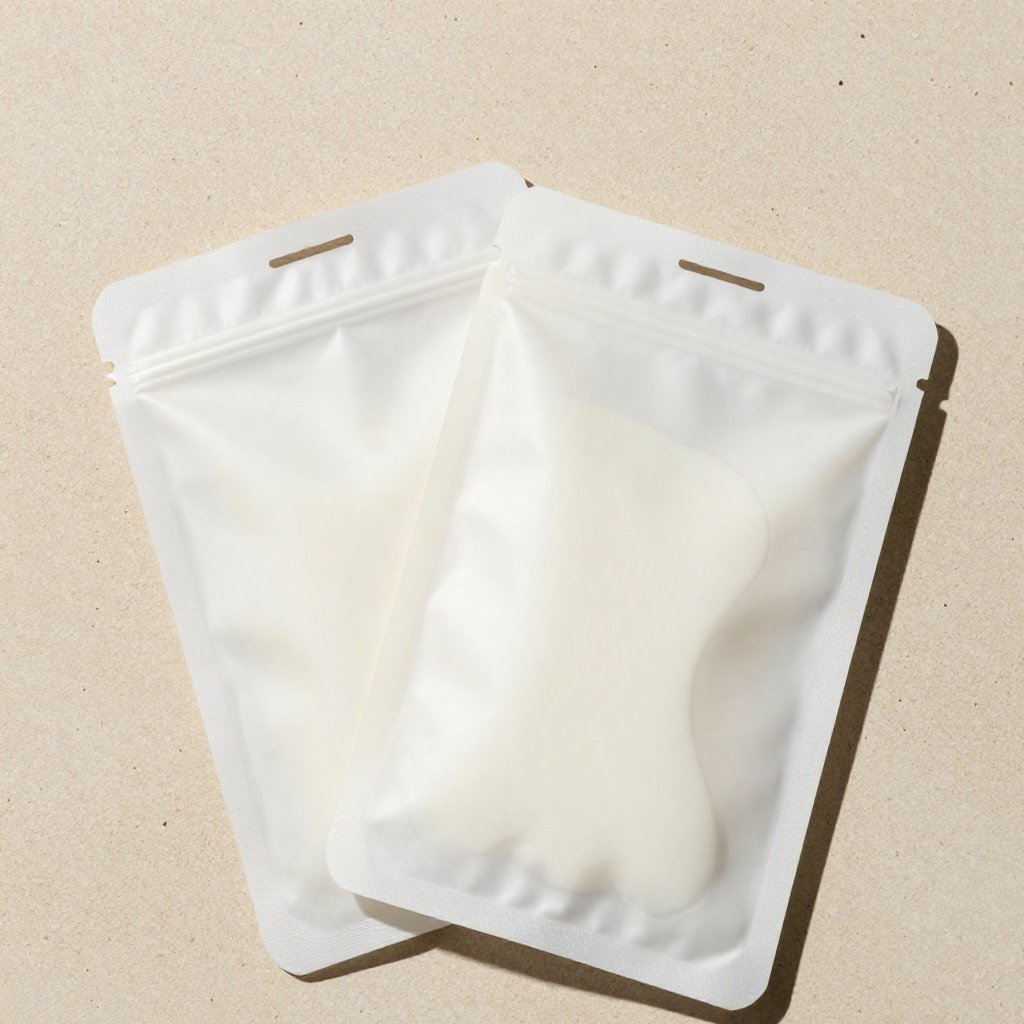
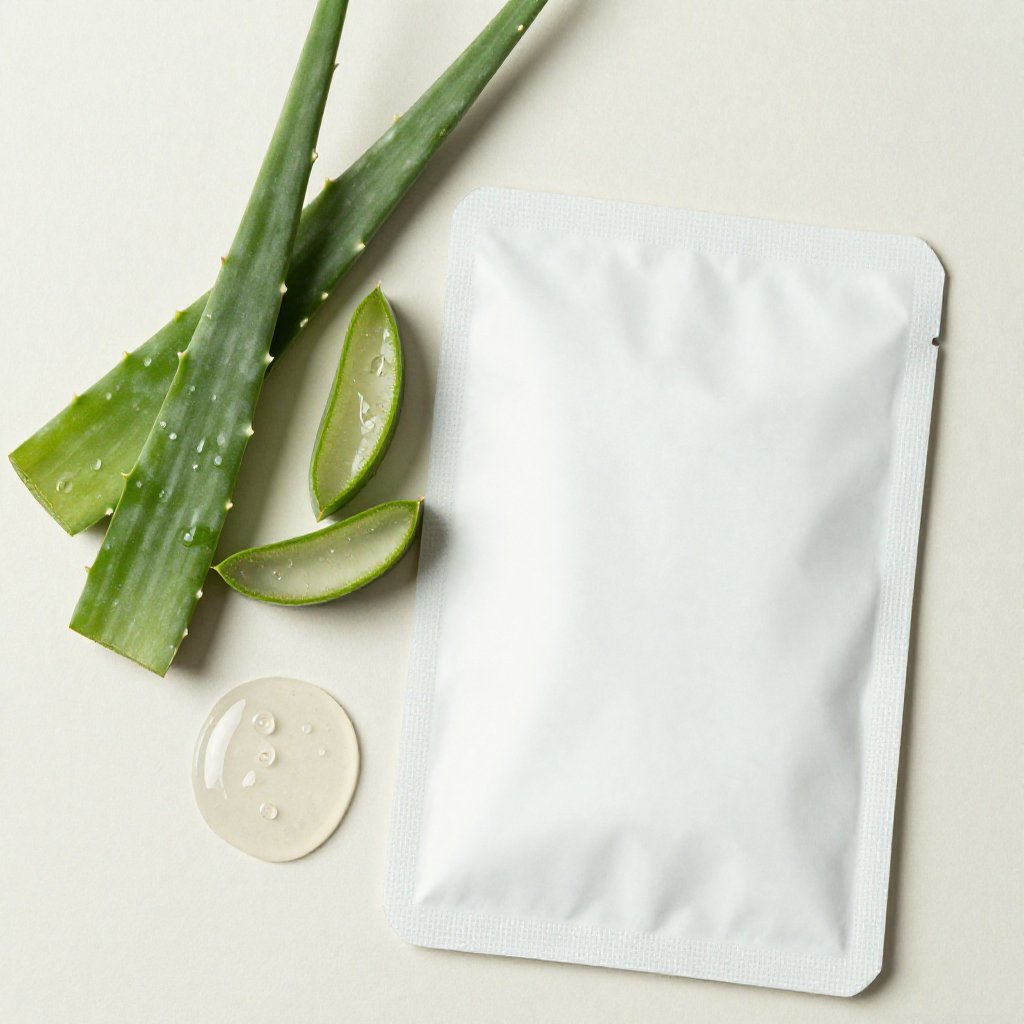
May set the two foot mask sachets on the table. One was labeled vitamin C, the other aloe.
"Both of these are the two-pair pack, six twenty," she said.
"Do you know the hardest part of selling this product?" Qiang asked.
"What part?"
"That it doesn't work right away."
May looked up.
"A foot mask isn't something that leaves your feet glowing the moment you take it off," Qiang said. "It's an acid product — you apply it, wrap it up, wait forty minutes, and then over the next three to seven days the keratin on your feet comes off layer by layer."
"So the customer sees nothing at all on the day she uses it."
"Nothing at all," Qiang said. "And on day one she may even decide it didn't work; it's day five before she notices that whole sheets of skin are coming off."
May looked down at the two sachets.
"Then how do we sell it?"
"By explaining the timeline first."
Scene 2 · The workbench, continuing
"The formula for a foot mask is actually very simple," Qiang said. "Four things."
"First, acids. Lactic, glycolic, salicylic, that family — they dissolve the bonds between the cells of the stratum corneum."
"Second, urea. It softens keratin and holds water at the same time."
"Third, humectants. Glycerin, butylene glycol. Because acids dry the skin out, a foot mask has to replenish moisture at the same time, or once the peeling is done the customer will feel her feet are rougher than before."
"Fourth, a thickener. It keeps the liquid clinging to the skin so it doesn't run straight down to the soles the moment it goes into the bag."
"So the active ingredient is the acid," May said.
"Right, but the concentration is the key," Qiang said. "If the acid is too weak, nothing comes off after the soak and the customer feels cheated. If it's too strong, what comes off isn't keratin, it's skin — stinging, redness, uneven tone left behind."
"How do you set that line?"
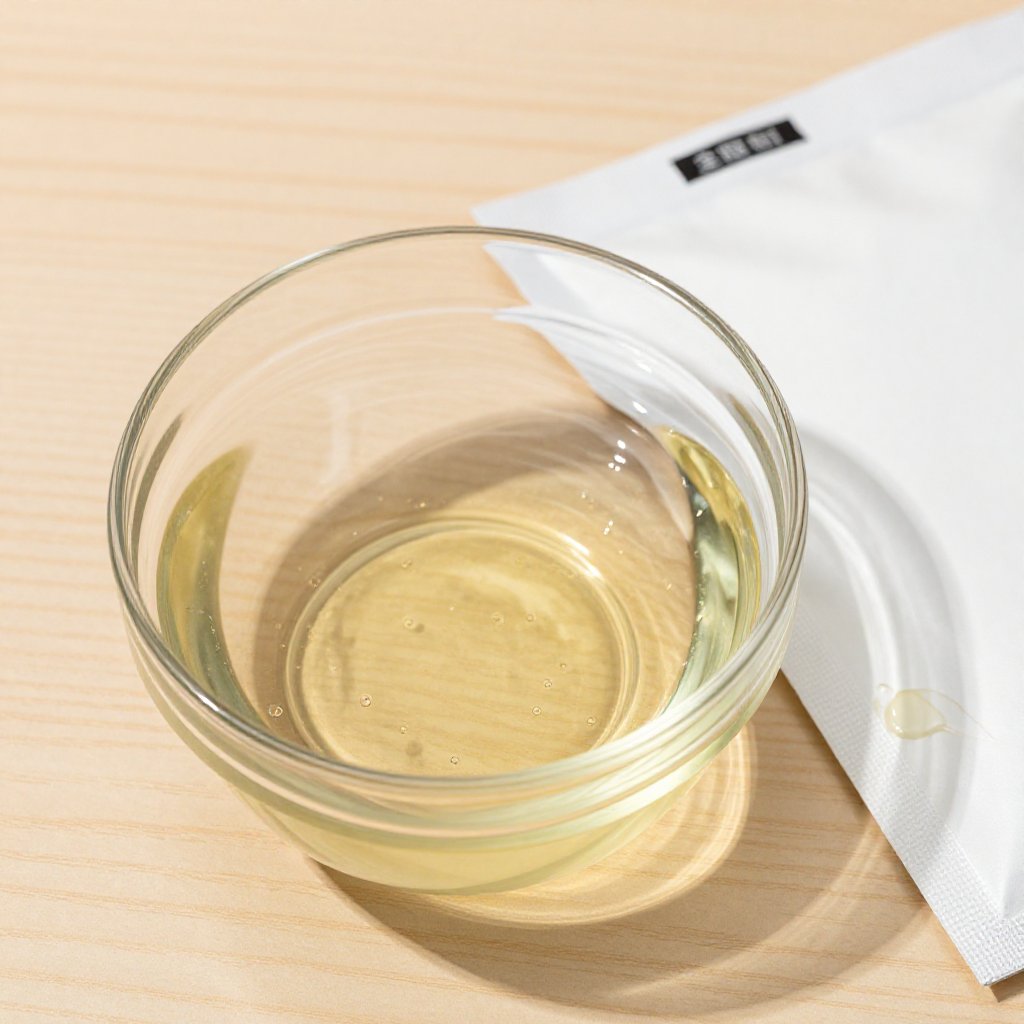
"By testing," Qiang said. "Not by the formula sheet. At the same concentration, the reaction on dry skin and on damp skin is completely different."
"So a foot mask absolutely has to be tested on people."
"Absolutely," Qiang said. "And you have to test for seven days — because the keratin doesn't come off on the same day."
Scene 3 · The meeting table, afternoon
The first question the client asked as he sat down was, "Can we write 'works in one use'?"
Qiang shook his head.
"Why not? Everyone in the market writes that."
"Because it isn't a product that works in one use," Qiang said. "Acids need time to dissolve keratin, and the keratin needs time to shed. If you write 'works in one use' and the customer sees nothing on the day she uses it, she'll decide it's useless, and then she'll return it."
"Then what do we write?"
"Write the real timeline," Qiang said. "Shedding begins in three to seven days and completes in one to two weeks. That isn't a flaw — that's the mechanism of this category."
The client frowned. "Won't customers not want to buy it if we write that?"
"You'll sell a little less," Qiang said. "But you'll lose a great many 'it didn't work' complaints."
He put down his pen.
"And the timeline itself can sell — three to seven days later the customer comes back and tells you 'it really is coming off.' That feedback is stronger than 'works in one use.'"
"It's a delayed-gratification product," May added.
"Exactly," Qiang said. "So on the packaging you give them a schedule to look forward to, not the line 'works in one use.'"
Scene 4 · The shooting room, two days later
"How do we shoot the video for a foot mask?" May asked.
"Shoot the process, not the result," Qiang said.
"Why?"
"Because the result is hard to shoot — most people find the sight of peeling skin uncomfortable," Qiang said.
"Then what do we shoot?"
"Three stages," he said. "First, the moment it goes on, the liquid inside the bag settling against the foot. Second, taking it off forty minutes later, when the foot is wet and bright. Third, day five — there you can shoot a piece of keratin being peeled away, but that piece has to be small, not the whole foot."
"Why does it have to be small?"
"Because a large piece turns people's stomachs," Qiang said. "A small piece is evidence; a large piece is horror. The only difference between the two is one camera distance."
May wrote "evidence versus horror" on her tablet.
"One more thing," Qiang said. "Don't shoot close-ups on a real foot. A silicone foot model is enough — you can shoot it ten times with no likeness issues, and you can control the light."
Scene 5 · The warehouse, evening
"Three thousand pairs of each of the two versions in this batch," May said. "The client is asking whether we can turn them into gift boxes."
"We can, and we should," Qiang said.
"Why?"
"Because a foot mask is a low-frequency product," Qiang said. "Two or three uses a year is enough for one person. If you sell a single box, the repurchase cycle is too long; make it a two-pair gift box or a three-piece set and the average order value goes up, and the gift occasion lets you sidestep the question of how often someone uses one herself."
"But the packaging cost will go up."
"It will," Qiang said. "But a foot mask has the character of a gift item to begin with — in the festive gift boxes of Southeast Asia and the Middle East, foot masks have always been a high-frequency pick."
May noted the gift box matter down.
"One more thing," Qiang said. "A foot mask is a liquid in a sachet, and it leaks in transit."
"How do we prevent that?"
"Three things," he said. "The seal has to pass an airtight seal test, the outer box needs an insert, and when packing, the sachets go in upright — not stacked on top of each other."
"If you skip this one, half the shipment leaks before it arrives, and the client won't place a second order."
FAQ
Q: Why can't you see the effect on the day you use a foot mask?
A: A foot mask dissolves keratin with acids, and keratin takes time to shed. Usually shedding begins in three to seven days and completes in one to two weeks. This isn't the product failing; it's the mechanism of the category.
Q: What's the difference between the vitamin C foot mask and the aloe foot mask?
A: Both are two-pair packs at the same price. The acid and urea backbone is the same; the difference lies in the care ingredients added — the vitamin C version leans toward a brightening claim, the aloe version toward a soothing claim. The exact formula is subject to the shipped goods.
Q: Can we write "works in one use"?
A: Not recommended. Writing it brings a large number of "no effect" complaints and returns. We recommend writing the real timeline: shedding begins in three to seven days and completes in one to two weeks.
Q: How should the foot mask video be shot?
A: Shoot the process rather than the result. Three stages: applying, removing (wet and bright), and a small piece of keratin on day five. A silicone foot model is recommended — it avoids likeness issues and also makes the lighting easier to control.
Q: What should we watch out for in shipping?
A: A foot mask is a liquid in a sachet, so the seal integrity test is required, the outer box needs an insert, and the sachets must be packed upright, not stacked on top of each other.
場景一 · 展示間,上午
May 把兩個足膜袋放在桌上。一袋寫維C,一袋寫蘆薈。
「這兩袋都是兩雙裝,六塊二。」她說。
「你知道這個產品最難賣的地方在哪嗎?」強哥問。
「在哪?」
「在它不會馬上有效果。」
May 抬起頭。
「足膜不是敷完就亮的東西。」強哥說,「它是酸類產品 —— 塗上去、包起來、等四十分鐘,然後接下來三到七天,腳上的角質一層一層掉。」
「所以客人敷完當天什麼都看不到。」
「什麼都看不到。」強哥說,「而且第一天還可能覺得沒用,第五天才會發現整片皮在掉。」
May 低頭看了看那兩袋。
「那怎麼賣?」
「先講清楚節奏。」
場景二 · 工作台,接著
「足膜的配方其實很簡單。」強哥說,「四樣東西。」
「第一,酸。乳酸、甘醇酸、水楊酸這一類 —— 溶解角質層之間的連接。」
「第二,尿素。軟化角質,同時抓水。」
「第三,保濕劑。甘油、丁二醇。因為酸類會讓皮膚乾,足膜必須同時補水,不然客人掉完皮會覺得腳更粗。」
「第四,增稠。讓液體掛在皮膚上,不會一進袋子就流到腳底。」
「所以有效成分是酸。」May 說。
「對,但濃度是關鍵。」強哥說,「酸太低,敷完什麼都不掉,客人覺得被騙;酸太高,掉的不是角質,是皮膚 —— 會刺痛、會紅、會留下色差。」
「這個度怎麼定?」
「靠測試。」強哥說,「不是靠配方表。同一個濃度,在乾燥的皮膚上和在潮濕的皮膚上,反應完全不同。」
「所以足膜一定要做人群測試。」
「一定要。」強哥說,「而且要測七天 —— 因為角質掉落的時間不是當天。」
場景三 · 會議桌,下午
客戶坐下來問的第一句話是:「能不能寫一次見效?」
強哥搖了搖頭。
「為什麼?市場上都這樣寫。」
「因為它不是一次見效的產品。」強哥說,「酸類溶解角質需要時間,角質剝落也需要時間。你寫一次見效,客人敷完當天看不到,就會覺得無效,然後退貨。」
「那寫什麼?」
「寫真實的節奏。」強哥說,「三到七天開始剝落、一到兩週完成 —— 這不是缺點,這是這個品類的機制。」
客戶皺了一下眉:「這樣寫,客人不會不想買嗎?」
「會少賣一點。」強哥說,「但你會少掉大量的『沒效果』投訴。」
他把筆放下。
「而且這個節奏本身可以賣 —— 三到七天之後,客人會回來跟你說『真的在掉』。那個反饋比一次見效更強。」
「這是延遲滿足型產品。」May 補了一句。
「對。」強哥說,「所以你要在包裝上給他一個期待的時間表,而不是一句『一次見效』。」
場景四 · 拍攝間,兩天後
「足膜的視頻怎麼拍?」May 問。
「拍過程,不要拍結果。」強哥說。
「為什麼?」
「因為結果不好拍 —— 掉皮的畫面大部分人看了不舒服。」強哥說。
「那拍什麼?」
「拍三個階段。」他說,「第一,套上去的那一下,袋子裡的液體貼住腳;第二,四十分鐘後拿下來,腳是濕的、亮的;第三,第五天 —— 這裡你可以拍一片撕下來的角質,但那一片要小,不要整隻腳。」
「為什麼要小?」
「因為大片會讓人覺得噁心。」強哥說,「小片是『證據』,大片是『恐怖』。這兩者只差一個鏡頭距離。」
May 在平板上寫下「證據 vs 恐怖」。
「還有一個。」強哥說,「不要用真人腳拍特寫。用矽膠腳模就行 —— 拍十遍也不會有肖像問題,而且可以控制光線。」
場景五 · 倉庫,傍晚
「這批兩款各三千雙。」May 說,「客戶問能不能做成禮盒。」
「可以,而且應該做。」強哥說。
「為什麼?」
「因為足膜是低頻產品。」強哥說,「一個人一年用兩三次就夠了。你賣單盒,回購週期太長;做成兩雙禮盒或者三件套,客單價上去,而且送禮的場景可以繞開『自己多久用一次』這個問題。」
「那包裝成本會增加。」
「會。」強哥說,「但足膜本來就是禮贈品類的性格 —— 東南亞、中東的節慶禮盒,足膜一直是高頻選品。」
May 把禮盒的事記下來。
「還有一件事。」強哥說,「足膜是液體袋裝,運輸會漏。」
「怎麼防?」
「三件事。」他說,「封口要過氣密測試、外盒要有內襯、裝箱的時候袋子要立著放,不要疊壓。」
「這一條如果不做,到貨漏一半,客戶第一次就不會再下單。」
常見問題
Q:足膜敷完為什麼當天看不到效果?
A:足膜靠酸類溶解角質,角質剝落需要時間。通常三到七天開始掉落,一到兩週完成。這不是產品失效,是這個品類的機制。
Q:維C足膜和蘆薈足膜有什麼區別?
A:兩款都是兩雙裝、同價位。酸類與尿素的骨架相同,差別在添加的護理成分 —— 維C款偏亮膚訴求,蘆薈款偏舒緩訴求。具體配方以出貨為準。
Q:「一次見效」能不能寫?
A:不建議。寫了會帶來大量「無效果」投訴與退貨。建議寫真實節奏:三到七天開始剝落、一到兩週完成。
Q:足膜視頻怎麼拍?
A:拍過程而不是結果。三個階段:套上、取下(濕亮)、第五天的小片角質。建議用矽膠腳模,避免肖像問題,也方便控制光線。
Q:運輸要注意什麼?
A:足膜是液體袋裝,需過封口氣密測試、外盒加內襯、裝箱立放不疊壓。
Questions about this process?對這道工序有疑問?
Ask us and we will answer in writing, with the batch records to back it up.問我們,我們會以書面回覆,並附上批記錄。