
The lipstick base that arrives without a promise運到利雅得的母塊,桶上不寫字
A lipstick base block is not a lipstick. It has no tube, no label and no claim. Halal under GSO 2055-4:2021 is a chain from the wax to the port, and this order cost ten days of delay and a small colour adjustment to keep that chain short enough to defend.口紅母塊是半成品:沒有管、沒有標籤、沒有宣稱。Halal 不是桶上的一個字,而是從蠟到港口的一整條文件鏈——這一單的代價,是十天的交期和一次顏色微調。
Scene 1 · Fahad's office, Riyadh, Sunday morning
Fahad's office in Riyadh, on the first working morning of the Saudi week. On the table was a printed mock-up of a lipstick carton, still without a barcode, and beside it a block of deep red wax wrapped in greaseproof paper. He wanted that block, not a finished lipstick: his factory would melt it, adjust the colour if needed, and pour its own bullets. What he wanted from us was the base, the documentation, and a date he could put in front of a retailer.
May asked the question that decides these projects before any formula is discussed: who holds the SFDA notification for the finished product. Fahad said his company did, through its import licence and its regulatory officer. Then he added the sentence that made the morning complicated. He wanted us to prepare the file and submit it on his behalf, because his officer was new and the launch calendar was already tight.
Ethan said no to that, politely and without pausing. A notification is submitted by the licensed local party, in the local system, in its own name; a Chinese factory cannot file it for him, and should not pretend to. He then set the second condition. Nothing goes on the drum. Not halal, not alcohol free, not a benefit line. A base block is an ingredient in transit, not a product on a shelf, and the claims belong to the finished lipstick after Fahad's own notification.
Fahad pushed back with the fact that mattered to him. Another supplier had quoted lower and said the halal certificate would be included, printed on the drum, ready for the port. If we could not match that, he had a shelf date to protect and a buyer who did not care which factory signed the paperwork. May wrote the sentence down and underlined it. This was not a technical objection. It was a commercial threat, and it was real.
The technical problem sat in the formula Fahad had brought. His current base used beeswax for structure and carmine for the red. Both are animal in origin, one from bees and one from an insect, and both turn a simple ingredient list into a document chain. The certificate for the last wax lot had expired eight months earlier, and nobody at his old supplier had noticed. He had been shipping a base whose halal file was, in his own words, probably fine.
Ethan asked for the full wax and pigment list before he would quote anything, and asked Fahad to stay on the call the next morning, Guangzhou time. There was a version of this base that could carry a clean file, he said, but it would not be the same base, and it would not be ready on the date Fahad had in his calendar. Fahad said he would rather hear the bad version now than at the port. The call ended with a time, not a price.
Scene 2 · The wax laboratory, Guangzhou, the next morning
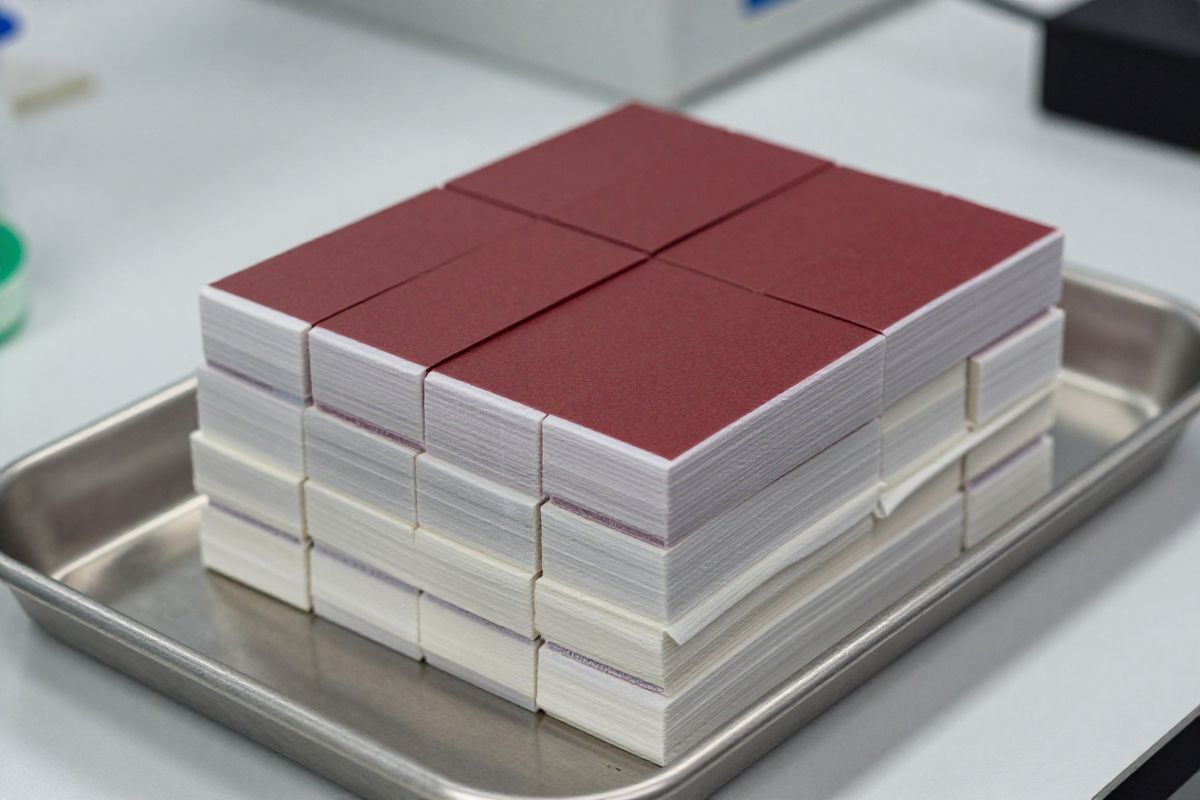
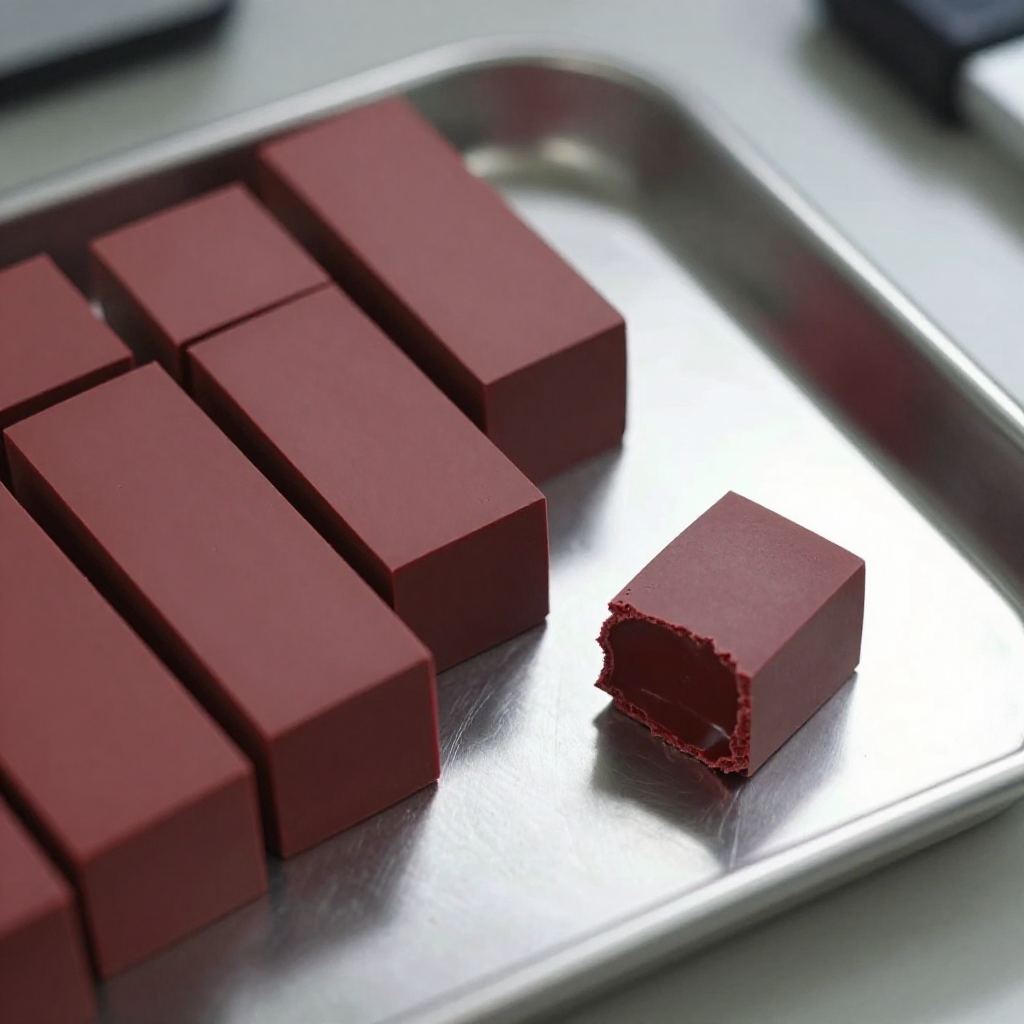
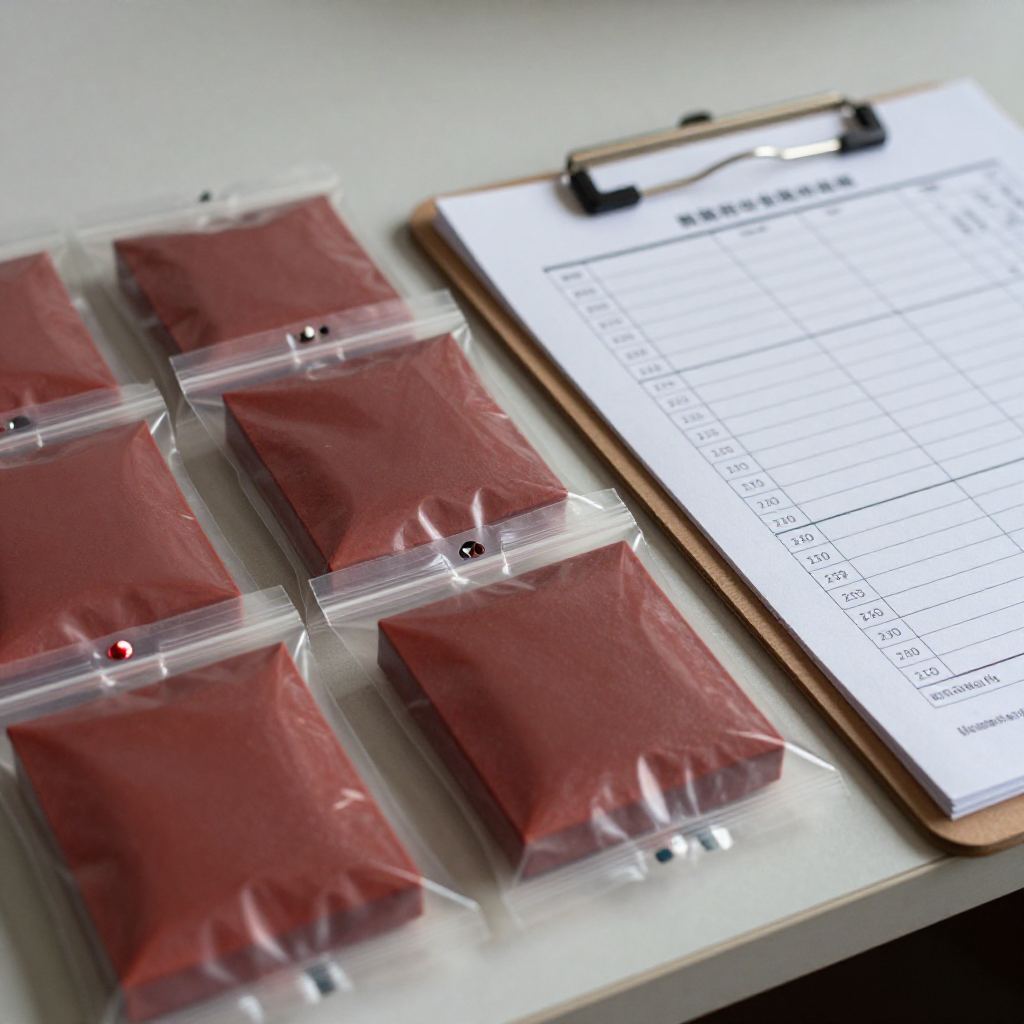
A lipstick base block is exactly what it sounds like: waxes, oils and a pigment dispersion, melted together, poured into a block mould, cooled, wrapped and shipped. It is not a lipstick. It has no bullet, no tube, no case, no label and no claim. Downstream, the customer melts it again, adds whatever fragrance or active it wants, pours it into bullet moulds, and turns it into the product that goes on a shelf.
The block form exists for two reasons. The first is transport: a finished bullet is a thin column of wax sitting inside a tube, and a hot container is enough to make it lean, sweat oil or shear off at the base. A block is a solid slab with no slender geometry to protect. The second is flexibility: one base can become a matte bullet, a satin bullet or a tinted balm, depending on what the customer adds at the fill line. The cost is that the base has to survive being melted twice.
The wax system is where that cost is paid. Candelilla and carnauba give hardness and gloss and are vegetable in origin; synthetic wax gives structure without an animal declaration; microcrystalline wax gives flexibility and oil binding. A typical lipstick base softens somewhere between thirty-five and forty-five degrees and has a drop point in the fifty-five to seventy-five degree range. In a Gulf summer, the inside of a non-refrigerated container or truck box can pass fifty degrees for hours, which is why the block, not the bullet, is the safer thing to ship.
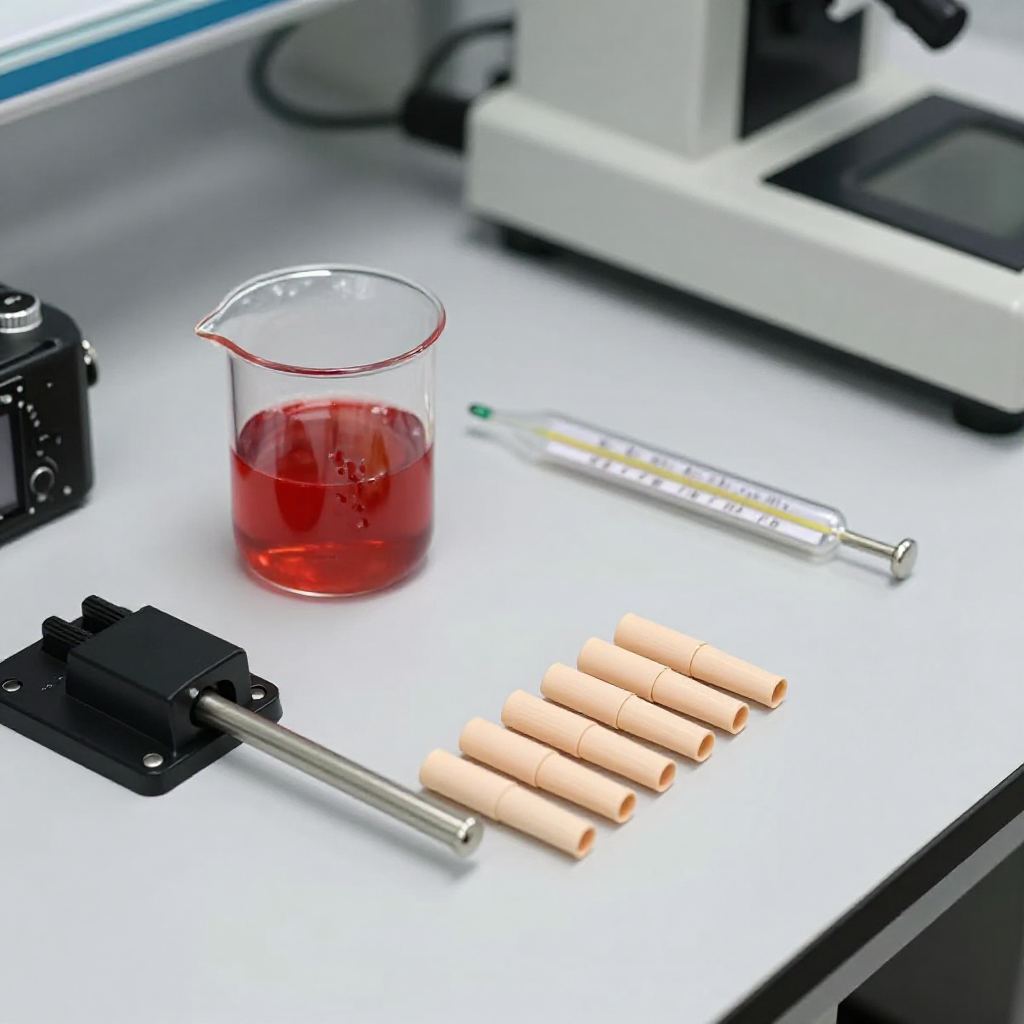
Xiao Lin put the block through the tests that decide whether it can be melted twice. Drop point before and after a double re-melt, with the method and the temperature ramp written down. Colour measured as a difference value against the original, not judged by eye under a different lamp. Oil bleed on filter paper after a week at elevated temperature. Hardness on a penetrometer, because a base that is too hard breaks in the bullet mould and one that is too soft slumps in the tube. Shrinkage in the block mould, because that number decides whether the customer's own mould needs adjusting.
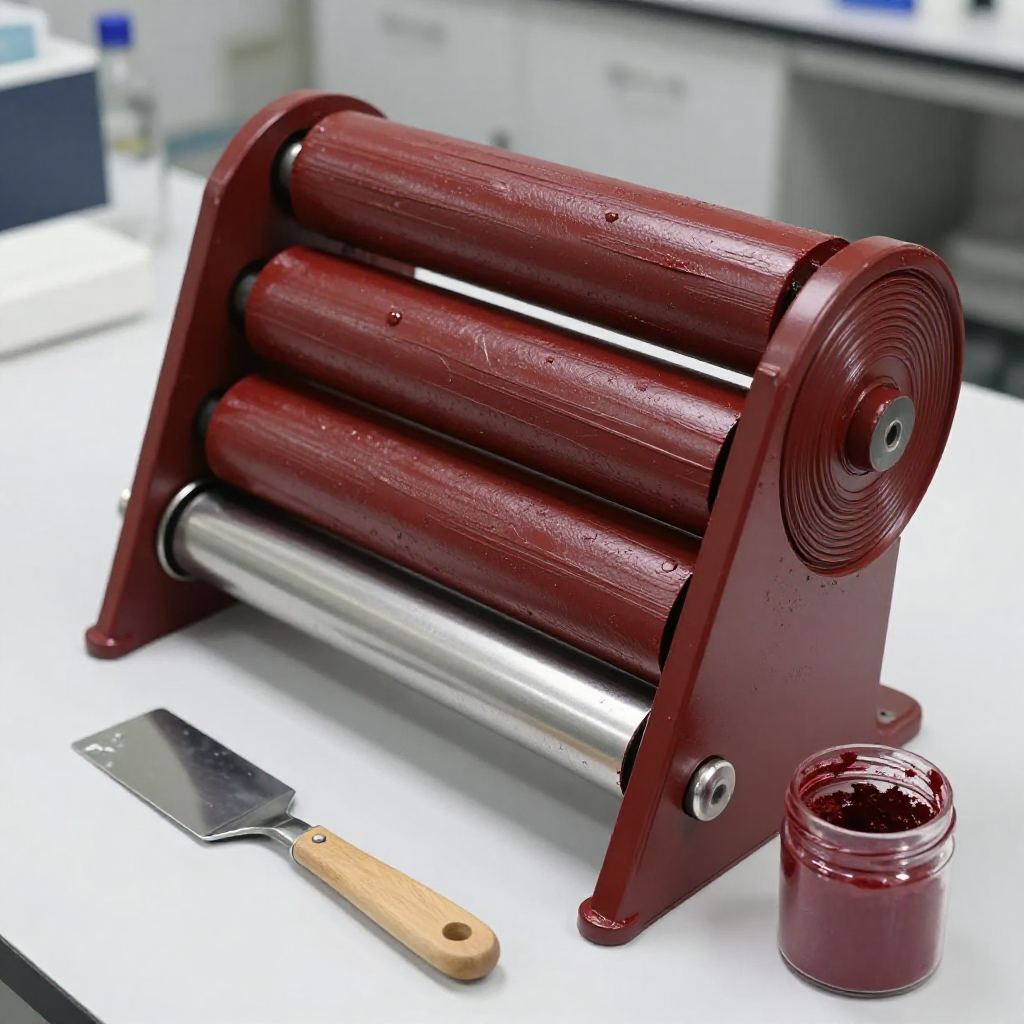
The pigment was the harder conversation. Carmine gives a clean, warm red and has been used for a century, but it is derived from an insect, and under a halal file it needs a declaration that many buyers would rather not explain to their own customers. A synthetic red removes that paragraph from the file, but it does not match carmine exactly: the shade shifts slightly cooler, opacity changes, and the dispersion behaves differently on the three-roll mill. Ethan's view was blunt. If the file is the point, take the synthetic and accept a small colour adjustment at the customer's fill line.
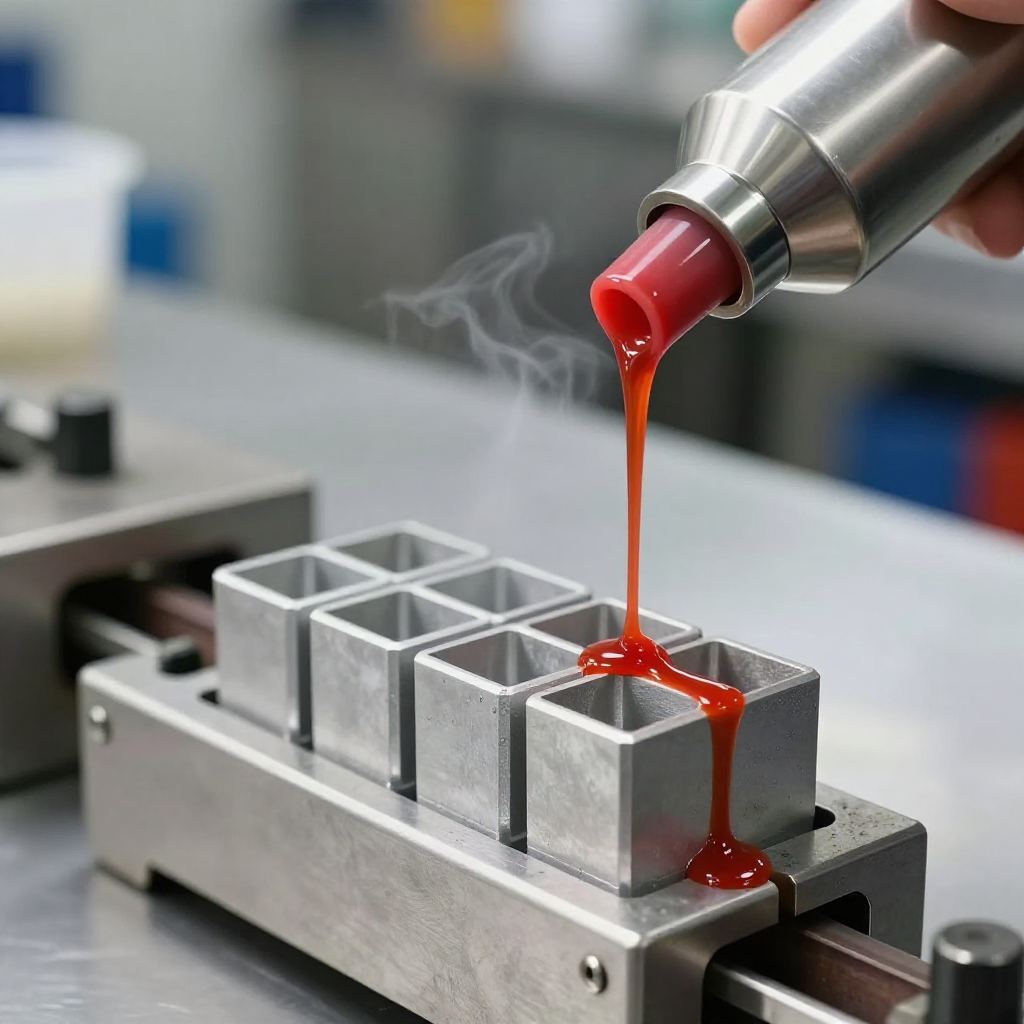
Hardness and pour temperature are tied together in a way that catches new fillers. A harder base needs a hotter pour to fill the mould cleanly, and a hotter pour changes the cooling curve, which changes the crystal structure and therefore the surface finish. Too cool, and the bullet has flow lines. Too hot, and the pigment settles before the mould is full. Xiao Lin wrote the working window on the board: pour temperature, mould temperature, cooling time, and the two points where the customer was allowed to adjust without asking us again.
Ethan's rule for the project was simple and not negotiable. The base has to come out of the second melt looking and behaving like the base that went into the first. If it does not, we are not selling a base; we are selling a problem that appears three weeks later in somebody else's factory. That rule eliminated two cheap wax blends before lunch, and it is the reason the final formula was more expensive than the one Fahad had been buying.
Scene 3 · The meeting room, that afternoon
The regulatory map took most of the afternoon and four documents. GSO 1943:2024 is the Gulf technical regulation for cosmetic safety, labelling and packaging, and its annexes on prohibited and restricted substances, colourants and preservatives are the first filter. GSO 1896:2022 is the standard written specifically for lipsticks. GSO 2055-4:2021 sets the requirements for halal cosmetics. GSO 2528:2024 governs claims. None of them can be satisfied by a sentence printed on a drum.
The heavy metal limits in GSO 1943:2024 are the numbers a buyer should ask for on a certificate of analysis: lead ten parts per million, arsenic three, cadmium three, mercury one, antimony five, and 1,4-dioxane ten. For products used on the mouth, the standard treats results at or above those limits on a case-by-case basis rather than waving them through. That matters for a lipstick base because the colour load is high and the pigment is the usual source of the metals.
Halal is a chain, not a word. Under GSO 2055-4:2021 an animal-derived ingredient needs a declaration that traces it back to its source, the production must be run under good manufacturing practice, the product must be traceable at every stage, and the facility must not be shared with non-halal production in a way that allows contamination. A certificate bought for one lot and filed in a drawer is not a chain. It is a piece of paper that will be questioned at the port, usually on the day the container arrives.
Then came the part that changed the plan. The wax-base unit that would run this block is not inside our own licence; lipsticks sit in the wax-based category, which is partner production, and the partner plant also runs lines that are not halal. Under a dedicated campaign the line can be cleaned and segregated, the cleaning validated, and the batch records kept separate, but that is a scheduled block of production, not an ordinary order slipped into a gap. It also means the certificate that matters belongs to the partner plant, and the whole chain has to be audited, not just our own floor.
Fahad was angry, and said so. His listing had a date, his artwork was approved, and every week of delay was a week of rent on a shelf he might lose. May did not argue with the date. She explained the other cost instead: a container held at the port because the file does not match the goods costs more than a delay, because it takes the goods out of the season entirely, and it puts a question mark on the importer's record for the next shipment. Fahad went quiet, which in that room counted as agreement.
Ethan put three options on the table. Keep the beeswax and carmine and build the declarations around them, which meant a longer file review and a real chance of a query. Switch to a vegetable wax blend and a synthetic red, dedicate a campaign at the partner plant, and accept a ten-day slip and a higher cost. Or ship an uncoloured base and let Fahad colour it locally, which would move the pigment risk to his side but also move the colour responsibility, and he did not want that.
The decision was the second option, with conditions written into the order. No claim on the drum. A technical dossier with the batch: full ingredient list, specification, certificate of analysis, safety data sheet, the partner plant's GMP certificate, and the halal documents covering every animal-derived input, which in the new formula meant none. Fahad would file the SFDA notification for his finished product after his own fill, in his own name. The drum would arrive plain, and the promise would arrive later, on a label he controlled.
Scene 4 · The loading bay, three days later
Three days later, at the loading bay, one wax lot was stopped. The supplier's halal declaration covered the previous batch, not the one in the warehouse, and the date on the certificate did not match the date on the bags. Xiao Lin refused to release it, which stopped the campaign. Re-sourcing a qualified vegetable wax took ten days. Nobody suggested using the lot and fixing the paperwork afterwards; that suggestion would have ended the project, and everyone on the floor knew it.
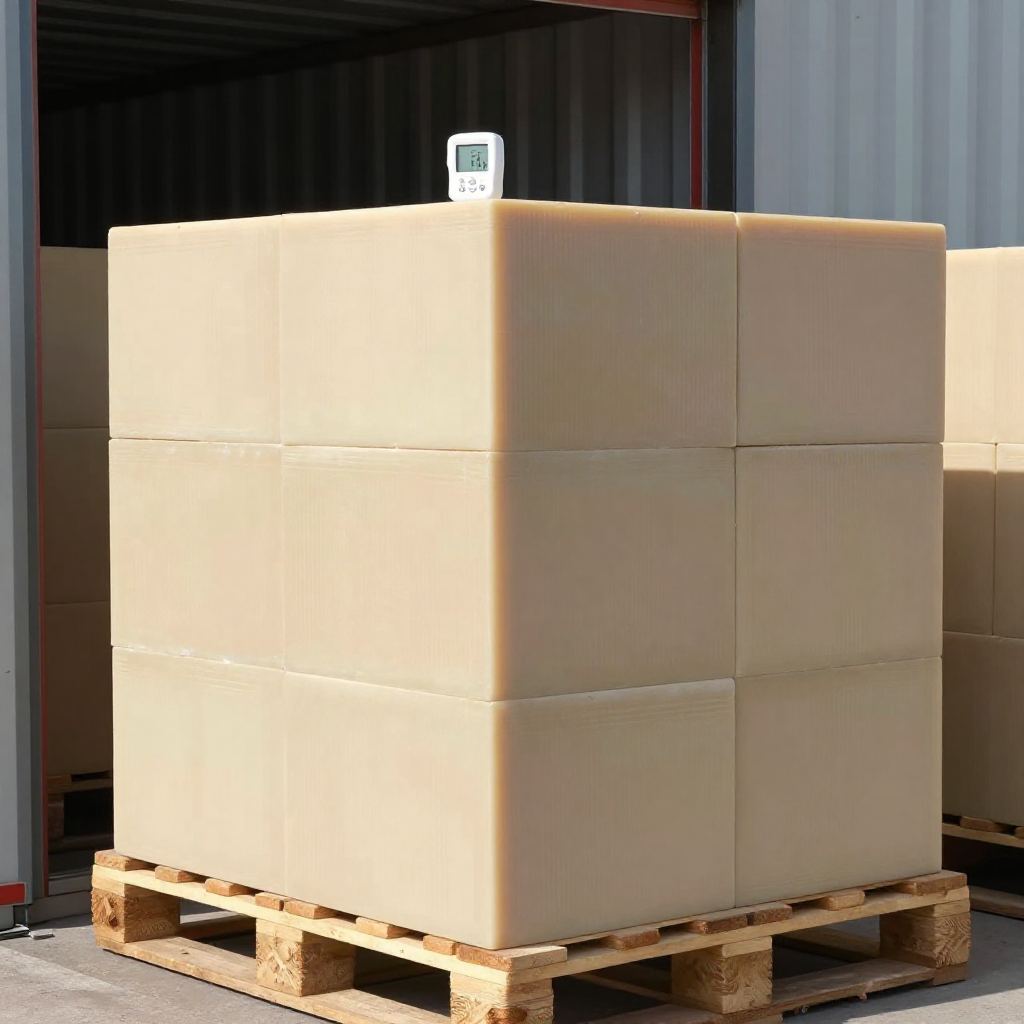
The container was the second problem. A dark steel box standing in a Gulf or South China yard in summer is not a room temperature environment; fifty degrees inside is ordinary, and the cargo nearest the roof runs hotter. Blocks tolerate that far better than bullets, but they are not immune: wax can soften, oil can migrate, and a block that has been through one bad cycle is not the same block. The shipping plan therefore carried a temperature logger on every pallet and a defined excursion limit, agreed before the container was sealed.
Packing was specified down to the liner. Food-grade liner inside the carton, desiccant where the route crossed humid coastlines, blocks separated by lot so that one questionable batch could be identified without opening everything, and a logger placed where it recorded the cargo, not the air near the door. The batch number went on the carton and on the record sheet, and the two had to match at the other end. This is not bureaucracy for its own sake; it is what allows a customer to answer a question six months later without calling us.
Release testing was the same set as the lab trial, plus the paperwork: drop point after the second melt, colour difference against the retained standard, microbiological result at the point of packing, heavy metals on the pigment certificate, and a retained sample from every lot. The retention shelf is the least glamorous part of the factory and the most useful. Two years later, when a customer says the last shipment behaved differently, the answer is either on that shelf or it does not exist.
Fahad called when he heard about the delay. He accepted the ten days, then asked whether we would fly a small sample set so his fill line could start tuning while the sea freight was still moving. Ethan agreed to the samples and only the samples, at our cost, because a fill trial that fails on the customer's line costs everyone more than a courier ticket. The production cargo stayed on the water. Nobody pretended the two were the same thing.
Standing at the bay door, watching the last pallet go in, Ethan said the sentence that became the title of the internal note. The drum is the last place to put a promise. Everything that can be promised has to be in the file, in the test record, in the certificate and in the batch number. What is printed on the outside of a drum is read once by a customs officer and never again by anyone who matters.
Scene 5 · A warehouse in Riyadh, two weeks later
The container arrived in Riyadh two weeks later and the logger came out before the cargo did. No excursion above the agreed limit, no condensation damage, blocks intact, cartons dry. Fahad's warehouse team checked the lot numbers against the record sheet and found one carton whose label had been re-taped at the factory; the batch inside matched, and the note explaining the re-tape was already in the file. That small piece of paper saved an hour of argument.
The fill trial was where the base had to prove itself. Fahad's line melted the blocks and poured bullets at its usual mould temperature, and the first bullets came out slightly harder than his old product, with a faint surface haze. Xiao Lin, on a video call at seven in the morning Guangzhou time, asked for the mould temperature to go up two degrees and the cooling time to come down, and told them not to touch the pour temperature. The second run was clean. The third run was the one they kept.
The SFDA notification was filed by Fahad's regulatory officer, in the company's own name and account, with the ingredient list, the safety data sheet, the certificate of analysis, the partner plant's GMP certificate and the halal documents attached. We supplied the technical pack and answered questions; we did not submit, and we did not sign. That division is not a formality. The entity that files is the entity that is answerable for the product in the market, and it has to be able to defend every line of the file.
Only after the notification was accepted did the word halal go on a label, and the label was Fahad's, on the finished lipstick, not on our drum. Under GSO 2055-4:2021 the word can be used only when the whole chain complies, which is why it is a claim a brand makes about a finished product, supported by documents, and not a sticker a supplier adds to a raw material. The base arrived with no claim at all, and that was the point.
The launch slipped by two weeks. Fahad kept the shelf, which he said was the only number that mattered, and the first sell-through was good enough that he asked about a second base for a tinted balm. Ethan did not quote on the call. He asked for the wax list and the target market first, because the same block that clears a Saudi file does not automatically clear an Indonesian or a Nigerian one, and a base is only as portable as its paperwork.
The closing judgment was Fahad's, not ours. He said he had spent years buying on price and had never once been asked by a customer what was in the drum, until the year a shipment was held and the customer asked for everything at once. A base travels as far as its file travels. The wax, the pigment and the drop point get the product made; the documents get it off the dock, through the border, and onto a shelf where somebody is willing to put their name on it.
Frequently asked questions
Q: What is the difference between a lipstick base block and a finished lipstick?
A: The base is a semi-finished material: waxes, oils and a pigment dispersion, with no tube, no bullet, no label and no claim. The customer melts it, pours its own bullets and fills its own packaging. The notification, the label and every benefit claim belong to the finished product and to the local licensed party, not to the block.
Q: Why can the drum not carry halal or a benefit claim?
A: Under GSO 2055-4:2021 halal is a chain, not a word; only a finished product that meets the whole chain may use it. A benefit claim belongs to the finished product and its local notification. Printing either on a drum turns a raw material into something that looks like a regulated product and puts the responsibility in the wrong place. The drum carries the batch number, net weight, ingredients and essential safety information only.
Q: How is temperature controlled on the route to the Gulf?
A: Inside a container in a Gulf summer can pass fifty degrees, and cargo near the roof runs hotter. Blocks tolerate heat better than finished bullets but are not immune. Every pallet carries a temperature logger, an excursion limit is agreed before sealing, and insulation and desiccant are used where the route crosses humid coastlines. The logger is read before the cargo is opened.
Q: What documents travel with a base shipment?
A: The finished-product notification is filed by the licensed local party. The base travels with a full ingredient list, specification, certificate of analysis, safety data sheet, the producing plant's GMP certificate, and source declarations plus halal certificates for any animal-derived input where applicable. Heavy metals are tested to the GSO 1943:2024 limits, with mouth-area products assessed case by case.
Q: Can we keep beeswax and carmine?
A: Yes, but they lengthen the halal file: both are animal in origin and need source declarations and traceability, and carmine in particular is difficult to explain to some buyers. Keeping them means a longer review and a higher chance of a query at the port. Switching to a vegetable wax blend and a synthetic red shortens the file, at the cost of a small colour adjustment and a dedicated production campaign.
Q: How are MOQ, lead time and price set?
A: By project. The MOQ, lead time and price of a base block depend on the wax system, the shade, the mould, and whether a dedicated campaign is required, and none of those can be quoted responsibly before the target market and the fill method are fixed. Confirm the market, the formula direction and the filling route first, then discuss quantity and schedule.
場景1 · 法哈德的辦公室,利雅得,週日上午
週日一早,沙特工作週的第一個工作日。利雅得的辦公室桌上擺著一個還沒印條碼的口紅紙盒打樣,旁邊是一塊用防油紙包著的深紅蠟塊。Fahad 要的是這塊蠟塊,不是成品口紅:他的工廠會重新熔化、按需調色、灌進自己的膏芯。他要的是母塊、文件,和一個能拿去跟零售商交代的日期。
May 先問了那個決定項目生死的問題:成品的 SFDA 通知掛在誰名下。Fahad 說掛在他公司,透過進口許可證和他的法規專員。接著他補了一句讓整個上午變複雜的話——他希望我們把文件做好、替他提交,因為他的專員剛到職,而上架時間表已經很緊。
Ethan 很客氣,也沒有停頓地拒絕了。通知必須由當地持證方以自己的名義、在當地系統裡提交;中國工廠不能替他交,也不該裝作可以。他接著開出第二個條件:桶上什麼都不印。不印 halal,不印無酒精,不印任何功效。母塊只是運輸途中的原料,不是貨架上的產品,宣稱屬於 Fahad 自己完成通知之後的成品口紅。
Fahad 把他在意的事實擺上桌:另一家供應商報價更低,還說 halal 證書會一併辦好、直接印在桶上,到港就能用。如果我們做不到,他有一個上架日期要守,而買家根本不在乎是哪家工廠簽的文件。May 把這句話記下來,畫了線。這不是技術異議,這是商業威脅,而且是真的。
技術問題藏在他帶來的配方裡。他現在的母塊用蜂蠟做結構、用胭脂蟲紅做紅色。兩者都來自動物,一個來自蜜蜂,一個來自昆蟲,一份簡單的成分表就這樣變成了一條文件鏈。上一批蠟的證書八個月前就過期了,舊供應商沒人發現。他自己說,那批貨的 halal 文件「大概沒問題」。
Ethan 要求先看到完整的蠟與色漿清單才談報價,並要 Fahad 第二天早上廣州時間再上線。他說,有一個版本可以帶著乾淨的文件出去,但那已經不是同一塊母塊,也不可能趕上他日曆上的日期。Fahad 說,寧可現在聽壞消息,也不要到港口才聽。電話以一個時間結束,沒有價格。
場景2 · 蠟實驗室,廣州,次日上午
口紅母塊就是字面意思:蠟、油、色漿,熔在一起,灌進塊模,冷卻、包裝、出貨。它不是口紅。沒有膏芯、沒有管、沒有殼、沒有標籤,也沒有任何宣稱。到了下游,客戶再熔一次,加自己想要的香精或活性物,灌進膏芯模具,才成為上架的產品。
做成塊狀有兩個原因。第一是運輸:成品膏芯是一根細蠟柱立在管裡,一個熱櫃就足以讓它歪、出油、從底部斷開。母塊是實心板料,沒有細長結構需要保護。第二是彈性:同一塊母塊,客戶在灌裝線上加不同的東西,就能變成霧面、緞面或有色護唇膏。代價是,母塊必須撐得住熔化兩次。
代價付在蠟系上。小燭樹蠟和巴西棕櫚蠟給硬度與光澤,植物來源;合成蠟給結構,不需要動物聲明;微晶蠟給柔韌性和鎖油能力。典型口紅母塊在 35 到 45 度之間開始軟化,滴點落在 55 到 75 度。海灣的夏天,非冷藏貨櫃或車廂內部可以連續幾個小時超過 50 度——這就是為什麼該運母塊,而不是膏芯。
小林把這塊料推進決定它能不能熔第二次的測試:二次熔融前後的滴點,方法和升溫曲線都要寫下來;顏色用色差值和原樣比,不靠在另一盞燈下用眼睛看;高溫放置一週後的濾紙油析;針入度計量硬度,太硬在膏芯模具裡會裂,太軟在管裡會塌;還有塊模收縮率,那個數字決定客戶自己的模具要不要改。
色漿是更難的一段。胭脂蟲紅給出乾淨溫暖的紅,用了一個世紀,但它來自昆蟲,在 halal 文件裡需要一份很多買家不願意向自己客戶解釋的來源申報。合成紅可以把這一段從文件裡拿掉,但它不會完全等於胭脂蟲紅:色調偏冷一點,遮蓋力變了,在三輥研磨機上的分散行為也不一樣。Ethan 的意見很直接:如果文件才是重點,就用合成紅,接受客戶灌裝線上那一點顏色調整。
硬度和澆注溫度是綁在一起的,新手灌裝廠最容易在這裡出錯。母塊越硬,越需要更高的澆注溫度才能把模具填乾淨;溫度一高,冷卻曲線就變,結晶結構跟著變,表面光潔度也變。溫度太低,膏芯有流痕;太高,色漿在模具填滿之前就沉了。小林把工作窗口寫在白板上:澆注溫度、模具溫度、冷卻時間,以及客戶可以不問我們就自行調整的兩個點。
Ethan 給這個項目定的規則簡單、不可談判:母塊從第二次熔融出來,看起來和表現起來都必須跟進去時一樣。做不到,我們賣的就不是母塊,而是一個三週後在別人工廠裡爆出來的問題。這條規則在午飯前就淘汰了兩個便宜蠟配方,也是最終配方比 Fahad 原來買的那個貴的原因。
場景3 · 會議室,當日下午
法規地圖吃掉了一整個下午和四份文件。GSO 1943:2024 是海灣化妝品安全、標籤與包裝技術法規,其中禁限用物質、著色劑和防腐劑的附錄是第一道篩子。GSO 1896:2022 是專門寫給口紅的標準。GSO 2055-4:2021 規定 halal 化妝品的要求。GSO 2528:2024 管宣稱。這四份,沒有一份能靠印在桶上的一句話滿足。
GSO 1943:2024 的重金屬限值,是買家應該在 COA 上要的數字:鉛 10 ppm、砷 3 ppm、鎘 3 ppm、汞 1 ppm、銻 5 ppm、1,4-二噁烷 10 ppm。用於口唇的產品,達到或超過限值時按個案評估,不是直接放行。這對口紅母塊特別要緊,因為色粉負載高,金屬通常就從色漿來。
halal 是一條鏈,不是一個詞。按 GSO 2055-4:2021,動物來源成分要有可追溯至源頭的申報,生產要在良好生產規範下進行,產品每個階段可追溯,廠房不得與非 halal 生產以可能造成汙染的方式共用。為一批貨買一張證書、放進抽屜,那不叫鏈,那是一張紙——通常會在貨櫃到港那天被問起。
然後是改變計畫的那一段。跑這批母塊的蠟基單元不在我們自己的許可範圍內:口紅屬蠟基類別,屬合作生產,而合作工廠同時還跑非 halal 的線。排專線可以把產線清洗、隔離、清洗驗證、批次記錄分開,但那是排定的一整段生產,不是普通訂單插空隙。也意味著真正要緊的證書屬於合作工廠,整條鏈都要審,不只是我們自己的車間。
Fahad 生氣了,也說了出來。他的上架有日期,包裝設計已經批了,每晚一週,就是他可能丟掉的貨架租金。May 沒有跟他爭日期,改為解釋另一種成本:因為文件跟貨物對不上,櫃子在港口被扣,代價比延期更高——整批貨直接錯過整個季節,還在進口商記錄上留一個問號,影響下一票。Fahad 安靜了,在那間會議室裡,安靜等於同意。
Ethan 把三個方案擺上桌。保留蜂蠟和胭脂蟲紅,圍著它們去補齊申報,代表文件審查更長,被查問的機率也真實存在。換成植物蠟加合成紅,在合作工廠排一次專線,接受十天延期和更高成本。或者出無色母塊,讓 Fahad 自己在當地調色——那會把色漿風險移到他那一邊,也把顏色責任一起移過去,而他不要。
決定是第二個方案,條件寫進訂單:桶上不作任何宣稱;隨批附技術卷——全成分表、規格書、COA、MSDS、合作工廠的 GMP 證書,以及覆蓋每一個動物來源成分的 halal 文件(新配方裡等於沒有)。Fahad 在自己的灌裝完成之後,以自己公司名義提交成品的 SFDA 通知。桶素面到港,承諾晚一點到,落在他自己控制的標籤上。
場景4 · 裝貨區,三天後
三天後,裝貨區攔下了一批蠟。供應商的 halal 申報只覆蓋上一批,不是倉庫裡這一批,證書上的日期也和袋子上的對不上。小林拒絕放行,專線停擺。重新找合格的植物蠟花了十天。沒有人提議先用掉這批、事後再補文件——那個提議會直接結束這個項目,車間裡每個人都知道。
貨櫃是第二個問題。深色鋼櫃在華南或海灣的夏天曬一天,不是室溫環境:櫃內 50 度很平常,靠櫃頂的貨更熱。母塊比膏芯耐得多,但不是無敵:蠟會軟、油會遷移,經歷過一次壞循環的母塊,就已經不是原來那塊母塊。所以運輸方案要求每板一個溫度記錄儀、一個事先講定的偏差上限,而且必須在封櫃之前談好。
包裝細到內襯。紙箱內用食品級內襯,航線經過潮濕海岸線的加乾燥劑,母塊按批次分開,方便有問題的那一批不用全拆就能識別;記錄儀放在能記錄貨物溫度的位置,不是櫃門旁邊的空氣。批號同時印在紙箱和記錄表上,兩端必須對得上。這不是為官僚而官僚,這是讓客戶半年後被問起時,不必打電話給我們。
放行檢驗跟實驗室那一套一樣,再加文件:二次熔融後的滴點、對留樣的色差、包裝點的微生物結果、色漿證書上的重金屬,以及每一批的留樣。留樣架是工廠裡最不風光、也最有用的角落。兩年後客戶說上一票貨表現不一樣,答案要麼在那個架上,要麼就不存在。
延期傳到 Fahad 那裡,他打了電話。他接受十天,然後問能不能先空運一小組樣品,讓他的灌裝線在海運還在走的時候先調機。Ethan 只同意樣品,費用我們出,因為客戶產線上失敗一次的代價,遠比一張快遞單貴。生產貨物繼續走海運。沒有人假裝這兩件事是一樣的。
站在裝貨口,看著最後一板推進櫃裡,Ethan 說了那句後來變成內部備忘標題的話:桶,是最後一個該放承諾的地方。能承諾的東西,都要在文件裡、在測試記錄裡、在證書裡、在批號裡。桶外面印的字,海關官員讀一次,之後再也沒有在乎的人會讀。
場景5 · 利雅得倉庫,兩週後
貨櫃兩週後到利雅得,記錄儀比貨先出來。沒有超出約定上限的偏差,沒有凝水損壞,母塊完好,紙箱乾燥。Fahad 的倉庫團隊拿批號對記錄表,發現有一箱的標籤在工廠重新貼過;箱內批次對得上,解釋重貼的說明也已經在文件裡。那張小紙條省了一個小時的爭論。
灌裝試驗才是母塊證明自己的地方。Fahad 的產線按平常的模具溫度熔塊、灌芯,第一批膏芯比他原來的產品略硬,表面有一層淡淡的霧。廣州時間早上七點,小林在視頻裡要求模具溫度加兩度、冷卻時間縮短,並且交代不要動澆注溫度。第二輪乾淨,第三輪才是他們留下的那一版。
SFDA 通知由 Fahad 的法規專員提交,用公司自己的名義和帳號,附上成分表、MSDS、COA、合作工廠的 GMP 證書和 halal 文件。我們提供技術卷、回答問題;我們不提交,也不簽名。這個分工不是形式。提交的那個主體,就是在市場上對產品負責的主體,它必須能為文件裡的每一行辯護。
通知被接受之後,halal 這個詞才出現在標籤上;那是 Fahad 的標籤,貼在成品口紅上,不是我們的桶上。按 GSO 2055-4:2021,只有整條鏈合規才能用這個詞——所以它是品牌對成品做的宣稱,靠文件支撐,不是供應商貼在原料上的一張貼紙。母塊到的時候什麼宣稱都沒有,而那正是重點。
上市晚了兩週。Fahad 保住了貨架,他說那是唯一重要的數字;首輪動銷還不錯,他問起第二塊有色護唇膏母塊。Ethan 沒有在電話裡報價,先要蠟清單和目標市場——同一塊母塊能過沙特的文件,不會自動過印尼或尼日利亞的文件;母塊能走多遠,取決於文件能走多遠。
最後的判斷是 Fahad 下的,不是我們。他說他按價格買了這麼多年,從來沒有客戶問過桶裡裝什麼,直到有一年一票貨被扣,客戶把所有問題一次問完。母塊能走多遠,文件就能走多遠。蠟、色漿和滴點讓產品做得出來;文件讓它離開碼頭、過邊境、上貨架,上到一個有人願意把名字放上去的位置。
常見問題
Q:母塊和成品口紅有什麼差別?
A:母塊是半成品:蠟、油、色漿,沒有管、沒有膏芯、沒有標籤,也沒有任何宣稱。客戶把它重新熔化、灌進自己的模具、裝進自己的包裝,才成為成品。通知、標籤和所有功效宣稱都屬於成品和當地持證方,不屬於這塊母塊。
Q:為什麼桶上不能印 halal 或功效?
A:按 GSO 2055-4:2021,halal 是一條鏈,不是一個詞;只有整條鏈合規的成品才能用。功效宣稱屬於成品和它的當地通知。桶上印任何宣稱,都會把原料變成看起來像受監管產品的東西,把責任放錯位置。桶上只印批號、淨重、成分和必要的安全資訊。
Q:運到海灣怎麼控溫?
A:海灣夏季貨櫃內可以超過 50 度,靠櫃頂更熱。母塊比成品膏芯耐熱,但不是無敵。每板一個溫度記錄儀,封櫃前講定偏差上限,航線經過潮濕海岸線時加隔熱與乾燥劑。到港先讀記錄儀,再開貨。
Q:母塊出貨要帶哪些文件?
A:成品通知由當地持證方提交;母塊隨批附全成分表、規格書、COA、MSDS、生產廠 GMP 證書,以及所有動物來源成分的來源申報與 halal 證明(如適用)。重金屬按 GSO 1943:2024 的限值檢驗,口唇用品另按個案評估。
Q:可以保留蜂蠟和胭脂蟲紅嗎?
A:可以,但它們會把 halal 文件拉長:兩者都是動物來源,需要來源申報和可追溯,胭脂蟲紅尤其難向部分買家解釋。保留它們,代表更長的審查和更高的到港被問風險。換成植物蠟加合成紅,文件變短,代價是一點顏色調整和一次專線生產。
Q:MOQ、交期和價格怎麼定?
A:按項目確認。母塊的 MOQ、交期和價格取決於蠟系、色號、模具,以及是否需要排專線,在目標市場和灌裝方式確定之前,給不出負責任的數字。先確認市場、配方方向和灌裝路線,再談數量與排期。
Questions about this process?對這道工序有疑問?
Ask us and we will answer in writing, with the batch records to back it up.問我們,我們會以書面回覆,並附上批記錄。