Four nose strips, three of them the same四條鼻貼,三條是同一條
Four nose strips, ¥4.5, ten to a pack. They look like four SKUs, but half of them are the same product. And the expensive part is not the material — it is the cut that follows the curve of the nose.四條鼻貼,四塊五,十片一包。看起來是四個 SKU,其實有一半是重複的。而這個品類最貴的不是材料,是那條貼合鼻翼的裁切曲線。
Scene 1 · The sample room, nine in the morning
May laid the four nose strips out on the table, separated them by brand, and lined them up one by one.
"All four are the same thing," she said. "Ten strips to a pack, four and a half yuan."
Qiang walked over and glanced at them, but did not reach out.
"Do you know that three of these four are the same strip?"
May looked up.
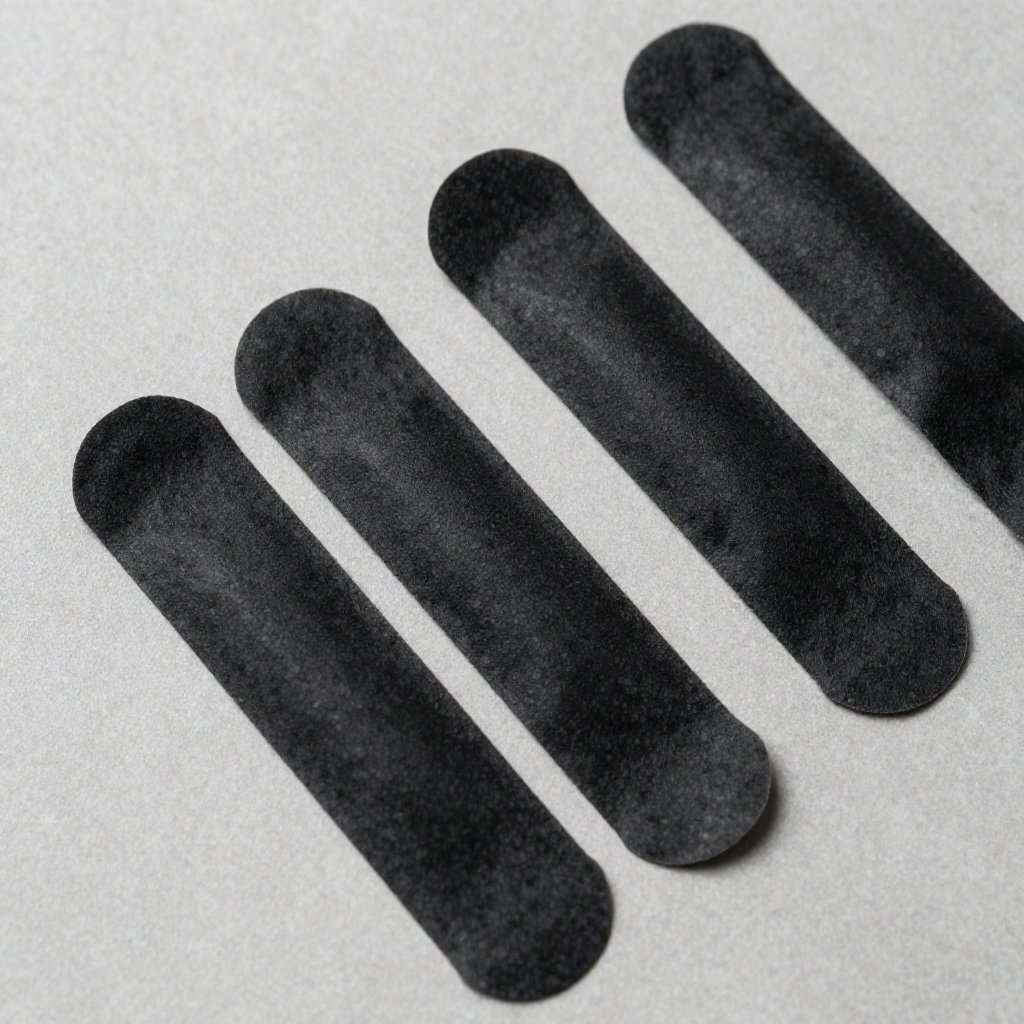
"The two charcoal ones," Qiang said. "One says blackhead nose strip, the other says charcoal nose strip — same formula, same specs, same price, just a few words changed on the packaging."
"Aren't those different SKUs?"
"They are different SKUs," Qiang said. "But to the customer they're the same thing. Put two identical things on one shelf and the customer thinks you're padding the count."
May looked down at the four strips, then stacked two of them together.
"So do we merge them?"
"No need," Qiang said. "What has to change is the position — one as the main push, one as the backup. Only one of them on any shelf."
Scene 2 · The workbench, mid-morning
"Such a small strip — why four and a half yuan?" May asked.
"Because it isn't a cosmetic, it's a craft item," Qiang said.
He slid a strip out of its packaging and held it up to the light.
"Look at the shape of this strip — narrow in the middle, wide at both ends. Why? Because a nose has nostril wings; the two ends have to reach into the hollows beside them, and the middle has to sit on the bridge. That's a three-dimensional curved surface, but what you're holding is flat. So it has to be cut at a certain angle."
"So the cost is in the cutting?"
"The cost is in the cutting plus the fit," Qiang said. "The cost structure of a nose strip is nothing like a sheet mask's — a sheet mask gets more expensive the bigger it is; a nose strip gets harder to make the smaller it is."
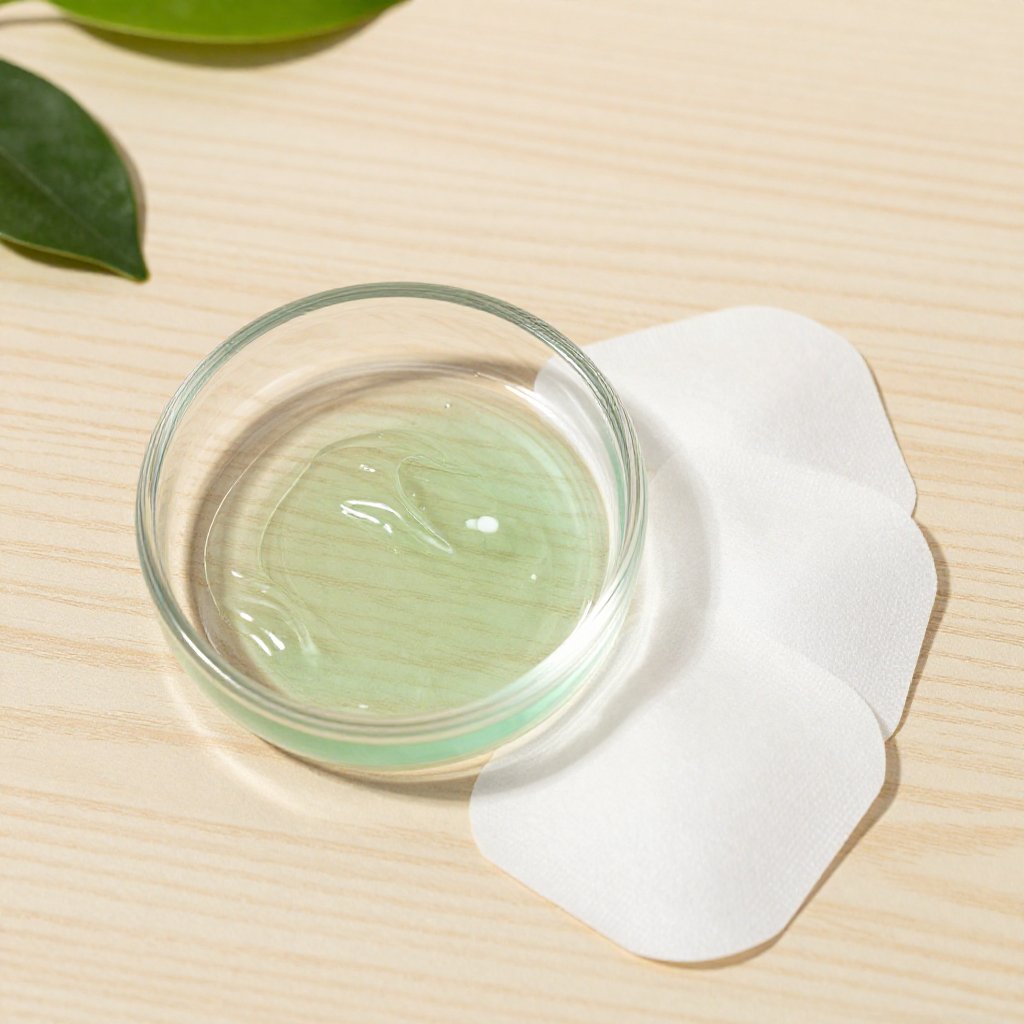
A nose strip has only three layers: a non-woven top layer, the adhesive gel in the middle, and release paper underneath. The gel is the core — it has to hold, it has to peel off, and it has to peel off without taking a whole layer of keratin with it.
"What is the gel?"
"Usually PVA plus a rosin-based tackifier plus glycerin. PVA provides the film and the adhesion, rosin gives the initial tack, and glycerin keeps it from drying out too much," Qiang said. "Get the ratio wrong and two things happen: too sticky and it hurts when you peel it; too loose and it falls off five minutes after you put it on."
"So what's the difference between the charcoal, aloe, and plant versions?"
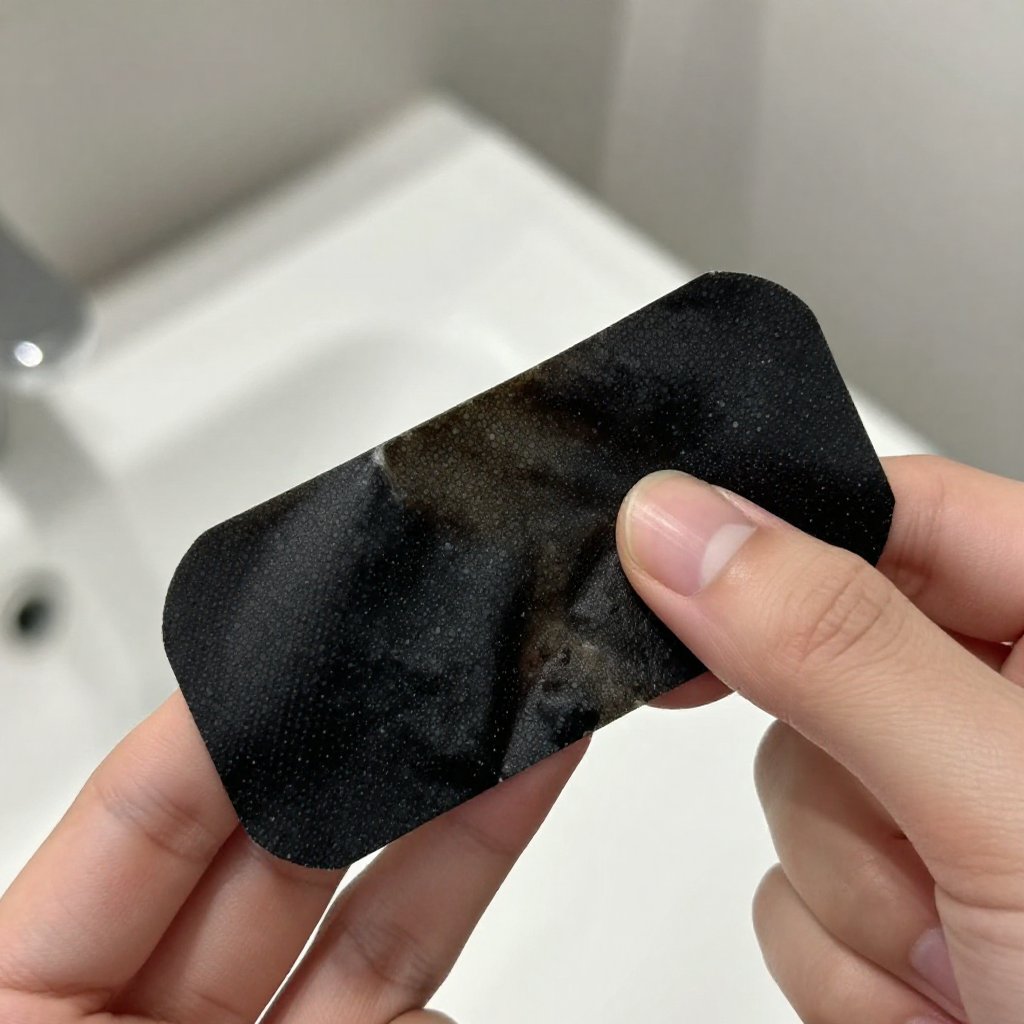
"The difference is the additives in the gel," Qiang said. "The charcoal one has carbon powder added, so the gel is black — once you peel it off, you can see what's stuck to that black film especially clearly."
"And the aloe and plant ones?"
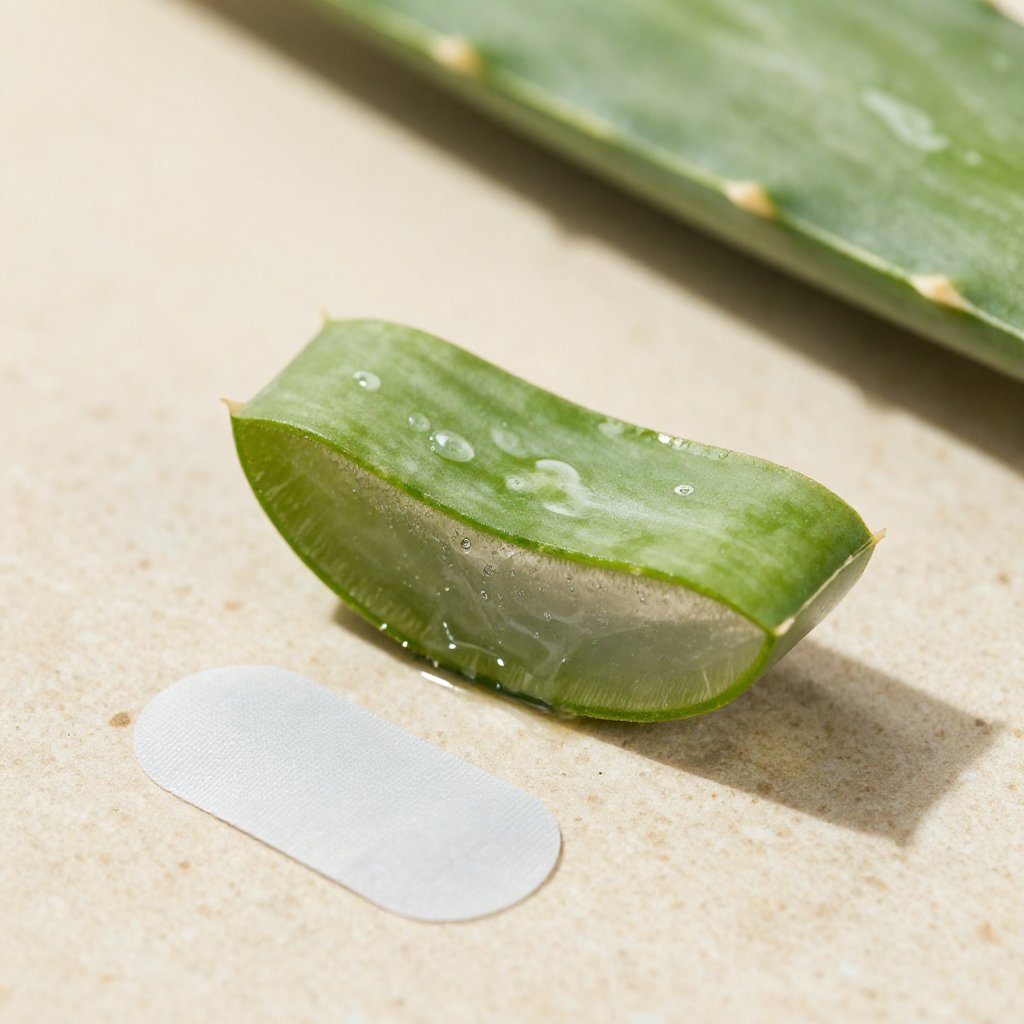
"The aloe one has aloe extract added, so the gel is nearly transparent; the plant one has plant extract added, so it's pale green." "Both of these are positioned on 'gentle,' not on 'cleaning power.'"
May typed a line on her tablet.
"So the charcoal one sells on visuals, while the aloe and plant ones sell on reassurance."
"Right," Qiang said. "That's also why charcoal sells best — because in that one glance when it comes off, the customer can see it."
Scene 3 · The meeting table, afternoon
The first thing the DininZi sales rep said as he sat down was, "Can we write 'permanently removes blackheads' on this?"
Qiang did not answer at once.
"No," he said.
"Why not? Some people on the market do write it."
"Just because some people on the market write it doesn't mean you can," Qiang said. "A blackhead is sebum that has oxidized and clogged the pore opening. You pull away the part on the surface, and the part underneath is still there. Tomorrow it oxidizes again."
"So it comes back."
"It comes back," Qiang said. "Which is why 'permanent' is the easiest word in this business to get sued over."
"Then what do we write?"
"Write what you can see," Qiang said. "For example, 'you can see the keratin and sebum adhering to the strip' — that describes a phenomenon, it doesn't promise a result."
"What else?"
"There's also 'reduces the appearance of blackheads,'" Qiang said. "The word 'appearance' matters — it turns the promise from a physiological change into a visual improvement."
The sales rep wrote the two lines down, then asked, "What about the pulling problem? Some people say nose strips enlarge your pores."
"They do," Qiang said. "So the packaging has to state the frequency of use — once or twice a week, peel in the direction the hair grows, and soften the skin with warm water before peeling."
"If we put all that on there, will customers be afraid to buy?"
"We'll sell a little less," Qiang said. "But there will be fewer returns, fewer complaints, and fewer takedowns by the platforms."
Scene 4 · The shooting room, two days later
May set her phone on the table and aimed the lens at a black nose strip stuck to a silicone nose model.
"How do we shoot this?"
"Shoot the moment it comes off," Qiang said. "And in slow motion."
"Why slow motion?"
"Because the shot of a nose strip lasts only two seconds. Shoot it at normal speed and the viewer never sees the process; slow it down three times and you can see clearly how the gel leaves the skin and what it carries away with it."
"Should we find a model?"
"No need," Qiang said. "A silicone nose model is enough. A real nose is hard to shoot well, and it involves portrait rights besides; with a silicone model you can shoot it ten times, twenty times, and pick the best take."
"And the realism?"
"Realism comes from what's on that film, not from a face," Qiang said. "Peel the film off and shoot that residue against the light — it's more convincing than any face."
May turned the light down a notch.
"One more thing," Qiang said. "Before you shoot, let the gel on the nose model dry out completely. Peeled wet, it comes off tacky; peeled dry, it comes off in one piece — the viewer can tell which one looks better."
Scene 5 · The warehouse, evening
Four cartons of goods were stacked in the corner. May had the shipping list in her hand.
"This batch is two thousand strips of each of the four versions, eight thousand in total," she said. "The customer is asking whether we can mix them."
"We can mix them, but mixed at case level, not mixed at unit level," Qiang said.
"What's the difference?"
"Mixed at case level, the customer gets four complete SKUs and can put them on the shelf separately," Qiang said. "Mixed at unit level, you have to repack — and the labor for repacking costs more than the nose strips themselves."
"And if the customer insists on unit-level mixing?"
"Then charge more," Qiang said. "Not a little more — charge until he decides it isn't worth it. Because unit-level mixing stops your production line."
May wrote that sentence on the back of the shipping list.
"One more thing," Qiang said. "Pay attention to how the nose strips are stored — this is a gel product, and moisture uptake costs it its initial tack. At a warehouse humidity above 70%, three months and it's done for."
"Does that have to go on the packaging?"
"Yes," Qiang said. "Mark the storage conditions and the shelf life. This one matters more than any claim — if a customer stockpiles and it goes bad, you're the first one they blame."
FAQ
Q: What's the difference between these four nose strips?
A: The two charcoal versions are the same formula (gel with carbon powder added), only the packaging story is different; the aloe version's gel is nearly transparent and is positioned as gentle; the plant version's gel is pale green and is likewise positioned as gentle. All four come 10 strips to a pack.
Q: Why are nose strips harder to make than sheet masks?
A: A sheet mask is flat, and the bigger it is the easier it is to make; a nose strip has to fit the three-dimensional curve of the nose bridge and the nostril wings, so the cost is in the cut shape and the gel formula — the shape decides whether it will stay on, the gel decides whether it will come off.
Q: Can we write "permanently removes blackheads"?
A: No. A blackhead is the result of sebum oxidizing continuously, and a nose strip only carries away the part on the surface. We suggest "you can see the keratin and sebum adhering to the strip" or "reduces the appearance of blackheads."
Q: What should we watch out for when shooting a short video?
A: Shoot the moment of peeling in slow motion, use a silicone nose model instead of a real person, and let the gel dry completely before peeling. The realism comes from what adheres to the film, not from the face.
Q: How should nose strips be stored?
A: Moisture uptake costs the gel its initial tack. At a warehouse humidity above 70%, it fails within three months, so the packaging has to state the storage conditions and the shelf life.
場景一 · 樣品間,早上九點
May 把那四條鼻貼擺在桌上,按品牌分開,一條一條對齊。
「四條都是一樣的東西。」她說,「十片一包,四塊五。」
強哥走過來看了一眼,沒有伸手。
「你知道這四條裡,有三條是同一條嗎?」
May 抬起頭。
「活性炭那兩條。」強哥說,「一個寫黑頭鼻貼,一個寫活性炭鼻貼 —— 配方一樣、規格一樣、價格一樣,只是包裝上換了幾個字。」
「那是不同 SKU 吧?」
「是不同 SKU。」強哥說,「但對客人來說,是同一個東西。你把兩個一樣的東西擺在同一個貨架上,客人會覺得你在湊數。」
May 低頭看那四條,然後把其中兩條疊在一起。
「那要合併嗎?」
「不用。」強哥說,「要改的是位置 —— 一條放主推,一條放備選。同一個貨架只放一個。」
場景二 · 工作台,上午
「鼻貼這麼小一片,為什麼要四塊五?」May 問。
「因為它不是化妝品,是工藝品。」強哥說。
他把一片鼻貼從包裝裡抽出來,對著燈看。
「你看這條的形狀 —— 中間窄、兩端寬。為什麼?因為鼻子有鼻翼,兩端要能貼到鼻翼的凹處,中間要貼住鼻樑。這是一個三維曲面,但你手上這是一片平的。所以它必須在某個角度被剪出來。」
「所以貴在裁切?」
「貴在裁切 + 貼合。」強哥說,「鼻貼的成本結構跟面膜完全不同 —— 面膜是越大越貴,鼻貼是越小越難做。」
鼻貼只有三層:表層的無紡布、中間的膠體、底層的離型紙。膠體是核心 —— 它要黏得住、撕得下、撕下來不帶走整層角質。
「膠體是什麼?」
「通常是 PVA 加松香類的增黏劑,再加甘油。PVA 提供成膜與附著,松香給初黏力,甘油讓它不要太乾。」強哥說,「比例錯了會出兩種事:太黏,撕的時候扯痛;太鬆,貼上去五分鐘就掉。」
「那活性炭、蘆薈、植物這三款差在哪?」
「差在膠體裡的添加物。」強哥說,「活性炭加的是碳粉,所以膠體是黑的 —— 撕下來之後,那層黑膜上附著的東西看得特別清楚。
「蘆薈和植物呢?」
「蘆薈加的是蘆薈萃取,膠體偏透明;植物那款加的是植物萃取,偏淺綠。」「這兩款主打的是『溫和』,不是『清潔力』。」
May 在平板上記了一行字。
「所以活性炭那款賣的是視覺,蘆薈和植物賣的是安心。」
「對。」強哥說,「這也是為什麼活性炭最好賣 —— 因為撕下來那一眼,客人看得見。」
場景三 · 會議桌,下午
DininZi 的業務坐下來第一句話是:「這個能不能寫永久去黑頭?」
強哥沒有立刻回答。
「不行。」他說。
「為什麼?市場上有人寫。」
「市場上有人寫,不代表你可以寫。」強哥說,「黑頭是皮脂氧化後堵在毛孔口的東西。你把表面的那一段黏走了,下面的還在。明天它會再氧化一次。」
「所以它會回來。」
「它會回來。」強哥說,「所以『永久』這兩個字,是這一行最容易被告的兩個字。」
「那寫什麼?」
「寫你看得見的。」強哥說,「比如『撕下來看得到附著的角質與皮脂』——這是描述現象,不是承諾結果。」
「還有呢?」
「還有『減少黑頭的外觀』。」強哥說,「外觀兩個字很重要,它把承諾從生理改變變成視覺改善。」
業務把那兩句抄下來,然後問:「那拉扯的問題呢?有人說鼻貼會把毛孔拉大。」
「會。」強哥說,「所以包裝上要寫使用頻率 —— 一週一到兩次,撕的時候順著毛髮生長方向,撕之前用溫水軟化。」
「這些寫上去,客人會不會不敢買?」
「會少賣一點。」強哥說,「但會少退貨、少投訴、少被平台下架。」
場景四 · 拍攝間,兩天後
May 把手機架在桌上,鏡頭對準一片貼在矽膠鼻模上的黑色鼻貼。
「這個怎麼拍?」
「拍撕的那一下。」強哥說,「而且要慢動作。」
「為什麼慢動作?」
「因為鼻貼的畫面只有兩秒。你正常速度拍,觀眾看不到過程;放慢三倍,才看得清膠體怎麼離開皮膚、上面帶走什麼。」
「要不要找模特?」
「不用。」強哥說,「用矽膠鼻模就行。真的鼻子拍不好還涉及肖像;矽膠模可以拍十遍、拍二十遍,選最好的一條。」
「那真實感呢?」
「真實感來自那層膜上的東西,不是來自一張臉。」強哥說,「你把膜撕下來,對著光拍那層附著物,比任何臉都有說服力。」
May 把燈調低了一格。
「還有一個。」強哥說,「拍之前先讓鼻模的膠體完全乾透。濕的撕下來是黏的,乾的撕下來是整片的 —— 觀眾分得出哪個好看。」
場景五 · 倉庫,傍晚
四箱貨堆在角落。May 拿著出貨單。
「這批四款各兩千片,總共八千片。」她說,「客戶問能不能混裝。」
「可以混,但要按盒混,不要按片混。」強哥說。
「差別在哪?」
「按盒混,客戶拿到的是四個完整的 SKU,可以分別上架。」強哥說,「按片混,你就要重新分裝 —— 分裝的人工比鼻貼本身還貴。」
「那如果客戶堅持按片混?」
「那就加錢。」強哥說,「不是加一點,是加到他覺得不划算為止。因為按片混會讓你的產線停下來。」
May 把這句話記在出貨單背面。
「還有一件事。」強哥說,「鼻貼的保存要注意 —— 它是膠體產品,受潮會失去初黏力。倉庫濕度超過 70%,三個月就廢。」
「包裝上要標嗎?」
「要。」強哥說,「標保存條件跟保質期。這一條比任何宣稱都重要 —— 客人囤貨囤壞了,第一個怪的是你。」
常見問題
Q:這四款鼻貼有什麼區別?
A:活性炭兩款是同一個配方(膠體加碳粉),只是包裝訴求不同;蘆薈款膠體偏透明,主打溫和;植物款膠體偏淺綠,同樣主打溫和。四款都是 10 片一包。
Q:為什麼鼻貼比面膜難做?
A:面膜是平面,越大越好做;鼻貼要貼合鼻樑與鼻翼的三維曲面,所以貴在裁切形狀與膠體配方 —— 形狀決定貼不貼得住,膠體決定撕不撕得下來。
Q:「永久去黑頭」能不能寫?
A:不能。黑頭是皮脂持續氧化的結果,鼻貼只帶走表面那一段。建議寫「撕下來看得到附著的角質與皮脂」或「減少黑頭的外觀」。
Q:拍短視頻要注意什麼?
A:用慢動作拍撕的那一下,用矽膠鼻模代替真人,撕之前讓膠體完全乾透。真實感來自膜上的附著物,不來自臉。
Q:鼻貼怎麼存放?
A:膠體受潮會失去初黏力。倉庫濕度超過 70%,三個月就會失效,包裝上要標保存條件與保質期。
Questions about this process?對這道工序有疑問?
Ask us and we will answer in writing, with the batch records to back it up.問我們,我們會以書面回覆,並附上批記錄。