
No SPF on the drum: eleven days on the ground at Mombasa桶上不印 SPF,這一櫃在蒙巴薩押了十一天
Eight drums of sunscreen emulsion base left Guangzhou for Nairobi. The customer wanted SPF 50 PA++++ printed on the drum, and wanted the box shipped under a raw-material exemption without a PVoC certificate. Both were refused: a base has no SPF to print, and the exemption certificate belongs to the importer. The bill came as eleven days on the ground at Mombasa, eight drums re-made after the oil phase let go in the 45°C chamber, and a launch pushed back six weeks.八桶防曬乳液基從廣州出,目的地內羅畢。客戶要在桶上印 SPF 50 PA++++,還想按原料豁免不辦 PVoC 合格證就上船。兩項都拒了:基料沒有防曬值,只能在成品上測;豁免證在進口方手裡,拿不到就不裝船。代價是櫃子在蒙巴薩押了十一天,第一批八桶在 45℃ 加速箱裡析油重做,客戶的上市檔期整體往後推六週。
Scene 1 · A meeting room in Karen, Nairobi, Tuesday morning
The drum label artwork was spread across the table, and the two lines that mattered were printed in red on the side panel: SPF 50 PA++++, and under it, in smaller type, reef safe. Njeri had paid a design studio in Westlands for that layout and she wanted an answer before lunch. Her brand has been on Kenyan shelves for six years, in two SKUs, one for a supermarket chain and one for pharmacy counters, and until this year every tube came in finished and was cleared at Mombasa under her importer's name.
This year the arithmetic changed. Freight, clearance and the shelf-life clock at the port made landed finished goods too expensive, so she built a small filling line in Athi River and came looking for bases instead: a sunscreen base, a body lotion base, and later a cleanser. Filling her own product means she owns the formula, the label and the registration. It also means the parts of the job that used to belong to the importer are now hers, which is the part nobody explains at the trade fair.
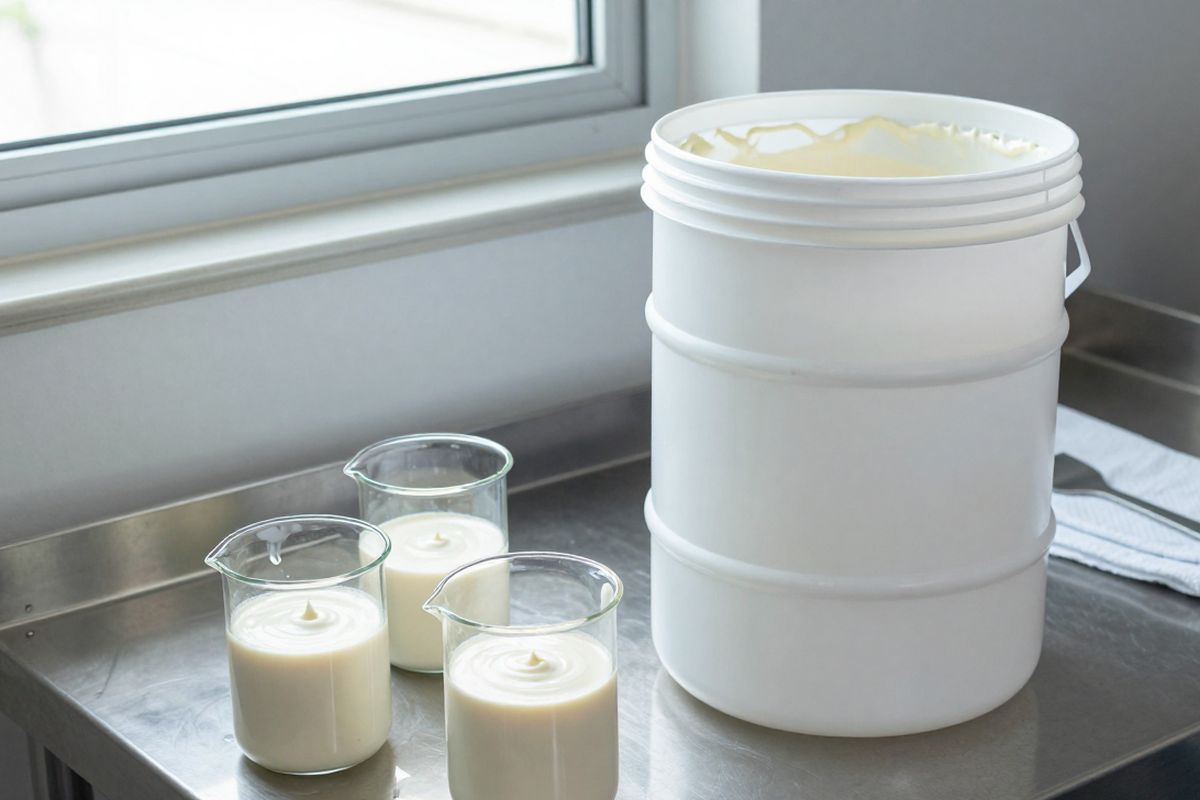
May answered the label question with a sentence she has used in four countries now: the drum is not a product. What leaves Guangzhou is an emulsion concentrate carrying UV filters, emulsifiers, oils and a thickener, without fragrance and without the final preservative level, because both depend on how the customer dilutes it. A base has no package, no retail label and no registration, so a claim printed on the drum would be a claim with nothing behind it.
Njeri pushed back the way buyers do, with the shelf: at the aisle a customer reads one number, SPF, and her competitor prints it in the biggest type the tube allows. She was not asking for a lie, she said; she was asking for a document. Ethan said the document is the test report on her finished product, in her name, and that the day an inspector pulls a tube off that shelf, the name on the recall notice will be hers, not the drum supplier's.
The meeting ended without a fight and with a cost. The design studio was told to redo the side panel, the packaging order moved, and the launch slipped out of the season she had planned for. On the way out she said the thing that stayed in the room: then this quarter we have no story to tell. Ethan told her the story would be the tests, and she did not look convinced.
Scene 2 · The formulation bench in Baiyun, Guangzhou, that afternoon
A sunscreen base looks simple on a spec sheet and is not. The UV filters are the expensive part and the part with the least room: in the EU and in most of Africa the permitted list, the maximum concentration in the finished product and the label wording are all fixed, and that maximum is written for the product that goes on skin, not for the concentrate in the drum. Everything we put in the drum has to be back-calculated through the customer's dilution.
The back-calculation is where most of the arguments start. A filler who adds fifteen per cent water and a little fragrance to stretch the batch has diluted every filter in it by fifteen per cent, and the SPF designed on the bench no longer exists on the shelf. So the technical data sheet gives a dilution window, the calculated filter concentration at each point inside that window, and one line in bold: the SPF of the finished product must be measured on the finished product.
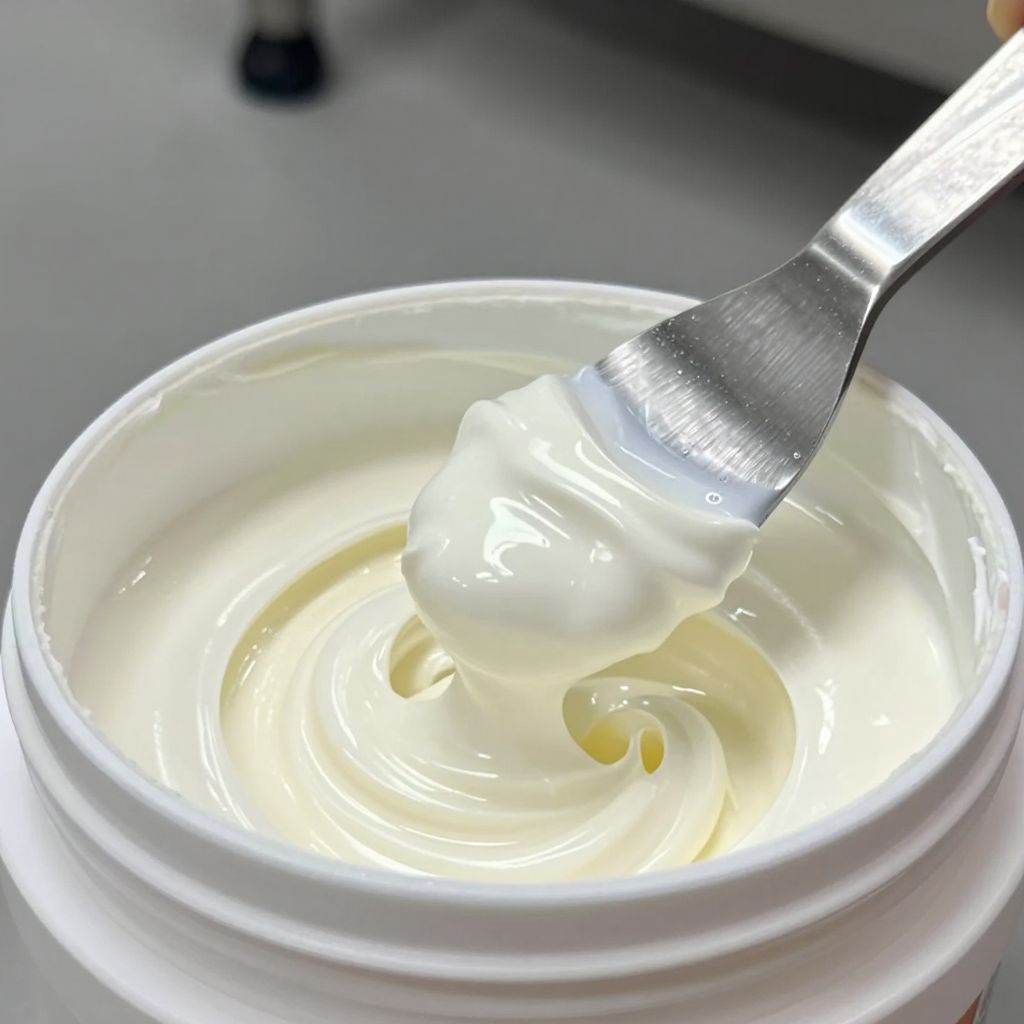
What we do measure is what a base can be measured for: pH, viscosity at a stated temperature and shear, centrifugation stability and accelerated ageing. What we do not do is put a number on the drum that only exists inside a laboratory with skin, volunteers and a solar simulator. In-vivo SPF runs to ISO 24444 and in-vitro to ISO 24443; both need a film of product at two milligrams per square centimetre on a substrate. A drum has no film and no substrate.
Lin, who runs the bench, put it in kitchen terms once and it stuck: the flour mill does not guarantee how high your bread rises. It guarantees the protein, the moisture and the ash, and it tells you what happens if you add too much water. A base is the same trade. The customer's skill is in the filling hall; ours is in the drum, and the honest document is the one that says exactly where that line falls.
There is also a difference in how the two markets treat the category. In China sunscreen is a special cosmetic and needs registration before sale; a base exported as a raw material does not carry that registration and cannot. In Kenya the product sits under KEBS standards, and if the claim crosses into a pharmacological effect it moves to the Pharmacy and Poisons Board instead. Either way the obligation lands on the party that puts the tube on the shelf.
So the drum carries six things and nothing else: product name, batch number, net weight, date of manufacture, shelf life and storage conditions. Not one word about effect. When a customer asks for one more line, the answer is the same in every language we ship in, and May keeps it on a card in her drawer, because she is the one who has to say no on the phone.
Scene 3 · The stability room next to retention, four weeks later
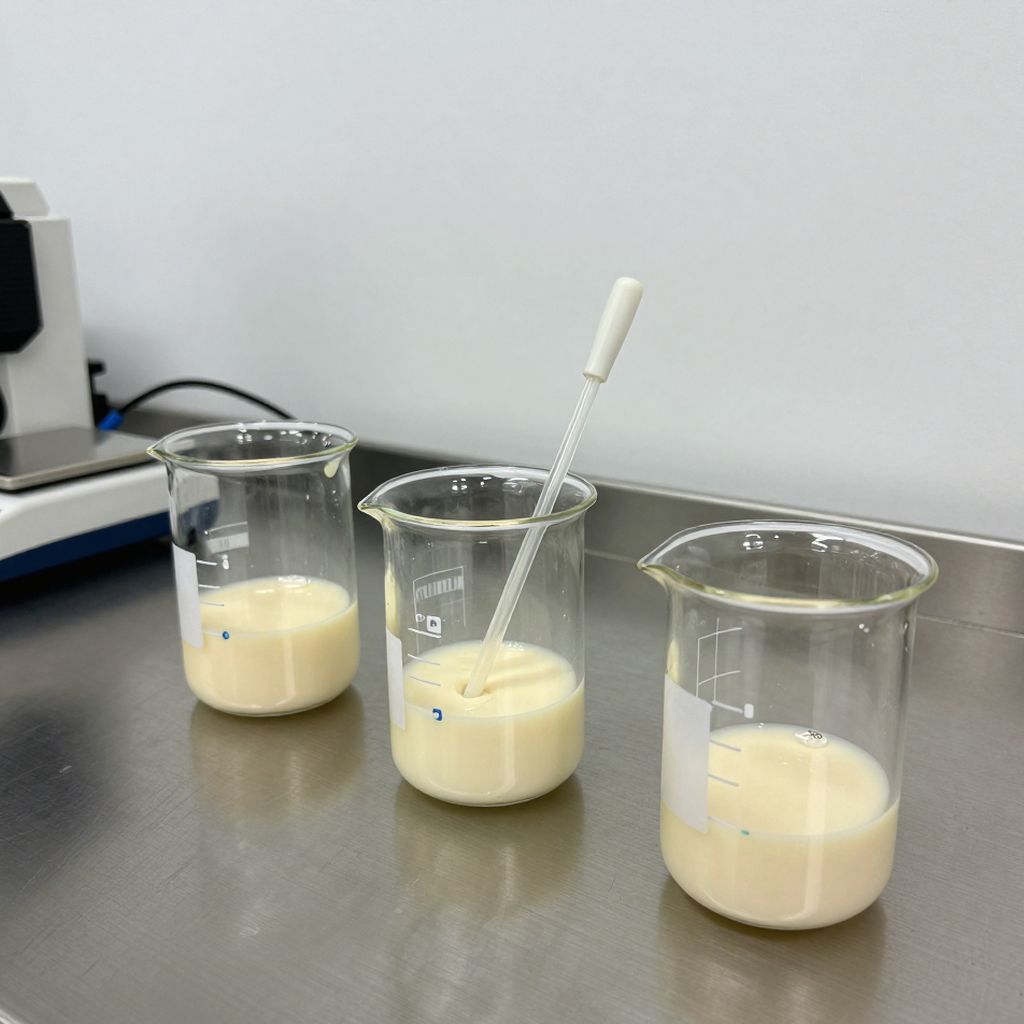
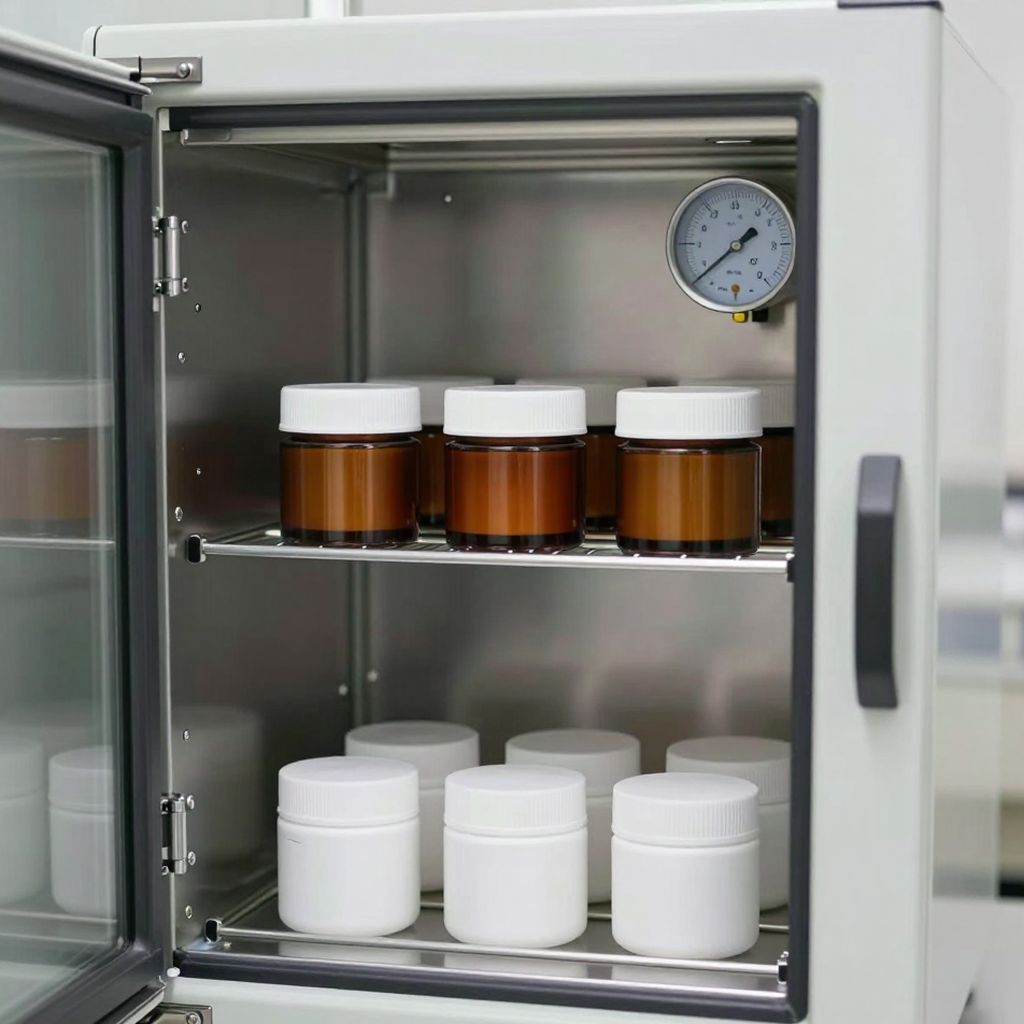
Every batch destined for East Africa now goes into the chamber before it goes into a drum, and the chamber is set at forty-five degrees with the humidity held steady. Four weeks, then thirty minutes at three thousand revolutions in the centrifuge, then the microscope. The number that matters is not whether it looks fine on day one; it is what the oil phase does after the emulsion has been cooked for a month.
On day twenty-six Lin opened the door and saw the sheen before he saw the sample. A thin film of oil had come up on the surface of two jars, and under the microscope the droplets had grown and begun to crowd. Nothing had gone wrong in the plant: pH was where it should be, micro was clean, viscosity read inside the window. The emulsion had simply been designed for a shelf at twenty-five to thirty degrees.
The container is a different climate from the shelf. A forty-foot box standing on a yard in Mombasa, sun on the roof from ten in the morning, has been logged at fifty-two degrees inside and thirty-one before dawn, and the daily swing does as much damage as the peak. Emulsifier blends that hold at ambient let go under that cycle, the oil phase separates, and what a customer opens in Nairobi is no longer what left Baiyun.
Three fixes were on the table. Cut the oil phase, which changes how the cream feels on skin and has to be re-described to the customer. Change the thickener, which costs money and needs a new supplier lead time. Add emulsifier, which is the cheapest and the one most likely to end up sticky in Nairobi. Lin took the thickener plus a small emulsifier adjustment, and wrote down the reason in the batch record.
The price was paid in batches, not in money. Two retention drums were scrapped because they had been filled from the old blend; the eight drums already palletised were emptied and made again; the shipment missed its sailing and the next one was two weeks out. Nobody argued about who was right. The line ran at night, and on the third night Ethan sent Lin home to sleep and sat with the chamber log himself.
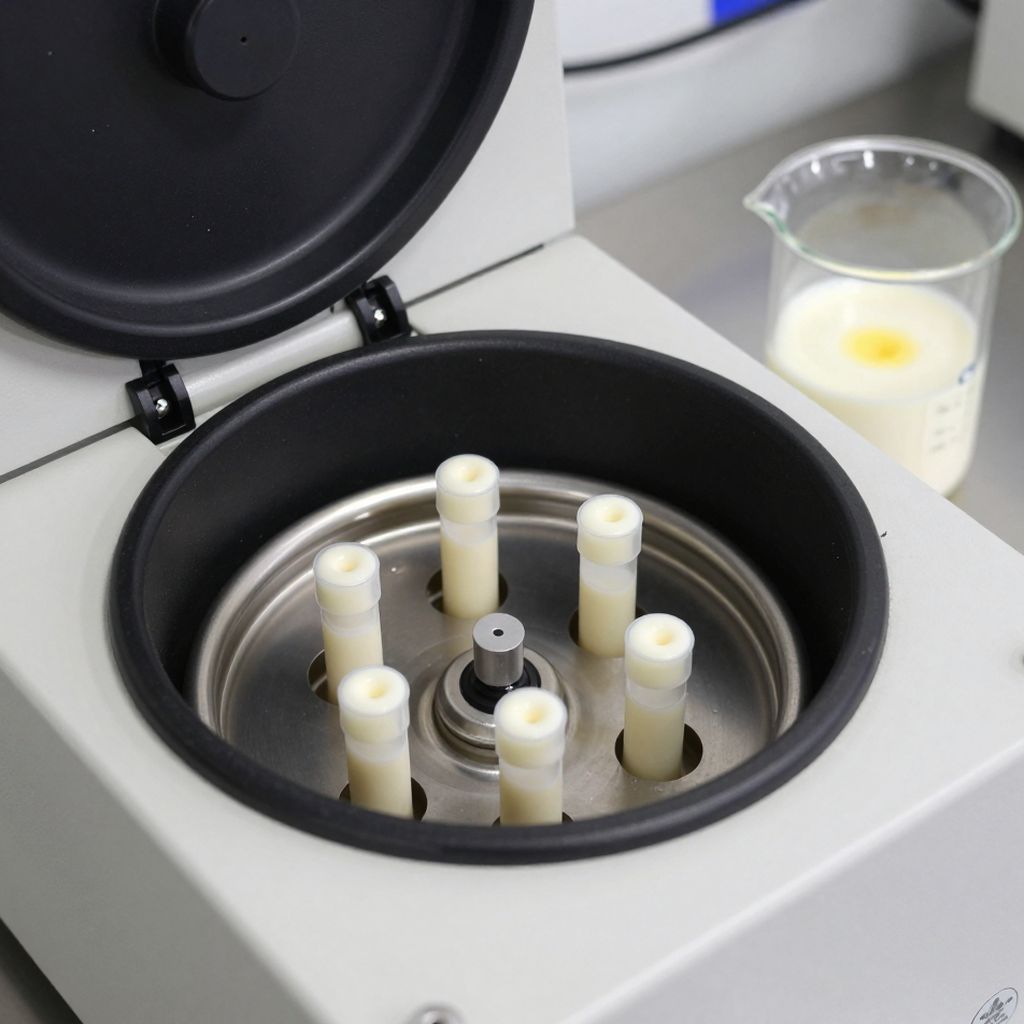
What changed afterwards is a rule rather than a formula: forty-five degrees for four weeks is now the floor for any market with a tropical port, and the argument that it cannot be that hot in the box is no longer accepted in the meeting. It was accepted once, in a smaller way, on the first cream base sent to Moscow, and the cost of that lesson was eleven days at a terminal in January.
Viscosity is the second half of the same lesson. A viscosity number without the temperature and the shear rate it was measured at is not a specification, it is a rumour, and a filler who reads twenty thousand centipoise and gets thirty thousand will call it a defect. So the sheet now states the spindle, the speed, the temperature and the settling time, and the number is given at forty-five degrees as well as at twenty-five.
None of this shows on the invoice. It shows in the second order, or it does not, and the only way to know which is to keep the data long enough to be asked. Retention samples from this batch will still be in the cabinet in two years, which is roughly how long it takes for a customer to come back and say the batch that failed was the one from the summer.
Scene 4 · A call from the clearing agent, five days before sailing
Njeri's freight forwarder had an opinion and it was a practical one: a base is a raw material, raw materials go in under the exemption, no certificate of conformity, ship it Friday. He had been moving cosmetics into Mombasa for ten years and he was not lying about what usually happens. What usually happens is not the same as what the law says, and the gap between the two is where containers sit for a fortnight.
May read it out from the KEBS pages rather than from memory. The pre-export verification programme has run since 2005 and covers regulated imports: a certificate of conformity has to be issued in the country of export, before shipment, by one of the inspection bodies KEBS contracts, and it is a mandatory document at Kenyan customs. Arrive without one and the box goes to destination inspection, with penalties, or rejection and re-export on the table.
The exemption is real but it is not ours to claim. Under the 2020 legal notice, raw materials and machinery imported by registered local manufacturers can be exempted, and there are other routes through a diamond mark or a ministerial waiver. Every one of those documents belongs to the importer. A supplier in Guangzhou cannot declare itself exempt on the strength of what is inside its own drum.
The reason it mattered here is what Njeri actually is. She fills, she labels, she sells, but she is not a registered manufacturer in the sense that notice means, and the exemption certificate she would have needed could not have been issued to her in time, if at all. So the choice was not between a fast route and a slow one. It was between a certificate and a box that might never clear.
The fee itself was never the issue. KEBS publishes three routes, and the rates run at six tenths of one per cent of FOB for the full inspection route, five and a half tenths for registration, three and a half for a licensed manufacturer, with a floor of two hundred and sixty-five dollars and a ceiling of twenty-seven hundred. On a shipment of this size the certificate is a small line; the five to seven working days it takes is the expensive part.
Ethan's decision took one sentence and cost the week: no certificate, no loading. Njeri was angry on the phone, and angry in the specific way of someone whose cash flow is tied to a sailing date, which is real anger and not a negotiating position. He answered that ten years of not being caught is a record, not a permission, and that the box that gets held is always somebody's first one.
The certificate came in six working days. The box missed the Friday vessel and left twelve days later. That same week a competing supplier's container arrived at Mombasa without one and went to destination inspection; it was still there when Njeri's box was cleared, and she heard about it from her forwarder before she heard it from us, which is the only reason the argument ended.
Scene 5 · The container yard at Mombasa, eleventh day on the ground
The certificate got the box through the gate; it did not get it out of the yard. KEBS pulled the consignment for sampling, and sampling has its own clock: a chemist, a bench, a queue of containers ahead of yours. Eleven days on the ground, billed by the day, while the temperature inside the box went up and down with the sun and every one of those days came off the shelf life of what was inside.
The logger told the rest of the story in a straight line with a sawtooth on it. Fifty-two at the peak, thirty-one before dawn, and the humidity doing the same dance. When Lin put that curve next to the chamber data he could point at four days where the emulsion had been through more heat than the accelerated test had ever asked of it, and the retention jars from that window still looked right.
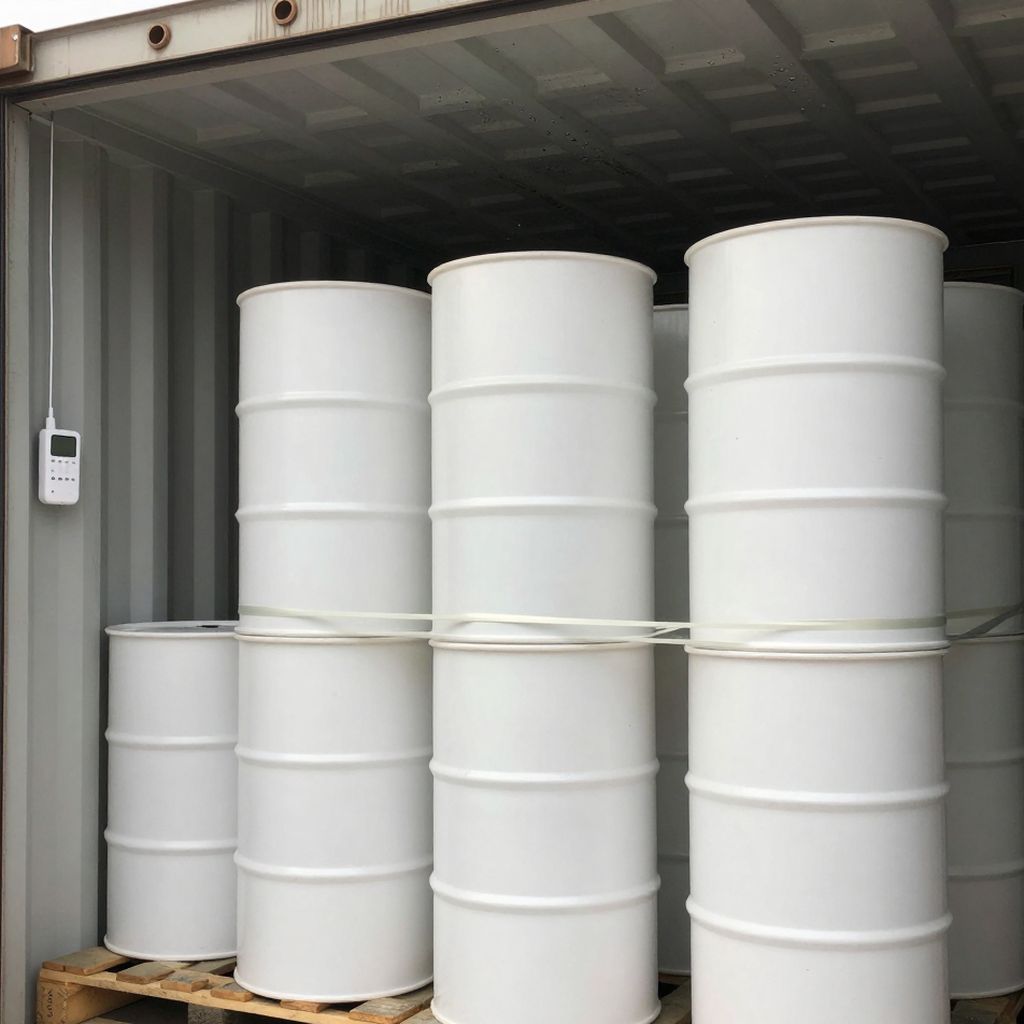
The shelf-life rule was the part nobody had modelled. Kenyan labelling guidance, as the US trade administration summarises it, expects non-food imports to land with at least half their shelf life remaining. Twenty-four months, minus production, minus sea freight, minus eleven days in the yard, minus the road to Nairobi, and the buyer's spreadsheet starts treating a perfectly good batch as a risk item rather than stock.
The request that followed is the one that ends relationships: could the production date on the drum label be moved forward, or the labels replaced. The answer was no, and it was not a negotiation. Batch number and date of manufacture are the two fields a factory never edits; change either and every certificate of analysis behind it becomes a document that proves nothing, and an inspector who wants to check starts with exactly those two.
What we could do was put the data in front of the buyer: the certificate of analysis for the actual batch, the logger curve with its dates, the retention results, and one practical instruction — put this batch on the line first, and take the next one earlier in the season than usual. We also pulled the following batch forward in the schedule, so the gap on her shelf would be shorter than the gap in her cash flow.
The yard charges were not in the contract, because the contract was written for a normal shipment and this was not one. In the end we carried a slice of the storage, which is money out of a base order's margin and the sort of thing that never appears in a case study. May wrote the clause into the template afterwards: who pays when a box is held, and at what point both sides stop guessing and start splitting.
Her summary was shorter than the story. A container is held for paperwork far more often than for product, she said, and the paperwork is decided before the box ever reaches the water. Everything that happened in that yard over those eleven days was set on the day the forwarder said the certificate was not needed.
Scene 6 · The filling line at Athi River, two months later
The finished product came off her line in September and went to a laboratory for in-vitro testing to ISO 24443, the method that calculates SPF from a measured transmission curve. The number that came back was lower than the number on her packaging artwork, and the gap was wide enough that her contract manufacturer's quality manager called us before she did.
Lin asked two questions and both had the same answer: how much water went into the batch, and how much fragrance. Fifteen per cent water, plus fragrance, plus a little extra thickener to bring the viscosity back up, because the batch had looked thin. Every filter in the concentrate had been diluted by roughly a sixth, and no amount of thickener puts an absorber back.
The table he sent back was one page: filter concentration in the drum, the calculated concentration at zero, five, ten and fifteen per cent dilution, the drift in viscosity at each point, and a line at the bottom saying that if a target SPF is fixed by the brand, the drum has to be ordered at a concentration that survives the dilution the line will actually do, not the dilution written in the brief.
Njeri apologised the way people do when they have spent two months being angry at the wrong party, briefly and without excuses, and then asked the question she should have asked in the first meeting. Ethan did not make a speech about it. He had May turn the dilution table into a single A4 sheet, laminated, and it is now taped above her filling line, where the operators read it before opening a drum.
The lesson is not that the customer was careless. It is that a semi-finished product only works when the boundary travels with it: what the drum is, what it is not, how far it can be stretched, and who signs what. A base sold without that is not a cheaper route to a product; it is a deferred argument, and the argument always arrives at the worst possible moment, which is after the money has been spent.
The bill for this order, in order: eleven days of storage at Mombasa, eight drums re-made, two retention drums scrapped, a launch moved six weeks, one slice of yard charges carried by us, and one phone call that came close to ending a two-year relationship. Against that: a certificate filed on time, a stability chamber that caught the oil separation before the customer did, and a laminated sheet on a wall in Athi River.
The drums are on shelves in two Nairobi supermarkets now. The name on the tube is hers, the SPF number is one her own laboratory measured on her own finished product, and the batch files behind it are complete enough that if an inspector walks in on a Tuesday morning nobody has to make a phone call to Guangzhou. That is what a base order is actually selling.
Common questions
Q: Can an SPF number be printed on a base drum?
A: No. SPF is a property of the finished product and can only be measured on it, in vivo to ISO 24444 or in vitro to ISO 24443. A base has no applied film, no substrate and no registration. The drum carries product name, batch, net weight, date of manufacture, shelf life and storage conditions; the data sheet gives a dilution window and the calculated filter concentration at each point inside it.
Q: Does a base need a PVoC certificate of conformity for Kenya?
A: Regulated imports need a certificate of conformity issued in the country of export before shipment, by a KEBS-contracted inspection body, and it is mandatory at customs. Raw-material exemption exists, but the exemption certificate belongs to the importer and has to be obtained by a registered local manufacturer; a supplier cannot declare itself exempt. Ask the customer first whether they hold it; if not, run the normal route and allow five to seven working days.
Q: Does time in the port eat into shelf life?
A: Yes, and it is the first risk a buyer sees. Kenyan labelling guidance expects non-food imports to land with at least half their shelf life remaining, so eleven days in the yard plus sea and road freight eats directly into that margin. The fix is not editing dates — batch number and date of manufacture are never changed — but supplying the certificate of analysis and the logger curve for the actual batch, so the customer can run it first-in-first-out and pull the next batch forward.
場景1 · 內羅畢 Karen 區,客戶的會議室,星期二上午
桶標設計稿攤在桌上,要緊的兩行字用紅色印在側面:SPF 50 PA++++,下面一行小字 reef safe。這份稿是 Njeri 在 Westlands 找設計公司做的,她想在午飯前拿到答案。她的品牌在肯尼亞貨架上做了六年,兩個 SKU,一個進超市連鎖、一個進藥妝櫃台;今年之前,每一支都是成品進口,用她進口商的名字在蒙巴薩清關。
今年這筆賬變了。運費、清關,加上港口那段保質期折損,成品落地價壓不住,她就在 Athi River 建了一條小灌裝線,回頭來找基料:一支防曬基、一支身體乳基,後來又加一支潔面。自己灌裝意味著配方、標籤、註冊都歸她;也意味著過去屬於進口商的那部分工作,現在落到她頭上——這部分在展會上沒有人會講。
May 用一句在四個國家講過的話回答標籤問題:桶不是產品。離開廣州的是乳液濃縮基,裡面有紫外吸收劑、乳化劑、油脂和增稠劑,沒有香精,防腐也按稀釋後的比例留空間,因為這兩樣都取決於客戶怎麼兌。基料沒有包裝、沒有零售標籤、沒有註冊,印在桶上的宣稱,後面什麼都沒有。
Njeri 用採購買家那種方式頂回來,指著貨架說:顧客站在通道裡只讀一個數字,SPF,競品把這幾個字印到管身能印的最大字號。她說她要的不是謊話,是一份文件。強哥說,文件是她成品上的檢測報告,掛她的名字;真到檢查員從貨架拿走一支的那天,召回通告上的名字是她的,不是供桶的人的。
會沒有吵起來就散了,但代價已經產生:設計公司要重做側板,包裝訂單順延,上市掉出她原定的那個季節。走到門口她說了一句留在房間裡的話:那我們這一季就沒有故事可講了。強哥說,故事會是那些檢測報告,她沒有被說服的樣子。
場景2 · 廣州白雲,配方台的下午
防曬基在規格表上看起來簡單,實際不是。貴的是紫外吸收劑,餘量最小的也是它:在歐盟和非洲多數市場,准用清單、成品裡的最大濃度、標籤寫法都是固定的,而那個最大濃度是寫給塗在皮膚上的成品,不是寫給桶裡的濃縮物。桶裡放多少,全部要按客戶的稀釋比例反算。
爭執大多從這個反算開始。灌裝廠如果為了拉產量加一成半的水和一點香精,桶裡每一種吸收劑都被稀釋了一成半,配方台上算出來的防曬值在貨架上就不存在了。所以技術數據表給的是一個稀釋窗口、窗口裡每個點對應的吸收劑計算濃度,以及一行加粗的字:成品的防曬值必須在成品上測。
我們能測的,是基料能測的那些:pH、在指定溫度與剪切條件下的粘度、離心穩定性、加速老化。我們不做的,是在桶上寫一個只存在於「有皮膚、有受試者、有太陽模擬器」的實驗室裡的數字。體內法走 ISO 24444,體外法走 ISO 24443,兩者都要在基材上塗到每平方厘米兩毫克的膜。桶沒有膜,也沒有基材。
管配方台的小林講過一個廚房裡的比方,後來成了內部說法:磨麵粉的不保證你的麵包發多高,他保證蛋白質、水分、灰分,並且告訴你水加多了會怎樣。基料是同一門生意。客戶的手藝在灌裝車間,我們的手藝在桶裡;誠實的文件,就是把這條線劃在哪裡寫清楚。
兩個市場對這個品類的處理也不一樣。在中國,防曬是特殊化妝品,上市前要註冊;以原料形態出口的基料不帶這個註冊,也帶不了。在肯尼亞,產品歸 KEBS 的標準管;一旦宣稱越界到藥理作用,就轉到藥劑與毒物委員會(PPB)那一條線。無論走哪條,義務都落在把管子放上貨架的那一方。
所以桶上只印六樣東西,別的都不印:品名、批號、淨重、生產日期、保質期、儲存條件。一個功效字都沒有。客戶要求再加一行時,答覆在我們出貨的每一種語言裡都一樣;May 把這句話寫在一張卡片上放抽屜裡,因為在電話裡說不的是她。
場景3 · 留樣室隔壁的穩定性房,四週之後
現在每一批去東非的貨,進桶之前先進箱。箱子設在四十五度,濕度壓穩。四週,然後離心機三千轉三十分鐘,再上顯微鏡。要緊的不是第一天看起來好不好,是乳液被烤了一個月之後,油相會做什麼。
第二十六天,小林開門時先看見那層光,才看見樣品。兩隻瓶子表面浮起一層薄油,顯微鏡下液滴已經長大、開始擠在一起。廠裡什麼都沒做錯:pH 在該在的位置,微生物乾淨,粘度讀數在窗口內。問題只是這套乳液是照二十五到三十度的貨架設計的。
貨櫃跟貨架是兩個氣候。一隻四十呎櫃停在蒙巴薩堆場,從早上十點起太陽曬在櫃頂,櫃內記錄到五十二度,天亮前三十一度;每天的震盪跟峰值一樣傷人。常溫下撐得住的乳化劑配比,在這種循環裡會鬆手,油相分出來,客戶在內羅畢打開的產品,已經不是離開白雲的那個。
桌上三個選項:降油相,手感會變,要重新跟客戶交代;換增稠劑,要花錢,還要等新供應商的交期;加乳化劑,最便宜,也最可能在內羅畢的熱天裡變得黏膩。小林選了換增稠劑加微調乳化劑,並且把理由寫進批記錄。
代價是按桶付的,不是按錢付的。兩桶留樣是按舊配比灌的,報廢;已經打好托盤的八桶倒出來重做;船期錯過,下一班在兩週後。沒有人爭誰對。產線在夜裡跑,第三晚強哥讓小林回去睡,自己守著恆溫箱的記錄。
後來改變的是規矩,不是配方:任何有熱帶港口的市場,四十五度四週現在是下限;「櫃子裡不會那麼熱」這種話,會議上不再被接受。這樣的話被接受過一次,程度還輕些,是第一批去莫斯科的膏霜基,那次教訓的代價是一月碼頭上的十一天。
粘度是同一課的後半段。一個沒有標明溫度與剪切條件的粘度數字不是規格,是傳言;灌裝廠讀到兩萬厘泊、實際拿到三萬,就會說這是瑕疵。所以表上現在寫明轉子、轉速、溫度、靜置時間,並且在二十五度之外,再給一個四十五度的讀數。
這些都不會出現在發票上。它出現在第二張訂單裡,或者不出現;要知道是哪一種,只能把數據留得夠久,久到有人來問。這批的留樣兩年後還會在櫃子裡——而那差不多也正是客戶回頭說「出問題的是夏天那批」所需要的時間。
場景4 · 貨代打來的電話,裝船前五天
Njeri 的貨代有一個意見,而且很務實:基料是原料,原料走豁免,不用合格證,星期五上船。他往蒙巴薩運化妝品運了十年,他講的「平常都這樣」不是假話。但平常都這樣,跟法律怎麼寫,是兩件事;兩者之間的差距,就是櫃子押上兩週的地方。
May 是照著 KEBS 的頁面念的,不是憑記憶。裝船前符合性驗證計劃從 2005 年開始跑,管的是受管制進口貨:合格證必須在出口國、裝船之前,由 KEBS 簽約的檢驗機構簽發,並且是肯尼亞清關的必備文件。沒有它就到港,櫃子轉目的地檢驗,罰款、拒收、退運都擺在桌上。
豁免是真的,但不是我們能主張的。按 2020 年那份法律公告,註冊本地製造商進口的原料與機器可以豁免,另有鑽石標誌與部長豁免幾條路。這些文件全部屬於進口方。廣州的供應商不能因為「我桶裡裝的是原料」就自己宣布豁免。
這件事在這裡之所以要緊,是因為 Njeri 的身份。她灌裝、貼標、銷售,但她不是那份公告所指的註冊製造商;她需要的那張豁免證,就算能辦也來不及。所以選項不是快路與慢路,而是「一張證」與「一隻可能清不了關的櫃子」。
費用本身從來不是問題。KEBS 公布三條路線,費率分別是離岸價的千分之六(全檢)、千分之五點五(註冊)、千分之三點五(持證製造商),下限二百六十五美元,上限二千七百美元。這個貨量下,一張證只是很小的一行成本;真正貴的是辦它要五到七個工作日。
強哥的決定一句話,代價是一週:沒有證,不上船。Njeri 在電話裡發火,而且是那種現金流綁在船期上的人特有的火——那是真火,不是談判姿態。他回答:十年沒被抓到,是一份紀錄,不是一份許可;而被押下的櫃子,永遠是某個人的第一次。
證六個工作日下來,櫃子錯過星期五那班船,晚了十二天走。同一週,另一家供應商的櫃子沒有證就到了蒙巴薩,轉目的地檢驗;Njeri 的櫃子清完的時候,那隻櫃子還在那裡。這件事她是先從貨代那裡聽到的,不是從我們這裡——這是爭執能結束的唯一原因。
場景5 · 蒙巴薩港的堆場,櫃子落地的第十一天
證讓櫃子進了閘,並沒有讓它離開堆場。KEBS 抽了這批貨去化驗,而化驗有它自己的時鐘:一個化驗員、一張台、前面排著的別人的櫃子。櫃子在地上十一天,按天計費;櫃內溫度跟著太陽上下,而那十一天,每一天都是從櫃裡那些東西的保質期裡扣的。
記錄儀把其餘的事講成一條帶鋸齒的直線。峰值五十二度,天亮前三十一度,濕度跟著跳同一支舞。小林把那條曲線放到恆溫箱數據旁邊,能指出其中四天,乳液經歷的熱超過加速試驗要求過的任何一段——而那四天對應的留樣,看起來還是好的。
保質期那條規矩,是沒有人建模的部分。按美國商務部國際貿易署對肯尼亞標籤要求的歸納,非食品進口貨到港時應保留至少一半保質期。二十四個月,減去生產到出廠、減去海運、減去堆場十一天、減去運到內羅畢那一段,採購的表上就開始把一批完全正常的貨當成風險項,而不是庫存。
接著來的要求,是那種能結束關係的要求:桶上的生產日期能不能往後挪,或者標籤重貼。答案是「不」,而且沒有商量。批號與生產日期,是工廠永遠不改的兩個欄位;改了任何一個,後面所有的分析報告都變成證明不了任何事的文件,而想查的人,第一個看的正是這兩個。
能做的,是把數據擺到採購面前:實際批號的分析報告、帶日期的溫度曲線、留樣結果,以及一句實務指示——這批先上線,下一批比往年更早進季節。我們還把再下一批的排產往前挪,讓她貨架上的空檔比她現金流的空檔短一些。
堆場費合約裡沒寫,因為合約是照正常出貨寫的,而這批不正常。最後我們承擔了一段倉租——那是從基料訂單毛利裡割出去的錢,也是案例分析裡永遠不會出現的那種事。May 事後把條款寫進模板:櫃子被押時誰付、到哪一步雙方停止猜測、開始分攤。
她的總結比故事短:櫃子因為文件被押的次數,遠多於因為產品被押;而文件在櫃子碰到海水之前就已經決定了。那十一天在堆場發生的一切,在貨代說「不用證」的那天就定下了。
場景6 · Athi River 的灌裝線,兩個月後
成品九月下了她的線,送去實驗室做 ISO 24443 體外測試——那個方法從實測的透射曲線算出防曬值。回來的數字比她包裝稿上的低,差距大到她的代工廠品保經理比她先打電話給我們。
小林問了兩個問題,答案是同一個:那批加了多少水,加了多少香精。一成半的水,加香精,再加一點增稠劑把粘度拉回來,因為那批看起來稀。濃縮基裡每一種吸收劑都被稀釋了差不多六分之一,而增稠劑加再多,也補不回吸收劑。
他回過去的表只有一頁:桶裡的吸收劑濃度,稀釋零、五、十、十五個百分點時各自的計算濃度,每個點上粘度的漂移,以及底下一句話——如果品牌方把目標防曬值定死了,訂桶時就要按產線實際會做的稀釋去定濃度,而不是按簡報上寫的稀釋。
Njeri 道歉的方式,是那種發現自己兩個月來生錯了氣的人的方式:很短,沒有藉口,然後問了她第一次會議就該問的問題。強哥沒有趁機講道理,只讓 May 把稀釋表做成一張 A4、過膠;現在貼在她灌裝線上面的牆上,操作員開桶之前會看一眼。
這件事的教訓不是客戶粗心,而是半成品只有在邊界跟著它一起走的時候才成立:桶裡是什麼、不是什麼、能拉多遠、誰簽哪一份。不帶這些就賣出去的基料,不是通往產品的便宜路,是一場延後的爭執;而爭執總是在最壞的時刻到——錢已經花完之後。
這單的帳單按順序是:蒙巴薩十一天倉儲、八桶重做、兩桶留樣報廢、上市推後六週、一段由我們承擔的堆場費、一通差點結束兩年合作的電話。對面是:一份按時歸檔的合格證、一台在客戶發現之前抓到析油的穩定性箱,以及 Athi River 一面牆上那張過膠的紙。
那些桶現在在內羅畢兩家超市的貨架上。管身上的名字是她的,防曬數字是她自己的實驗室在自己成品上測出來的,後面那一疊批檔案完整到,如果某個星期二上午有檢查員走進來,沒有人需要打電話到廣州。基料訂單真正賣的,就是這個。
常見問題
Q:基料桶上可以印 SPF 嗎?
A:不行。防曬值是成品指標,只能在成品上按 ISO 24444(體內)或 ISO 24443(體外)測;基料沒有塗布膜、沒有基材,也沒有註冊身份。桶上只印品名、批號、淨重、生產日期、保質期、儲存條件;技術數據表給稀釋窗口與各稀釋點的計算濃度,SPF 由客戶在自己成品上測。
Q:出口肯尼亞,基料要不要 PVoC 合格證?
A:受管制進口貨要在裝船前於出口國取得合格證(CoC),由 KEBS 簽約的檢驗機構簽發,是清關必備文件。原料豁免確實存在,但豁免證屬進口方,要由註冊本地製造商去辦;供應商自己宣布豁免無效。實務上先問客戶拿不拿得到,拿不到就按正常路線辦 CoC,留五到七個工作日。
Q:押港會不會影響保質期?
A:會,而且是買方最先看到的風險。肯尼亞的標籤要求歸納裡,非食品進口貨到港時應保留至少一半保質期,押港十一天加上海運與陸運會直接吃掉這個餘量。處理方式不是改日期——批號與生產日期絕對不能改——而是提供實際批號的分析報告與溫度記錄曲線,讓客戶按先到先用安排上線,並把下一批排產提前。
Questions about this process?對這道工序有疑問?
Ask us and we will answer in writing, with the batch records to back it up.問我們,我們會以書面回覆,並附上批記錄。