SPF 100 does not travelSPF 100 這三個字,在三個市場都不成立
One sunscreen, three markets, one label reading SPF 100 — and a spray on top. Three rulebooks on one table, one molecule with three ceilings. The bottle can travel. The number cannot.一支防曬想同時賣到歐洲、美國、中國,還要寫 SPF 100 —— 三本規定攤在桌上,同一個分子三個上限。瓶子能通三地,數字不能。
Scene 1 · The client video call, Tuesday morning
The call connects and the screen shows Kofi from Ghana. He holds a plain white plastic bottle up to the camera, no printing on it at all. "This shape," he says. "White, pump head, 200 millilitres. Inside: SPF 100 plus, water resistant, and it has to spray." "Three requirements," Qiang writes on a sheet of paper. "Three requirements, one bottle, sold into Africa, the Middle East and Europe." "Can you do that?"
Qiang did not answer straight away. He asked first: "Who decided on SPF 100?" "The customer wants it," Kofi said. "Everyone is shouting 100 these days, and it sells better than 50." "And if one market does not allow 100?" Kofi paused. "Then write 50. The label can change per market."
May was taking notes and looked up at Qiang. He stopped for two seconds before speaking. "The label can change per market, and so can the concentration. But the testing cannot be done once, and the registration cannot be done once." He paused again. "What you are asking for is not one bottle. You are asking for one bottle to be sold in three places."
Scene 2 · The formulation lab, that afternoon
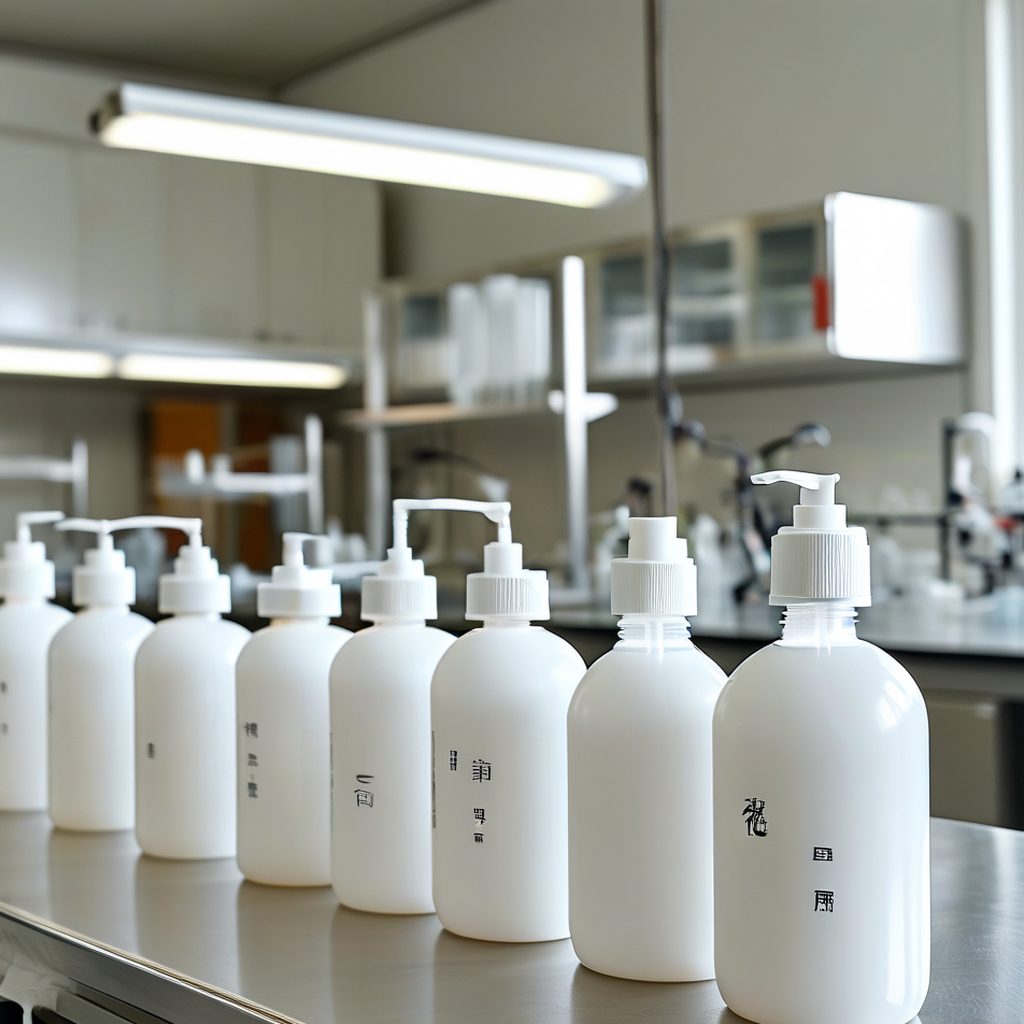
Xiao Lin pushed a backlight panel across the bench, six rows of test tubes on it. "First, where SPF comes from," she said. "With an artificial light source you mark areas on a volunteer's back, measure how much exposure turns the unprotected skin red, then measure how much it takes once the product is on, and the ratio is the SPF." She tapped the tubes. "Ten to twenty subjects, and the result has to be statistically meaningful." "So SPF is not something we dial in," Qiang said. "SPF is something we measure," Xiao Lin said.
And water resistance?" asked Qiang. Xiao Lin turned to another page: "Ordinary water resistance is two 20-minute sessions in water, very water resistant is four. No wiping in between, water temperature held between 23 and 32 degrees. Then you measure again, and the SPF has to hold at least half its original value to count." "Half the protection after half an hour in the pool." "That is the idea," Xiao Lin said. "So the word 'water resistant' needs a report behind it."
May asked a very practical question: "How much do customers actually apply?" Xiao Lin said: "The reference is 2 milligrams per square centimetre, roughly 36 grams for an adult body." "Most people use less than half of that," Qiang said. "So with the same formula, whether you label SPF 50 or SPF 100, what decides the protection is not the bottle, it is how much the customer applied." He turned towards Kofi. "That is also why you have to be careful about a high number. You are selling a promise the customer will not apply enough to keep."
Xiao Lin turned to another page, this one on EU labelling: "In the EU the SPF label stops at 50+, split into low, medium, high and very high. The UVA protection factor has to be at least one third of the SPF, and there is a critical wavelength requirement of 370 nanometres for broad spectrum coverage." "SPF 100 in Europe is not a matter of labelling a bit higher," Qiang said. "There is no such tier."
Scene 3 · The meeting table, early evening

In the evening three documents lay side by side on the meeting table: the EU Regulation 1223/2009 Annex VI, the US OTC Monograph M020, and Table 5 of China's Safety and Technical Standards for Cosmetics. Qiang lined them up. This was the most expensive lesson of the day. "One molecule, three markets, three ceilings." He pointed at bemotrizinol. "The EU Annex VI allows 10%. China's Table 5 also says 10%. The US — this June 10 final order put it at 6%."
May asked: "Why is the US lower?" "Because in the US sunscreen is a drug, not a cosmetic. It sits under the OTC monograph. The June 10 order is the first time in twenty years that a new sunscreen active has been added to that monograph, and FDA calls it a milestone, with an 18-month exclusivity period." "Is that bad news for us?" Kofi asked. "It is bad news for anyone who wants the highest concentration," Qiang said. "The US ceiling is fixed there. A 10% version cannot go there."
"And this one is worse." Qiang turned to the second order, September 10. "PABA and trolamine salicylate have been removed from the permitted list. FDA's own words: the risks outweigh the benefits, and under no conditions are they generally recognized as safe and effective. In practical terms these two ingredients can no longer be sold in the US." He turned the page towards Kofi. "Do your existing formulas contain either of them? If so they have to change."
"And China?" May asked. Qiang opened the Chinese document at the relevant section: "Sunscreen is a special cosmetic in China. Not a notification — a registration. Nothing can be produced or imported before registration, the registration certificate is valid for five years, and the registration number has to appear on the label. Claims need a sound scientific basis, and the summary goes public on the regulator's website." "And there is a timetable." He turned another page. "Announcement No. 6 of 2026: 4-methylbenzylidene camphor is banned from 1 January 2027. The limits for oxybenzone, homosalate and octocrylene are revised from 1 January 2028. After that revision the permitted UV filter list goes from 27 entries down to 25."
"I need to stop on the 2028 line," Qiang said, pressing his finger on the homosalate row. "The revision adds a condition of use: not to be used in products where inhalation exposure is a possibility." "You want a spray," May said. Qiang nodded. "Aerosols are exactly that inhalation risk. Oxybenzone and octocrylene carry the same line, and for octocrylene the cap is 9% in aerosol products against 10% in everything else."
Kofi was quiet for a moment. "So the one I sell in Europe has to be redone." "Yes," Qiang said. "The European version can be a non-spray. And the spray for Africa?" "Africa and China are not the same book of rules. China can do it, but you have to start dating the formula now — raw materials, testing, registration, all of it has to finish before 1 January 2028. Miss that and the spray does not exist in China."
"So three markets, one bottle." May stacked the three documents. "That cannot be done." "What can be done is one formula core, with three concentrations, three labels and three registration routes." Qiang looked at Kofi. "Or you drop the number 100."
Scene 4 · The testing and sample area, the next morning
The next morning in the testing and sample area, Xiao Lin was laying out a schedule. "Three places, three submissions," she said. "The EU wants the file plus label review, the US wants a filing and label review under the OTC monograph route, and China wants special cosmetic registration plus testing. Three paths, and they do not merge into one." "How long?" "Human efficacy evaluation is the slow part. SPF, water resistance and PFA testing need subjects assembled, plus ethics review and lab scheduling. For an aerosol the propellant is assessed separately, and where there is inhalation exposure you also need an inhalation toxicity assessment of the propellant."
May asked the practical question: "What if an imported sunscreen's outer packaging says a different SPF from what we measure here?" Xiao Lin pulled out the guidance Q&A. "If the SPF value, PA or water-resistance claims on the sales packaging do not match the results obtained using the methods in the Safety and Technical Standards, you must design separate sales packaging specifically for the China market. Same base, different pack for China."
"And the aerosol warnings." Xiao Lin said. "If the propellant is flammable you mark fire and explosion precautions. Where there may be inhalation exposure, the safety warnings are encouraged to say do not spray directly onto the face, avoid inhalation, and avoid use in small enclosed and poorly ventilated spaces." "All of that goes on the bottle," Qiang said. "So the pack cannot be shared with the lotion version."
Scene 5 · The corridor, dusk

At dusk Qiang called Kofi back from the corridor. "I have three options for you," he said. "First, a non-spray lotion or cream, SPF 50 and PA four plus, which can go to Europe, the US and China, with the labels built for each market — what you pay extra is three sets of labels and three registrations. Second, add a spray line, for the US and for markets outside the Middle East, with the concentration set against the US 6% ceiling; the skin feel will be heavier and I will not promise it. Third, you find local distributors to register separately, and I only supply the formula and the documentation."
"I don't want the third one," Kofi said. "I want the second. Spray is essential in Africa and the Arab markets." "Then you need the first one too," Qiang said, "because the volume seller in the Middle East is not the spray, it is the everyday bottle." Kofi laughed: "How do you know that?" May spoke up: "Because on shelves in those markets the spray is usually the big family pack, while the everyday bottle is what moves units."
"Then it is two lines," Qiang said. "Let me state the cost first. Minimum order quantities are calculated per line, testing is billed twice, and the lead time is longer than for a single bottle. The single-SKU cost advantage you were expecting gets partly eaten by registration and testing." "How much?" Kofi asked. "I cannot quote that now," Qiang said. "Let me confirm the testing schedule first, then I will give you a number."
Before hanging up Kofi asked one last thing: "You really cannot write SPF 100 at all?" Qiang said: "Europe has no tier above 50+. The US has only just added a new active in. China has just struck two off the permitted list. Which label would you like me to print 100 on?" Kofi did not answer. Qiang said: "That is the sentence I want to write. SPF is not shouted into existence, it is measured into existence. The bottle can travel to three markets. The number cannot."
Scene 6 · On set, two weeks later
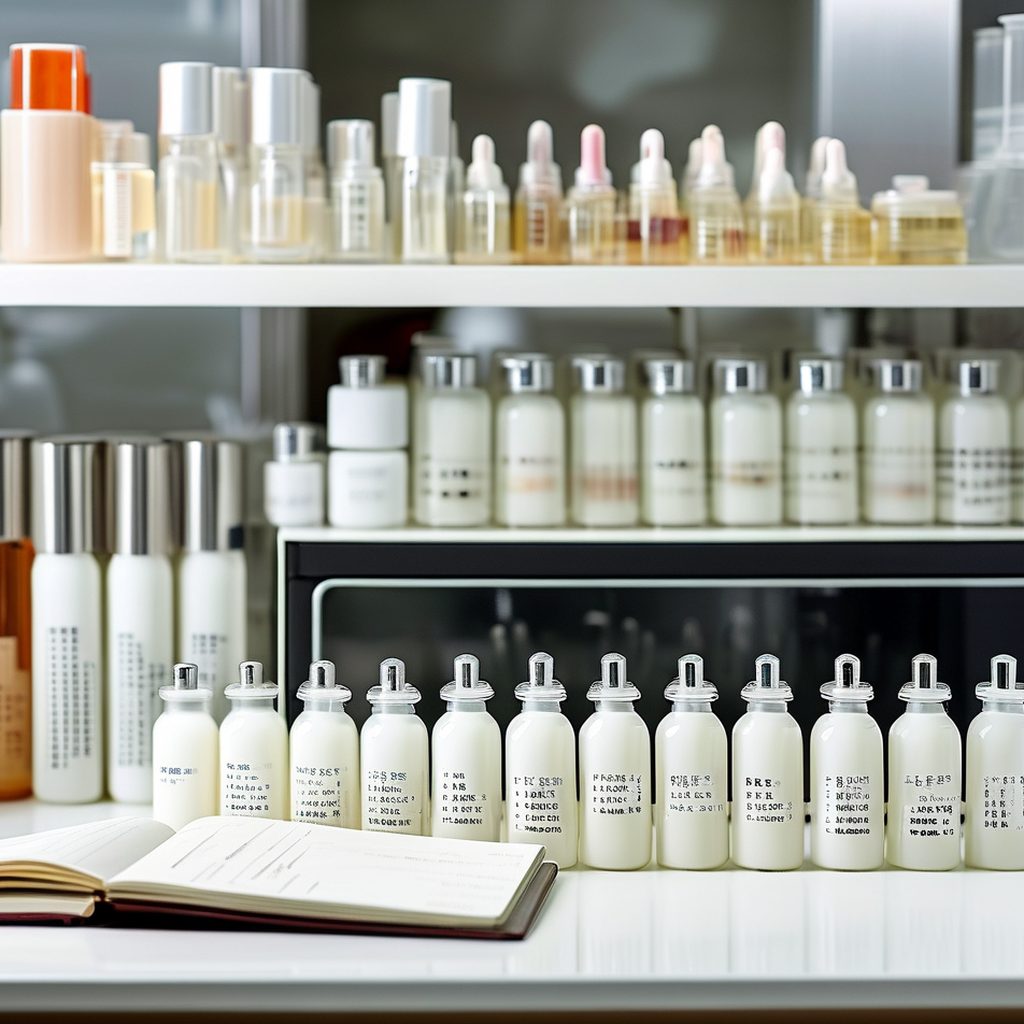
Two weeks later on set, three samples sat on the table: a lotion, a spray and a test tube from the pilot run. The photographer asked whether to shoot people. "No people," Qiang said. "Shoot the bottles, the labels, the wall in sunlight." He pointed at the lotion. "This one has four label versions: Europe, the US, China, plus an instruction card for the counter. The card says how to use it and how much to apply for protection. It does not carry an SPF number."
May came over with the printed submission checklist. "I have checked what goes into the China registration file. The claims summary has to be in Chinese too, and I am getting that written." "Keep the summary conservative," Qiang said. May said: "What I have is: this evaluation is based on a human efficacy evaluation test, the method follows the Safety and Technical Standards for Cosmetics, and the results are in report number so-and-so."
"And the spray?" Kofi asked down the phone. "The China submission for the spray is not finished," Qiang said. "The formula is already built against the 2028 rules and we are waiting on the testing schedule. I am not going to race the 1 January 2027 ban date, but the target is to file before it, with margin."
Before wrap, Qiang turned the empty plastic bottle over in his hand twice. At the start he had taken this for an order about a bottle. Only at the end did he understand that the bottle was the easy part, and the hard part was three books of rules, two rounds of testing and one number that could not be written casually. He said to May: "One molecule, three ceilings. One bottle, three labels. One number, three fates. What this order pays for is not the formula. It is the ability to tell those three things apart."
FAQ
Q: Why does sunscreen need registration in China when other cosmetics only need notification?
A: Because the Cosmetics Supervision and Administration Regulation lists hair colouring, perming, spot-removal and whitening, sunscreen and anti-hair-loss products as special cosmetics. Special cosmetics are registered with the national regulator and cannot be produced or imported before registration. The registration certificate is valid for five years, and renewal has to be applied for 30 working days before it expires. Claims also need a sound scientific basis, and the summary is published for public scrutiny.

Q: Can SPF 100 actually not be made?
A: The test itself can be done — SPF is a ratio of minimal erythema dose on volunteer skin. But labelling is a separate matter. In the EU the label stops at 50+, and 50+ carries its own measured threshold. In the US the route runs through the OTC monograph, where active ingredients and concentrations must fall inside the monograph conditions. So being able to make it and being able to label it are two different things.
Q: An imported sunscreen says SPF 60+ on its outer packaging. Can it go straight into China?
A: Not as it stands. According to the Q&A on the Technical Guidelines for Research on Sunscreen Cosmetics, if the SPF value, PA and water-resistance claims on the sales packaging do not match results obtained with the sunscreen efficacy methods in the Safety and Technical Standards for Cosmetics, sales packaging must be designed specifically for the China market.
Q: Why do aerosol sunscreens need extra care in China?
A: Three reasons. First, in the safety assessment the propellant is assessed separately from the other ingredients, with concentrations calculated after the propellant is deducted; where there is inhalation exposure you also need an inhalation toxicity assessment of the propellant. Second, the pack needs warnings such as fire and explosion precautions, do not spray directly onto the face, and avoid inhalation. Third, Announcement No. 6 of 2026 revises the limits for oxybenzone, homosalate and octocrylene from 1 January 2028, explicitly stating that they are not to be used in products where inhalation exposure is a possibility.
Q: Do African and European customers expect the same thing from sunscreen?
A: Not quite. European shelves are used to SPF grades and UVA logos, and the buying decision is more rational. In West Africa and the Arab markets the demand is more direct about water resistance and lasting a full day outdoors, and many end customers first ask whether it will run when they sweat. May's view is that in those markets the everyday bottle is what sells, while the spray is mostly the family pack.
場景一 · 客戶視訊會議,週二上午
視訊接通,螢幕那邊是加納的 Kofi。他舉起一個塑膠瓶到鏡頭前,瓶身素白,什麼字都沒有。「我要這個形狀,」他說,「白色,按壓頭,兩百毫升。裡面是 SPF 100 以上、防水、可以噴的防曬。」「三個要求。」強哥在紙上寫下來。「三個要求,一支瓶子,賣到非洲、中東,還有歐洲。」Kofi 說,「你們能不能做?」
強哥沒有立刻答。他先問:「SPF 100 是誰定的?」「客戶要。」Kofi 說,「現在外面都在喊 100,賣得比 50 好。」「那如果某一個市場不允許寫 100 呢?」Kofi 停了一下:「那就寫 50 嘛。標籤可以按市場改。」
May 在旁邊記錄,抬頭看了強哥一眼。強哥停下兩秒才說:「標籤可以按市場改,濃度也可以按市場改。但測試不能只做一次,註冊不能只做一次。」他頓了一下,「你要的不是一支瓶子。你要的是一支瓶子賣三個地方。」
場景二 · 配方實驗室,同日下午
小林把一個背光板推過來,上面是六排試驗管。「先講 SPF 是怎麼來的。」她說,「用人工光源在受試者背上劃區塊,先量沒擦防曬時多少照射量會紅,再量擦了以後要多少才會紅,兩個數相除就是 SPF。」她敲了敲那排管子,「受試者要十到二十個,而且結果要有統計意義。」「所以 SPF 不是我們調出來的。」強哥說。「SPF 是量出來的。」小林說。
「防水呢?」強哥問。小林翻到另一頁:「普通防水是兩次二十分鐘的水中活動,強防水是四次,中間不能擦,水溫控制在 23 到 32 度。洗完之後再量一次,SPF 要保住原來的一半以上,才算有防水性能。」「半小時游泳不掉一半。」強哥說。「是這個意思。」小林說,「所以『防水』兩個字是要有報告的。」
May 問了一個很實際的問題:「那客人實際擦多少?」小林說:「參考量是每平方公分 2 毫克,一個成年人全身大概三十六克。」「大多數人擦不到一半。」強哥說,「所以同一個配方,標 SPF 50 還是標 SPF 100,最後決定防護的不是瓶子,是客人擦了多少。」他轉向 Kofi 的方向,「這也是為什麼標太高的數字要小心 —— 你賣的是一個客人擦不滿的承諾。」
小林把另一頁翻出來,這一頁講的是歐盟的標籤:「歐盟 SPF 最高只能標 50+,分低、中、高、很高四級;UVA 防護指數要至少是 SPF 的三分之一;還有一個臨界波長要達到 370 納米才算廣譜。」「SPF 100 在歐洲不是標高一點的問題。」強哥說,「是根本沒有這一檔。」
場景三 · 會議桌,傍晚
傍晚,會議桌上攤了三份文件:歐盟的 1223/2009 附件六、美國的 OTC Monograph M020、中國的《化妝品安全技術規範》表 5。強哥把三份並排,這是今天最貴的一課。「同一個分子,三個市場三個上限。」他指著 bemotrizinol,「歐盟附件六,准用到 10%。中國表 5,也是 10%。美國 —— 今年 6 月 10 日的最終命令,加到 6%。」
May 問:「為什麼美國比較低?」強哥說:「因為美國的防曬是藥品,不是化妝品,它走 OTC 專論。六月十日那個命令是二十年來第一次往專論裡加新的防曬活性成分,FDA 說這是個里程碑,還帶 18 個月獨佔期。」「那對我們是壞消息嗎?」Kofi 問。「對想用最高濃度的人是。」強哥說,「美國的上限壓在那裡,10% 的版本做過去過不了。」
「還有更狠的。」強哥翻到 9 月 10 日的第二份命令,「PABA 和 trolamine salicylate 被移出可用名單。FDA 的原話是風險大於收益,在任何條件下都不再認定為安全有效。等於這兩個成分在美國不能直接賣。」他把那頁轉向 Kofi,「你手上現有的配方裡有沒有這兩個?有就要換。」
「中國這邊呢?」May 問。強哥把中國那本翻到章節:「防曬在中國是特殊化妝品,不是備案,是註冊。註冊完才能生產進口,註冊證五年有效,標籤上要印註冊證編號。功效宣稱要有科學依據,摘要要在藥監局網站公開。」「還有時間表。」他又翻一頁,「2026 年第 6 號公告,4-甲基苄亞基樟腦 2027 年 1 月 1 日起禁用;二苯酮-3、胡莫柳酯、奧克立林的限值 2028 年 1 月 1 日起修訂。修訂完,准用防曬劑從 27 種變 25 種。」
「2028 年那條我要重點講。」強哥用手指點在胡莫柳酯那一行,「修訂之後加了使用條件:不得用於可能具有吸入風險的產品。」「你們要的是噴霧。」May 說。強哥點頭,「氣霧劑就是吸入風險。二苯酮-3 和奧克立林那兩行同樣加了這句;奧克立林在氣霧產品裡上限 9%,其他產品 10%。」
Kofi 沉默了一會兒:「那我在歐洲賣的那支,是不是要重做?」強哥說:「要。歐洲那支可以做非噴霧。」「那我在非洲的噴霧呢?」強哥說:「非洲和中國不是同一本規。中國可以,但你要提前把配方的日子排好 —— 你的原料、你的檢測、你的註冊,都要趕在 2028 年 1 月 1 日之前走完。錯過了,那個噴霧在中國就不存在了。」
「所以三個市場,一支瓶子。」May 把三份文件疊起來,「做不到。」強哥說:「做得到的是同一個配方內核,三套濃度、三套標籤、三套申報路徑。」他看著 Kofi,「或者,你放棄『SPF 100』這個數字。」
場景四 · 檢驗與送樣區,隔天上午
隔天上午在檢驗與送樣區,小林在排一張時間表。「三地要送三份東西。」她說,「歐盟是文件加標籤審核,美國是 OTC 專論路徑下的備案與標籤審核,中國是特殊化妝品註冊加檢驗。三條路不能併成一條。」「時間呢?」「人體功效評價是最慢的一環。」小林說,「SPF、防水、PFA 三項測試,受試者要湊齊,還要倫理審查和機構排期。氣霧劑的推進劑要單獨評估,存在吸入暴露風險的,還要補推進劑的吸入毒性評估。」
May 問了個很實際的問題:「進口的防曬,國外包裝上寫的 SPF 跟國內測出來的不一樣,怎麼辦?」小林翻出指引問答:「如果銷售包裝上標的 SPF 值、PA 或者防水宣稱,跟按《化妝品安全技術規範》測出來的結果不符,必須專為中國市場重新設計銷售包裝。也就是說,同一支膏體,進口版和中國版的包裝要分開做。」
「還有氣霧的警示語。」小林說,「用易燃推進劑的要標注意防火防爆;對可能有吸入暴露的,建議在安全警示語裡寫請勿直接噴於面部、避免吸入、在狹小密閉不通風空間避免使用。」「這幾句都要印在瓶身上。」強哥說,「那包材就不能跟乳液版共用。」
場景五 · 走廊,天快黑
天快黑的時候,強哥在走廊上跟 Kofi 打了第二通電話。「我給你三個選項。」他說,「第一,一支非噴霧的乳或霜,SPF 50、PA 四個加號,歐洲、美國、中國都能走,標籤按各自市場做,你多付的是三套標籤和註冊的錢。第二,加一條噴霧線,只做美國和中東以外的市場,濃度按美國的 6% 算,膚感會厚一點,我不敢保證。第三,你自己找當地的分銷商分開做註冊,我只給你配方和資料。」
「第三個我不要。」Kofi 說,「第二個我要,spray 在非洲和阿拉伯市場是剛需。」強哥說:「那第一個也要,因為中東賣得最好的其實是日常那支,不是防曬噴霧。」Kofi 笑了:「你怎麼知道?」May 在旁邊開口:「因為那些市場的貨架上,防曬噴霧通常是大包裝、賣給家庭的;日常用的那支才是走量的。」
「那就兩條線。」強哥說,「代價我先講清楚:兩條線的最低起訂量分開算,檢測費是兩份,交期會比一支瓶子長。你原本期待的單一 SKU 成本優勢,會被註冊和檢測吃掉一部分。」「多少?」Kofi 問。「這我不能現在報。」強哥說,「等我把送檢排期確認了,再給你一個數字。」
掛電話前 Kofi 問了一句:「SPF 100 你真的一點都不能寫?」強哥說:「歐洲沒有 50+ 以上那一檔。美國剛剛才加了一個新成分進來。中國准用表上剛剛劃掉兩個。你要我把 100 印在哪一張標籤上?」Kofi 沒答。強哥說:「這就是我要寫的那句話 —— SPF 不是喊出來的,是量出來的。瓶子能通三地,數字不能。」
場景六 · 拍攝現場,兩週後
兩週後的拍攝現場,桌上排了三支樣品:一支乳、一支噴霧、一支中試用的試管。攝影師問要不要拍人。「不拍人。」強哥說,「拍瓶子,拍標籤,拍陽光下的牆面。」他指著那支乳,「這支的標籤有四個版本:歐洲、美國、中國,還有一版給專櫃櫃檯用的說明卡。說明卡上寫的是這支怎麼用、擦多少量才有防護 —— 不是寫 SPF 數字。」
May 拿著列印出來的申報清單過來:「中國那條線,註冊資料要交的清單我核過了,功效宣稱摘要也得寫中文版,這部分我請人做。」強哥說:「摘要要寫得保守。」May 說:「我寫的是:本次評價基於人體功效評價試驗,評價方法依據《化妝品安全技術規範》,試驗結果見報告編號。」
「噴霧那支呢?」Kofi 在電話那頭問。「噴霧在中國的申報還沒走完。」強哥說,「配方已經按 2028 年的新規則備好了,檢測排期在等。我不趕 2027 年 1 月 1 日那個禁用日期,但目標是在那之前把申報交上去,留出餘量。」
收工前,強哥把那支空塑膠瓶拿在手裡轉了兩下。一開始他以為這是一支關於瓶子的單子,最後才知道瓶子是最好解決的部分,最難的是三本規、兩份檢測、一個不能亂寫的數字。他跟 May 說了一句:「同一個分子三個上限,同一支瓶子三張標籤,同一個數字三種命運。這個單子賺的不是配方的錢,是分清楚這三件事的錢。」
常見問題
Q:為什麼防曬在中國要註冊,其他化妝品備案就行?
A:因為《化妝品監督管理條例》把染髮、燙髮、祛斑美白、防曬、防脫髮列為特殊化妝品。特殊化妝品由國家藥監局註冊管理,註冊後方可生產、進口;註冊證有效期五年,延續要在期滿前 30 個工作日提出申請。功效宣稱還要有充分科學依據,摘要要公開接受社會監督。
Q:SPF 100 真的做不出來嗎?
A:測試本身做得出來 —— SPF 是受試者皮膚最小紅斑量的比值。但標籤是另一件事:歐盟最高只能標 50+,標 50+ 還有實測門檻;美國走 OTC 專論,活性成分與濃度要落在專論條件內。所以「做得出」跟「能標」是兩件事。
Q:進口防曬的外包裝寫了 SPF 60+,能直接進中國嗎?
A:不能直接用。按《防曬化妝品研究技術指導原則(試行)》問答,如果銷售包裝上標識的 SPF 值、PA 以及防水相關宣稱,與採用《化妝品安全技術規範》防曬功效試驗方法測定的結果不符,應當專為中國市場設計銷售包裝。
Q:為什麼氣霧型防曬在中國要更小心?
A:三個原因。一是安全評估時推進劑要與其他原料分開評估,濃度按扣除推進劑後折算;有吸入暴露風險的還要補推進劑的吸入毒性評估。二是包裝上要有防火防爆、請勿直接噴於面部、避免吸入等警示語。三是 2026 年第 6 號公告對二苯酮-3、胡莫柳酯、奧克立林的限值修訂自 2028 年 1 月 1 日起實施,明確不得用於可能具有吸入風險的產品。
Q:非洲和歐洲的消費者對防曬的期待一樣嗎?
A:不一樣。歐洲的貨架習慣看 SPF 級別和 UVA 標誌,購買決策偏理性;西非和阿拉伯市場對「防水、能在戶外待一整天」的需求更直接,很多終端消費者先問的是出汗會不會化。May 的說法是:在那些市場,賣得最好的通常是日常那一支,噴霧更多是家庭大包裝。
Questions about this process?對這道工序有疑問?
Ask us and we will answer in writing, with the batch records to back it up.問我們,我們會以書面回覆,並附上批記錄。